
 Posts
Posts


A dog-eared copy of Crime and Punishment changed his life. My friend Basharat Peer from Tehelka told me the story of Iqbal Ahmed, who left Kashmir in 1993 to work in London. He was 26. Iqbal worked at a number of places and is currently a porter in a London hotel. It was in Kashmir that he got hold of the classic book and decided to become a writer. His loneliness as an immigrant and the way London failed him inspired him to write a book titled: Sorrows of the Moon, A Journey Through London.
You can read his experiences he shared with the London Review of Books here.
Saturday, March 25, 2006


Only one Dream

This is a box item from Page number 113 of Fimlmfare, May 2005 issue. I was flipping through this magazine to pass time as my Hair Dresser Pran drank tea. And then suddenly this page flashed in front of me. As Pran got busy with cutting someone's hair, I silently tore away this page. I could not resist because for long I had been wanting to lay my hands upon these lyrics. These have been penned by Gulzar for film Kinara.
Gulzar says he always wanted to write songs that could be part of narrative. Ek hi khwab... was one such experiment. Gulzar remembers taking this song to Pancham (RD Burman). When he came to learn that Gulzar wanted him to put these words to music, he smacked his head and exclaimed: Koi kaam seedha nahi karta hai.
This song was recorded in Bhupinder's and Hema Malini's voices. Bhupi was given a pair of headphones and asked to strum his guitar spontaneously. Bhupi did it in one take.
Thursday, March 23, 2006
You have come, what for?
Life comes a full circle
I wait for it
To come to me
After taking
A merry-go-round
I have a gift for Life
A watermelon
Packed in a condom
I will hand over
The gift, to Life
And wink my eye
Saying: Chattri se Azaadi.
I wait for it
To come to me
After taking
A merry-go-round
I have a gift for Life
A watermelon
Packed in a condom
I will hand over
The gift, to Life
And wink my eye
Saying: Chattri se Azaadi.
Wednesday, March 22, 2006
The Design of Madness
He was mad. His madness did not require him to wear torn clothes and let saliva drip from the corners of his mouth. Or to mumble to himself. Or to throw stones at people. His madness had its own way. Its own design.
Like this. He drank whisky with roasted grams. Sometimes he would begin drinking at three in the morning. Switch on his CD player and listen to the melancholic songs of Talat Mehmood. And cry very silently as the night broke down into sunrise. And then he would wet his hair, look into the depths of his retinas in the mirror and laugh. Laugh till he collapsed.
Sometimes he would begin writing in the evening. He had held himself for long. No longer anymore. He would put choicest Bhangra tunes on his player. After pouring himself half-a-finger whisky, he would begin typing. And then rise suddenly from his seat and begin dancing. His dance was so intense that frenzy would hide itself. When one song finished, it meant five hundred words and innumerable tiny droplets of sweat on his forehead. And then another half-a-finger, another song and another five hundred words. And a round sun of sweat on his shirt.
Aaja mere khaetan di bahaar ban aaja
Faslan da roop da shingaar ban aaja
Come on, be the spring of my fields
Come, be the ornament of my harvest
That was Amarjit Sandhu doing a private show for him. He danced with his eyes closed. He would even type with his eyes closed. And blindly take a swig from his glass. When he was exhausted, he stood in front of the mirror again. Looking intensly at himself, as if the mirror enabled him to see the blood surging in his arteries, he would laugh again.
By that time, Maya would appear. He would kiss her delicately, undress her and enter her. While he made love, he would recite poetry. Mostly James Thomson.
And so throughout the twilight hour
That vaguely murmurous hush and rest
There brooded; and beneath its power
Life throbbing held its throbs supprest:
Until the thin-voiced mirror sighed,
I am all blurred with dust and damp,
So long ago the clear day died,
So long has gleamed nor fire nor lamp.
Maya would begin to ebb away from his febrile consciousness. She was an illusion after all. But his madness was real. The words that you read right now are a testimonial.
Like this. He drank whisky with roasted grams. Sometimes he would begin drinking at three in the morning. Switch on his CD player and listen to the melancholic songs of Talat Mehmood. And cry very silently as the night broke down into sunrise. And then he would wet his hair, look into the depths of his retinas in the mirror and laugh. Laugh till he collapsed.
Sometimes he would begin writing in the evening. He had held himself for long. No longer anymore. He would put choicest Bhangra tunes on his player. After pouring himself half-a-finger whisky, he would begin typing. And then rise suddenly from his seat and begin dancing. His dance was so intense that frenzy would hide itself. When one song finished, it meant five hundred words and innumerable tiny droplets of sweat on his forehead. And then another half-a-finger, another song and another five hundred words. And a round sun of sweat on his shirt.
Aaja mere khaetan di bahaar ban aaja
Faslan da roop da shingaar ban aaja
Come on, be the spring of my fields
Come, be the ornament of my harvest
That was Amarjit Sandhu doing a private show for him. He danced with his eyes closed. He would even type with his eyes closed. And blindly take a swig from his glass. When he was exhausted, he stood in front of the mirror again. Looking intensly at himself, as if the mirror enabled him to see the blood surging in his arteries, he would laugh again.
By that time, Maya would appear. He would kiss her delicately, undress her and enter her. While he made love, he would recite poetry. Mostly James Thomson.
And so throughout the twilight hour
That vaguely murmurous hush and rest
There brooded; and beneath its power
Life throbbing held its throbs supprest:
Until the thin-voiced mirror sighed,
I am all blurred with dust and damp,
So long ago the clear day died,
So long has gleamed nor fire nor lamp.
Maya would begin to ebb away from his febrile consciousness. She was an illusion after all. But his madness was real. The words that you read right now are a testimonial.
Monday, February 20, 2006
The Life of Pandey Ji
The Bus Stop is no longer there. And neither is the huge billboard behind it. The flyover has devoured them. Delhi is experiencing modernisation. Everything needs to shine. With spit and polish of ambition. There is no time to value emotions. Or to preserve monuments of despair. Of hopelessness. Like the one, you could see near the Okhla vegetable market. On the yellow signboard of that Bus Stop. Before the flyover came up. Read More...
Second Part: Life is a Diode
Second Part: Life is a Diode
Sunday, February 12, 2006
Sunday, February 05, 2006
Campaign In Rajasthan
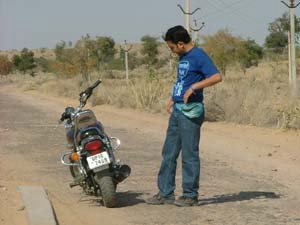
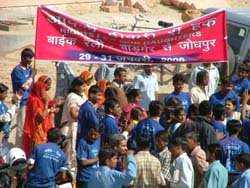
I have just returned back from Rajasthan, where we ran a campaign for Girl Child rights in Barmer district. The campaign also included a Bike rally from Barmer to Jodhpur, which passed through almost hundred villages. For more about this campaign log on to www.halfworld.blogspot.com

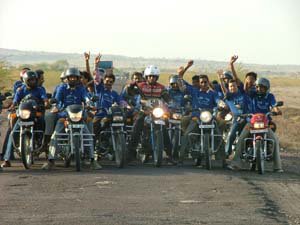
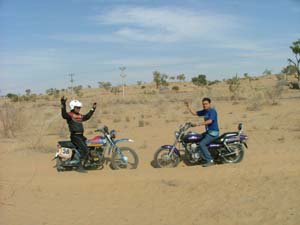
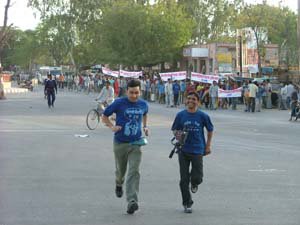
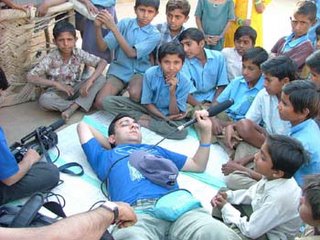
Pics (From top to bottom)
1. With friend Sharad Sharma of World Comics India outside Jodhpur railway station.
2. Examining my bike near Kavas village.
3. The rally has reached Baitu village.
4. Motorcycle rally reaches Pachpadra village famous for its salt lakes.
5. With International Bike racer Bittoo Sondhi.
6. Running along with cameraperson Tara Joshi to get a better shot of the rally.
7. Recording a song in Haathma village.
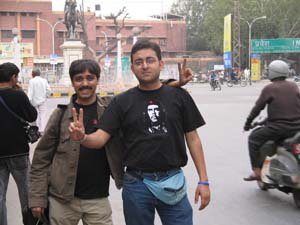

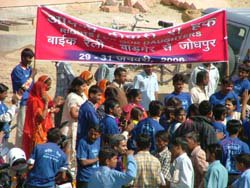


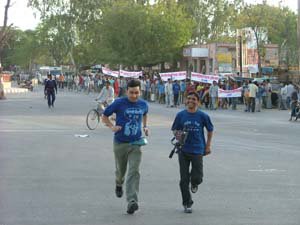

Pics (From top to bottom)
1. With friend Sharad Sharma of World Comics India outside Jodhpur railway station.
2. Examining my bike near Kavas village.
3. The rally has reached Baitu village.
4. Motorcycle rally reaches Pachpadra village famous for its salt lakes.
5. With International Bike racer Bittoo Sondhi.
6. Running along with cameraperson Tara Joshi to get a better shot of the rally.
7. Recording a song in Haathma village.
Thursday, January 19, 2006
The Elbow Cream
Today, I write about you
Words come from my gall bladder
All drenched in bile,
And wine made from cider
I remember those summer afternoons
When coal tar would stick on shoes
And you would dress up in cotton Pyjamas
Planning to set up a ruse
You, lost in your own world
And partially in mine
You’d seek refuge in the recycled paper
And lie down beside me
On the top floor of that house
I would go to sleep
and you would look at me
And then lie down beside me
(as I felt the mole near your navel)
Remember? You were after me those days
Trying to change the destiny of my elbows
Armed with, do you remember, the elbow-cream?
You’d be soon leaving for Kolkata
I knew you had surrendered
Their happiness mattered to you.
But what about my elbows, Nina?
Words come from my gall bladder
All drenched in bile,
And wine made from cider
I remember those summer afternoons
When coal tar would stick on shoes
And you would dress up in cotton Pyjamas
Planning to set up a ruse
You, lost in your own world
And partially in mine
You’d seek refuge in the recycled paper
And lie down beside me
On the top floor of that house
I would go to sleep
and you would look at me
And then lie down beside me
(as I felt the mole near your navel)
Remember? You were after me those days
Trying to change the destiny of my elbows
Armed with, do you remember, the elbow-cream?
You’d be soon leaving for Kolkata
I knew you had surrendered
Their happiness mattered to you.
But what about my elbows, Nina?
Monday, January 16, 2006
Mind wanders in Meerut
He wore a silk scarf. One last time, he thought. He also held a silken handkerchief in his hand. Ram Bahadur put his sleeping bag and his suitcase in the rear of the car. As he shut the dickey, two crows sitting on the electric pole became alert. They tried to ward off their fear, hopping restlessly on their feet, but then decided to fly away. Ram Bahadur looked at him meaningfully and he gave a nod. The time had come...
Saturday, January 14, 2006
Postman, Bouncing High
A paralysis has gripped me. There is internal bleeding as well. Of words, which don’t come out. I imagine myself, on a bed in a hospital, wrapped in a calm, white sheet. A needle lies embedded in one of my veins, near the elbow joint. I also visualise a red-coloured Thesaurus attached to it, hanging upside down on the drip stand. I imagine.
I think of myself to be a Postman at a hill station. I walk on the lonely stretches, negotiating bends and curves; a bunch of envelopes in my hands and an old-fashioned black umbrella held under my left arm. I stop at the tea shop. I have a bun and an extremely sweet tea, served in a chipped glass. Sometimes sun shines. Sometimes I cut through the mist. And sometimes I have to open the umbrella.
Actually it is nothing but loneliness. Also, there is no agitation of mind. My inner demons are in a state of comatose. I am stuck. Struck off too; struck off from my own margins.
I try to write. Like:
When he saw a snake creeping over his leg; making a rustling sound on his silken pyjamas, he knew the time had come. Time to tell the story. (Sentence left as it is)
Insalubrious. (Nothing)
It rained heavily as we carried his body till the main road. The load was very heavy, almost backbreaking, despite the fact that he was a mere skeleton now. But carrying him from his cottage till the main road, climbing those fifty-eight steps, laden with bare leaves, we stopped at various places and tried to take stock of our breaths – the phenomenon that he had ceased to perform. (Harmonica, four years ago; as I saw it. MS word file closed)
Maqbool Sherwani. Hindu astrologer; the story of 300 apple cases. Snake bite outside Bhadrakali temple. Raahchok, the ghost. She jumped into the river. Dost Mohammed jumped after her. Leather sandals for seventeen rupees. It was snowing when I opened my eyes. Six months had passed. (Wrote it on the stick pad and pasted it on the CPU)
Yes, aware that I am dying,
I carry my body on my back
Into my mind. Take a shovel
Dig myself a pit. It’s simple. (Doc’s poem. Put it back in the cupboard)
Isko kisi ki arzoo bhi nahi. This does not desire of anything. This. This. Write Rahul write. For God sake write. Please. Write for the sake of that red wall. Write for the sake of that look in your eyes (Secret). Write for the sake of that thought in your mind (Top Secret).
If I can bounce high. High-bouncing self, I must have you!
I think of myself to be a Postman at a hill station. I walk on the lonely stretches, negotiating bends and curves; a bunch of envelopes in my hands and an old-fashioned black umbrella held under my left arm. I stop at the tea shop. I have a bun and an extremely sweet tea, served in a chipped glass. Sometimes sun shines. Sometimes I cut through the mist. And sometimes I have to open the umbrella.
Actually it is nothing but loneliness. Also, there is no agitation of mind. My inner demons are in a state of comatose. I am stuck. Struck off too; struck off from my own margins.
I try to write. Like:
When he saw a snake creeping over his leg; making a rustling sound on his silken pyjamas, he knew the time had come. Time to tell the story. (Sentence left as it is)
Insalubrious. (Nothing)
It rained heavily as we carried his body till the main road. The load was very heavy, almost backbreaking, despite the fact that he was a mere skeleton now. But carrying him from his cottage till the main road, climbing those fifty-eight steps, laden with bare leaves, we stopped at various places and tried to take stock of our breaths – the phenomenon that he had ceased to perform. (Harmonica, four years ago; as I saw it. MS word file closed)
Maqbool Sherwani. Hindu astrologer; the story of 300 apple cases. Snake bite outside Bhadrakali temple. Raahchok, the ghost. She jumped into the river. Dost Mohammed jumped after her. Leather sandals for seventeen rupees. It was snowing when I opened my eyes. Six months had passed. (Wrote it on the stick pad and pasted it on the CPU)
Yes, aware that I am dying,
I carry my body on my back
Into my mind. Take a shovel
Dig myself a pit. It’s simple. (Doc’s poem. Put it back in the cupboard)
Isko kisi ki arzoo bhi nahi. This does not desire of anything. This. This. Write Rahul write. For God sake write. Please. Write for the sake of that red wall. Write for the sake of that look in your eyes (Secret). Write for the sake of that thought in your mind (Top Secret).
If I can bounce high. High-bouncing self, I must have you!
Wednesday, January 04, 2006
Friday, December 30, 2005
This Characterless String
Bazaar mein,
baune khambe ke upar
Teen baar mudi hui
eik charitraheen rassi
Koi khambe ko chhue
to fanfukaarti hai,
Naagin si bal khaati hui
eik charitraheen rassi
Do premiyon ko dekhkar
thoda hilti hai
maano laaj se ho simti hui
eik charitraheen rassi
Aur saamne madiralay mein
shaam guzaarti hai wo
dekho, jhumkar nikalti hui
eik charitraheen rassi
Hai to wo khaane peene ke thelon ke beech,
pur unse duur uska apna chulha hai
alag khichdi pakati hui
eik charitraheen rassi
A translation by my friend Tanzan Senzaki:
This characterless string
Is clinging to a stumped pole,
Going around it three times,
In the vendors’ street.
Many lovers she has.
But this one,
This pole is special,
For the characterless string.
Should someone touch the pole,
She uncoils fast like a snake
And snaps back sharply at him.
This characterless string.
When she sees two lovers together,
She acts as if drenched in shame.
This characterless string.
She spends her evenings at the pub.
Look there she is,
Walking out all drunk.
This characterless string.
Though in the middle of vendors’ street,
She cooks her hotchpotch in a pot,
Placed in a hearth away from street.
This characterless string.
baune khambe ke upar
Teen baar mudi hui
eik charitraheen rassi
Koi khambe ko chhue
to fanfukaarti hai,
Naagin si bal khaati hui
eik charitraheen rassi
Do premiyon ko dekhkar
thoda hilti hai
maano laaj se ho simti hui
eik charitraheen rassi
Aur saamne madiralay mein
shaam guzaarti hai wo
dekho, jhumkar nikalti hui
eik charitraheen rassi
Hai to wo khaane peene ke thelon ke beech,
pur unse duur uska apna chulha hai
alag khichdi pakati hui
eik charitraheen rassi
A translation by my friend Tanzan Senzaki:
This characterless string
Is clinging to a stumped pole,
Going around it three times,
In the vendors’ street.
Many lovers she has.
But this one,
This pole is special,
For the characterless string.
Should someone touch the pole,
She uncoils fast like a snake
And snaps back sharply at him.
This characterless string.
When she sees two lovers together,
She acts as if drenched in shame.
This characterless string.
She spends her evenings at the pub.
Look there she is,
Walking out all drunk.
This characterless string.
Though in the middle of vendors’ street,
She cooks her hotchpotch in a pot,
Placed in a hearth away from street.
This characterless string.
Of Human Bondage
It was not true that he would never see her again. It was not true simply because it was impossible.
Somerset Maugham, Of Human Bondage
Writing a line or two on every page. Page after page. Then making paper boats out of them. And then turn on the kitchen sink...
Somerset Maugham, Of Human Bondage
Writing a line or two on every page. Page after page. Then making paper boats out of them. And then turn on the kitchen sink...
Wednesday, December 28, 2005
A Poem in Hindi
A co-traveller on the Intentblog, Tanzan Senzaki has translated my Hindi poem in free English verse: (You can find the original - in Roman - below this translation)
Time does not hang
On trees for me,
It passes like a rope passes
Through a bull’s nose
Even if I am still
It still moves on
Marching past my pulse
Carrying my subconscious
In a sack on its back,
To savor the sweetness of future
It still passes on
Once I ran fast after it,
Asking it to stop and stay
Under the tree of my memories
Blinking its eyes it marched ahead,
Saying if it did stop,
My pen too would stop,
And only when it moved
‘Now’ became ‘yesterday’
Making my memories thunder in the skies
And passing them on into my pen
Time moved on
I turned back
Reaching far back,
I heard the skies thunder
And my pen moved on
Translated from my Hindi Poem:
Mujhe Samay, Paed pur latka hua nahi milta
Wo guzarta hai -
guzarta hai, jaise bael ke nathunon se nakael
Uske saamne mein thithak bhi javun, pur wo
meri nabz pur kadam taal karte hue
aage nikal padta hai
Apni peeth pur mere antarmann ka pitthu baandhe
wo bavishya ka gud khaane daud padta hai
Maine use raukne ke liye eik baar daud lagayi
aur poocha - ki wo aaram kare
meri smritiyon ke vraksh ke neeche
Wo palke jhapkaata hua mujhe dekhta gaya
lekin ruka nahi
aur phir wo muskuraya
bola -
mein agar ruk gaya to tumhari kalam ruk jaayegi
kyunki mein jab chalta hun
to hi 'ab' kal banta hai
jiske aasman mein smritiyan
bijli bankar kaundh ti hein
aur tumahri kalam ki syaahi mai tabdeel ho jaati hai
Wo chalta gaya
aur mein bhi mudkar chalne laga
duur nikal aaya
aur phir bijli kaundh ne lagi
aur meri kalam chalne...
Time does not hang
On trees for me,
It passes like a rope passes
Through a bull’s nose
Even if I am still
It still moves on
Marching past my pulse
Carrying my subconscious
In a sack on its back,
To savor the sweetness of future
It still passes on
Once I ran fast after it,
Asking it to stop and stay
Under the tree of my memories
Blinking its eyes it marched ahead,
Saying if it did stop,
My pen too would stop,
And only when it moved
‘Now’ became ‘yesterday’
Making my memories thunder in the skies
And passing them on into my pen
Time moved on
I turned back
Reaching far back,
I heard the skies thunder
And my pen moved on
Translated from my Hindi Poem:
Mujhe Samay, Paed pur latka hua nahi milta
Wo guzarta hai -
guzarta hai, jaise bael ke nathunon se nakael
Uske saamne mein thithak bhi javun, pur wo
meri nabz pur kadam taal karte hue
aage nikal padta hai
Apni peeth pur mere antarmann ka pitthu baandhe
wo bavishya ka gud khaane daud padta hai
Maine use raukne ke liye eik baar daud lagayi
aur poocha - ki wo aaram kare
meri smritiyon ke vraksh ke neeche
Wo palke jhapkaata hua mujhe dekhta gaya
lekin ruka nahi
aur phir wo muskuraya
bola -
mein agar ruk gaya to tumhari kalam ruk jaayegi
kyunki mein jab chalta hun
to hi 'ab' kal banta hai
jiske aasman mein smritiyan
bijli bankar kaundh ti hein
aur tumahri kalam ki syaahi mai tabdeel ho jaati hai
Wo chalta gaya
aur mein bhi mudkar chalne laga
duur nikal aaya
aur phir bijli kaundh ne lagi
aur meri kalam chalne...
Sunday, December 18, 2005
Retinas on Nanda Devi
After six years, he came back. For a day. To visit an old, empty cottage. To taste the strawberry lip gloss. Images of a plane hijack. Tunes of Latino. Smell of ear wax. And Nanda Devi. And a promise. Of coming back. Permanently. And then...
Friday, December 16, 2005
Jammu Roughcut
He searched for her... in mental spaces... on the Palace road. He could not find his past; Raju tea stall was closed... and Amit's dream was hit by precision-guided-missile of destiny. And then those 4o-page letters... Read More
Wednesday, December 07, 2005
Half Tomato, Boiled Sparrow Eggs
I wrote this story, in two parts, for Intentblog:
Half Tomato and Boiled Sparrow Eggs
Half Tomato and Boiled Sparrow Eggs: Part 2
This story extends from Kashmir to Gujarat. It is the tale of a man haunted by tomatoes; of a sparrow, its master and a naked fakir called Sarmad. It also has Ehsan Jafri. And it also has she, who hates tomatoes and eventually...
Half Tomato and Boiled Sparrow Eggs
Half Tomato and Boiled Sparrow Eggs: Part 2
This story extends from Kashmir to Gujarat. It is the tale of a man haunted by tomatoes; of a sparrow, its master and a naked fakir called Sarmad. It also has Ehsan Jafri. And it also has she, who hates tomatoes and eventually...
The Quest for a House
The front wall painted red. Pebbles of various shapes and sizes put in a ceramic basket. A sofa set in one corner. Not the Godzillas put on sale in imported furniture showrooms, but medium sized with striped upholstery. An orange rug beneath a mahogany table. A laughing Buddha on the side table. A bunch of Narcissus in a transparent vase. ‘Potato Eaters’ on the wall. Floor cushions scattered here and there. Coffee table books on the shelf. Black and white photographs, framed, placed under the hanging light. Two goldfishes in a glass bowl; ones which would live till he did. A Thai mask, smiling at him, from above his bottles. And then he pours himself one, swirls it in his mouth for a while and gulps it down without making noise. Abida Parveen’s voice wafts through the house. The house which is his home.
A study in the remotest corner of the house. Books on shelves, with a delicate layer of dust on them. But not on ‘Lust for Life’. How could it be? He reads it daily, taking inferences from it to conduct his own life. There is a Van Gogh’s Self Portrait on the wall. A table lamp – 70’s model. A rock picked up from the Dead Sea. Fountain pens and sharpened pencils in a holder. Few read and unread mails. A paper cutter. Some white, neat paper. A few lines scribbled on the topmost paper. A mattress thrown in one corner. Cushions of various hues. Thick curtains to darken the room or let in streams of sunshine once lifted. A DVD player to watch ‘Pyaasa’.
And then the bathroom. Dry, first of all. With water coming in taps, whenever needed. A shower. Clean hand towels on the shelf along with a bamboo shoot. One single stick of Gladiola in a sleek bottle. A quote or a thought on a stick pad, pasted on the wall. A mirror with electric blue frame.
And finally a terrace. Flowers in pots. A reclining chair in one corner. Terracotta pots and figures in one corner. A rug to sit on the floor. Petals floating in water in a rectangular earthen basin. A water lily, may be. Overlooking a park or a monument.
Honkkkkkkk… he woke up startled. Dam’n these cabs which come to pick up call-centre executives. Naipaul’s ‘A house for Mr Biswas’ fell from his chest. He was reading Page 329, where Mr Biswas writes a report for his newspaper Sentinel. One of the lines in his report read: “It was midnight and I was alone”. He looked around. A dog was barking incessantly in the street. Tunes of Jagraata, based on popular Hindi songs also reached his ears. In the night, trucks came along with drillers for illegal boring of water. There was everything illegal in the colony he lived.
For years, they had lived in rented rooms, he and his family. One room – where they lived, cooked, ate, slept, studied, received guests. Then a room and a kitchen, but the bathroom had no door. So once inside, you turned into a singer. He still sang pretty well. May be he needed more practise. But by that time the landlord had turned hostile. So the singing stopped. Then they shifted to another room. And then another. And then another.
Once he shifted to Delhi and his parents came to stay with him, he wanted to put an end to all this. In his own little way. Four years ago, he finally managed to buy a 2- bedroom flat in the illegal colony. “The colony will be regularised in no time by the Government and then you will see the rates sky-rocketing,” the builder had told him.
His father followed the Hindustan Times everyday. “Oh, that colony has been regularised. Our colony will also be, in no time”. Yes, the colony was regularised, but nothing changed really. The water remained scarce. Power cuts were a reality that downed upon them, a dozen times a day. There was no place to park the car. There was no pucca road. After every rain, the road became a swamp. There was noise everywhere. Of children wailing on the road. Of cabs coming to pick up call-centre executives. Of loud music being played on local-made speakers. Of dogs barking in the night. Of drunkards creating a brawl in the back street. Things turned from bad to worse in four years.
Then his father banked his hopes upon house loans. Every week, he would study Property Times, as if he was preparing for an entrance exam. “We will sell this house and take a bank loan. We will shift to Gurgaon from Delhi,” this became his new mantra. But his horoscope dashed his father’s hope. Every astrologer who studied his horoscope would prophesise that he would turn into an ascetic one day and run away. That is why his father always grew wary when he chucked his jobs like diapers. He feared that now, now he will run away. Whenever he chucked his job, he would not wake up in the morning at his usual time. For two days, his father would watch patiently and pray that what he thought was not true. But when the same thing got repeated on the third day, his father would understand. Then he would talk to himself for some time which sounded like, “God knows what he keeps on doing! I don’t know what he is up to! Bad luck, nothing else. Unlucky stars.” And then he would throw away the Property Times and immerse himself in the almanac. Study his son’s planetary position. But nothing would help. One day he would run away. One day.
He was not meant for these regular jobs. He wanted to write. He had all his hopes on Yimberzal. The novel which he claimed to work on. Yimberzal would bail him out or so he thought. And then there would be a red wall. Pebbles. Paper cutter. Mask. Narcissus. Water lily. And a dry bathroom.
He put the book back in the shelf and began to write: It was midnight and I was alone…
A study in the remotest corner of the house. Books on shelves, with a delicate layer of dust on them. But not on ‘Lust for Life’. How could it be? He reads it daily, taking inferences from it to conduct his own life. There is a Van Gogh’s Self Portrait on the wall. A table lamp – 70’s model. A rock picked up from the Dead Sea. Fountain pens and sharpened pencils in a holder. Few read and unread mails. A paper cutter. Some white, neat paper. A few lines scribbled on the topmost paper. A mattress thrown in one corner. Cushions of various hues. Thick curtains to darken the room or let in streams of sunshine once lifted. A DVD player to watch ‘Pyaasa’.
And then the bathroom. Dry, first of all. With water coming in taps, whenever needed. A shower. Clean hand towels on the shelf along with a bamboo shoot. One single stick of Gladiola in a sleek bottle. A quote or a thought on a stick pad, pasted on the wall. A mirror with electric blue frame.
And finally a terrace. Flowers in pots. A reclining chair in one corner. Terracotta pots and figures in one corner. A rug to sit on the floor. Petals floating in water in a rectangular earthen basin. A water lily, may be. Overlooking a park or a monument.
Honkkkkkkk… he woke up startled. Dam’n these cabs which come to pick up call-centre executives. Naipaul’s ‘A house for Mr Biswas’ fell from his chest. He was reading Page 329, where Mr Biswas writes a report for his newspaper Sentinel. One of the lines in his report read: “It was midnight and I was alone”. He looked around. A dog was barking incessantly in the street. Tunes of Jagraata, based on popular Hindi songs also reached his ears. In the night, trucks came along with drillers for illegal boring of water. There was everything illegal in the colony he lived.
For years, they had lived in rented rooms, he and his family. One room – where they lived, cooked, ate, slept, studied, received guests. Then a room and a kitchen, but the bathroom had no door. So once inside, you turned into a singer. He still sang pretty well. May be he needed more practise. But by that time the landlord had turned hostile. So the singing stopped. Then they shifted to another room. And then another. And then another.
Once he shifted to Delhi and his parents came to stay with him, he wanted to put an end to all this. In his own little way. Four years ago, he finally managed to buy a 2- bedroom flat in the illegal colony. “The colony will be regularised in no time by the Government and then you will see the rates sky-rocketing,” the builder had told him.
His father followed the Hindustan Times everyday. “Oh, that colony has been regularised. Our colony will also be, in no time”. Yes, the colony was regularised, but nothing changed really. The water remained scarce. Power cuts were a reality that downed upon them, a dozen times a day. There was no place to park the car. There was no pucca road. After every rain, the road became a swamp. There was noise everywhere. Of children wailing on the road. Of cabs coming to pick up call-centre executives. Of loud music being played on local-made speakers. Of dogs barking in the night. Of drunkards creating a brawl in the back street. Things turned from bad to worse in four years.
Then his father banked his hopes upon house loans. Every week, he would study Property Times, as if he was preparing for an entrance exam. “We will sell this house and take a bank loan. We will shift to Gurgaon from Delhi,” this became his new mantra. But his horoscope dashed his father’s hope. Every astrologer who studied his horoscope would prophesise that he would turn into an ascetic one day and run away. That is why his father always grew wary when he chucked his jobs like diapers. He feared that now, now he will run away. Whenever he chucked his job, he would not wake up in the morning at his usual time. For two days, his father would watch patiently and pray that what he thought was not true. But when the same thing got repeated on the third day, his father would understand. Then he would talk to himself for some time which sounded like, “God knows what he keeps on doing! I don’t know what he is up to! Bad luck, nothing else. Unlucky stars.” And then he would throw away the Property Times and immerse himself in the almanac. Study his son’s planetary position. But nothing would help. One day he would run away. One day.
He was not meant for these regular jobs. He wanted to write. He had all his hopes on Yimberzal. The novel which he claimed to work on. Yimberzal would bail him out or so he thought. And then there would be a red wall. Pebbles. Paper cutter. Mask. Narcissus. Water lily. And a dry bathroom.
He put the book back in the shelf and began to write: It was midnight and I was alone…
Wednesday, November 30, 2005
Kabir, Katrina and Ketchup Dreams
I don’t know who I am. Sometimes when I look at myself in the mirror, I find myself staring at a stranger. I think I am great. Sorry for being immodest, but that is what I think. I also think I am an escapist. I run away from the realities of life, as far as I can. And sometimes I lurk close to see what is happening but far enough to shrink further into the depths of my own being. I am also impractical. If I was not, why would I leave a job which fetched me three-quarters of a lakh every month, probably the highest earned by anyone else in my entire clan? I am also a dreamer and they sometimes (read most of the times) ruin me. Dreaming is my biggest vice. Let me explain how.
When I was very young, my mother took me to a marriage luncheon. I would have been three years old or little younger than that. But this bitch, my memory that is, keeps on reminding me of my follies. So yes, people were having their lunch and I saw a baby crying. Now my mind, as it always does, started working overtime. I thought (read imagined) that the baby was separated from her parents. Back home, for weeks, I dreamt of creating a space (I had no idea what space meant, but whenever I thought of it, it felt like something secure) where I could keep that baby. This dream ruined my days and robbed me of my childish play. I grew much before it was expected of me. It is another thing that when I was fourteen, I was still creating bubbles out of soap water. I hate to tell you that that act was also a manifestation of my dreams.
Don’t tell this to anyone, but sometimes I dream that I am Kabir. Now this dream gives me twin pleasure. One is regarding words. Kabir wrote such beautiful verses that no matter how great I am (refer to my earlier statement), I cannot write with such intensity. And second, I dream that Osama Bin Laden and Praveen Bhai Togadia are fighting over my dead body. And they kill each other. And then I rise again and see my disciple waiting with pen and paper. I start writing again. Chaah gayi chintaa mitti, manwa beparwah, jinko kachhu na chahiye, wahi shaahanshah (Desire killed, worries gone; he who desires nothing is an emperor)
But I have lots of desires. Like making my greatness known to all and sundry. I dream of being paid the highest advance ever paid to an Indian author for his book and then being interviewed by the news channel which I left. And then Tarun Tejpal, when he meets me during a book launch will not have to remark, “Oh, have I met you before, you smart young man?” (Don’t miss the adjective ‘smart’). Is it called adjective? I think yes.
Cut the crap man! You know Katrina? Katrina – super model. She proposed to me. And you know what (with due apologies to Tata Indica), I said yes. But I told her that I don’t like Salman Khan. Ok, if it is of any consolation to him, I don’t like Aishwarya Rai either.
Let me kill my desires. If not anything else, I will become an emperor.
Dream on, Rahul!
When I was very young, my mother took me to a marriage luncheon. I would have been three years old or little younger than that. But this bitch, my memory that is, keeps on reminding me of my follies. So yes, people were having their lunch and I saw a baby crying. Now my mind, as it always does, started working overtime. I thought (read imagined) that the baby was separated from her parents. Back home, for weeks, I dreamt of creating a space (I had no idea what space meant, but whenever I thought of it, it felt like something secure) where I could keep that baby. This dream ruined my days and robbed me of my childish play. I grew much before it was expected of me. It is another thing that when I was fourteen, I was still creating bubbles out of soap water. I hate to tell you that that act was also a manifestation of my dreams.
Don’t tell this to anyone, but sometimes I dream that I am Kabir. Now this dream gives me twin pleasure. One is regarding words. Kabir wrote such beautiful verses that no matter how great I am (refer to my earlier statement), I cannot write with such intensity. And second, I dream that Osama Bin Laden and Praveen Bhai Togadia are fighting over my dead body. And they kill each other. And then I rise again and see my disciple waiting with pen and paper. I start writing again. Chaah gayi chintaa mitti, manwa beparwah, jinko kachhu na chahiye, wahi shaahanshah (Desire killed, worries gone; he who desires nothing is an emperor)
But I have lots of desires. Like making my greatness known to all and sundry. I dream of being paid the highest advance ever paid to an Indian author for his book and then being interviewed by the news channel which I left. And then Tarun Tejpal, when he meets me during a book launch will not have to remark, “Oh, have I met you before, you smart young man?” (Don’t miss the adjective ‘smart’). Is it called adjective? I think yes.
Cut the crap man! You know Katrina? Katrina – super model. She proposed to me. And you know what (with due apologies to Tata Indica), I said yes. But I told her that I don’t like Salman Khan. Ok, if it is of any consolation to him, I don’t like Aishwarya Rai either.
Let me kill my desires. If not anything else, I will become an emperor.
Dream on, Rahul!
Subscribe to:
Posts (Atom)