
 Posts
Posts


For a man who no longer has a homeland, writing becomes a place to live: Theodor Adorno
Two days ago I saw
My land like a tourist
On the Discovery channel
My father shouted and
Told my niece:
Look that is the Dal lake
Where lotus stems come from
In his shikara
Gulla carried
Bunches of Narcissus
Which we would decorate
In a brass plate
Along with a pen
And a coin to
Welcome the spring
Now springs are spent
In colouring rusted coolers
To enable them to
Provide succour in heat
Relatives from Jammu
Arrive every few months
Bringing with them
Souvenirs of my land
Green saag with roots
And local sesame bread
My father and mother
Arrived in Delhi
A few years ago
From Jammu
And now when
He refers to Jammu
My father says:
Back in Srinagar
And then he stops
When he realises
That Srinagar was
What he left
Sixteen years ago
And then for days
He keeps silent
He keeps on staring
At the ceiling
He also does not
Then read newspapers
Tuesday, August 29, 2006


Friday, August 25, 2006
Monaco Biscuits
You have retained
Your habit of making
Caricatures when you
Do not bother
To listen to
What a speaker
Has to say
The free strands
Of your hair
Look like Vincent’s
Corn-field and
Your worn-out
Canvas shoes
Like his canvas
You wear
A silver ring
On the little finger
Of your right hand
Through which I desire
To pass like a
Pashmina shawl
When you entered
Yesterday into
The array of my vision
You passed your
First glance at me
How I wished
I had a beard
I also heard
You telling your
Friend that you
Were hungry
I could have fed you
My liver instead of
Those Monaco biscuits
Your habit of making
Caricatures when you
Do not bother
To listen to
What a speaker
Has to say
The free strands
Of your hair
Look like Vincent’s
Corn-field and
Your worn-out
Canvas shoes
Like his canvas
You wear
A silver ring
On the little finger
Of your right hand
Through which I desire
To pass like a
Pashmina shawl
When you entered
Yesterday into
The array of my vision
You passed your
First glance at me
How I wished
I had a beard
I also heard
You telling your
Friend that you
Were hungry
I could have fed you
My liver instead of
Those Monaco biscuits
Wednesday, August 23, 2006
In search of a poet
The train passes through lush green fields and small towns with walls painted with advertisements of quacks and tantriks, who claim to have an antidote for everything, ranging from bad jobs to failed love. I really do not know why I am on this train, bound for Lucknow. But gradually I figure out. Back home, in Delhi, the Internet is not working and the service provider is behaving like Dickensian Uriah Heep. My desktop gets restarted after every fifteen minutes. A local courier has not reached even after three days have passed. The electricity is playing truant. I feel like joining the Gestapo. Instead, I run away to Lucknow.
I have been to Lucknow many times before and if you really ask me, I have never ventured anywhere barring an old bookstore in Hazratganj market that has in offing a decent collection of Hindi literature. But this time I know something which was previously unknown to me. Just few metres away from the book store is an old hotel that has been renovated recently and turned into a huge banquet hall. But on its rooftop it carries a burden of history from which it cannot be absolved. It is the Capoor Hotel.

Raaste mein ruk ke dam le lun, meri aadat nahi
Lautkar waapas chala jaun, meri fitrat nahi
Aur koi hamnawa mil jaaye, ye kismat nahi
Eiy Gam-e-dil kya karun
Eiy vehshat-e-dil kya karun
(That I should stop and take a breather is not my habit
That I should turn back and return is not my nature
That I should meet a co-traveller, I am not that lucky
What do I do, my sorrow-filled heart?
What do I do, my grieving heart?)
These lines were written by Asrarul Haq Majaaz, who is known as the Keats of Urdu poetry. He was very famous among poetry-lovers. Ismat Chughtai recounts that girls used to take out lottery in order to decide who among them would marry Majaaz. They used to sleep with his photograph under their pillow.
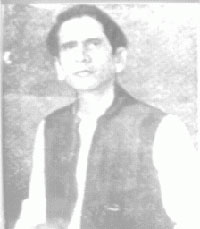
Majaaz was a progressive poet who believed in the equality of women. He wrote:
Tere maathe pe ye aanchal bohot hi khoob hai lekin
Tu is aanchal se ek parcham bana leti to accha tha
(The scarf on your head is fine
Only if you could turn it into a flag)
Many of Majaaz’s friends made money by writing film lyrics. Majaaz never belonged there. So he spent most of his life in taverns of Lucknow. It is said that after drinking, Majaaz would wander on the streets of Lucknow. His fans would take him home, make him drink more and make him recite his poetry till he collapsed. Then they would ask a servant to drop him on a bench in a park or in a railway station.
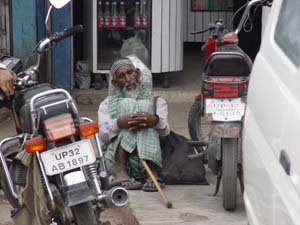
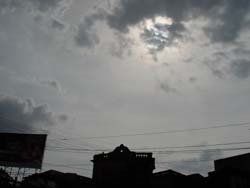
It was on a chilly December night in 1955 that Majaaz was taken by some of his fans to the rooftop of Capoor Hotel where they left him alone after drinking till midnight. In the morning he was found unconscious and was then rushed to a hospital where the doctors said that he had died because of severe cold which had damaged his brain. He was 44.
Bohot mushkil hai duniya ko sanwaarna
Teri zulfon ka pecho-kham nahi hai
(It is very difficult to simplify this world
It is not the tangle of your tresses)
What else is there to write? About Lucknow? About anything else?
More Pics
I have been to Lucknow many times before and if you really ask me, I have never ventured anywhere barring an old bookstore in Hazratganj market that has in offing a decent collection of Hindi literature. But this time I know something which was previously unknown to me. Just few metres away from the book store is an old hotel that has been renovated recently and turned into a huge banquet hall. But on its rooftop it carries a burden of history from which it cannot be absolved. It is the Capoor Hotel.

Raaste mein ruk ke dam le lun, meri aadat nahi
Lautkar waapas chala jaun, meri fitrat nahi
Aur koi hamnawa mil jaaye, ye kismat nahi
Eiy Gam-e-dil kya karun
Eiy vehshat-e-dil kya karun
(That I should stop and take a breather is not my habit
That I should turn back and return is not my nature
That I should meet a co-traveller, I am not that lucky
What do I do, my sorrow-filled heart?
What do I do, my grieving heart?)
These lines were written by Asrarul Haq Majaaz, who is known as the Keats of Urdu poetry. He was very famous among poetry-lovers. Ismat Chughtai recounts that girls used to take out lottery in order to decide who among them would marry Majaaz. They used to sleep with his photograph under their pillow.

Majaaz was a progressive poet who believed in the equality of women. He wrote:
Tere maathe pe ye aanchal bohot hi khoob hai lekin
Tu is aanchal se ek parcham bana leti to accha tha
(The scarf on your head is fine
Only if you could turn it into a flag)
Many of Majaaz’s friends made money by writing film lyrics. Majaaz never belonged there. So he spent most of his life in taverns of Lucknow. It is said that after drinking, Majaaz would wander on the streets of Lucknow. His fans would take him home, make him drink more and make him recite his poetry till he collapsed. Then they would ask a servant to drop him on a bench in a park or in a railway station.
It was on a chilly December night in 1955 that Majaaz was taken by some of his fans to the rooftop of Capoor Hotel where they left him alone after drinking till midnight. In the morning he was found unconscious and was then rushed to a hospital where the doctors said that he had died because of severe cold which had damaged his brain. He was 44.

Bohot mushkil hai duniya ko sanwaarna
Teri zulfon ka pecho-kham nahi hai
(It is very difficult to simplify this world
It is not the tangle of your tresses)
What else is there to write? About Lucknow? About anything else?
More Pics
Friday, July 28, 2006
TV says: Et tu Rahul?
I am working on a mini Graphic novel, titled - Byte Soldiers: The life and times of a Metro TV Reporter, for Sarai (CSDS). You can read some of my postings here:
The BJP Correspondent
The Sissy Proletariat
His shoulders and Dodee
The Ninnies of Television
Skull and Cotton Candy
The BJP Correspondent
The Sissy Proletariat
His shoulders and Dodee
The Ninnies of Television
Skull and Cotton Candy
Thursday, July 27, 2006
Your almond eyes

Tumhari aankhon ka aakash
Saral aankhon ka neela aakash
(The sky of your eyes
The blue sky of
Your simple eyes)
You were too young to have inspired the above lines of a Hindi poet, who wrote it decades ago. But if you ask me, Priyadarshani, I would like to compare your eyes to the raw, green spring almonds of Kashmir. I have been told that you were an award-winning singer, who performed in faraway nations like Russia. Tell me, did they look at you, the Russians, and utter: Mera joota hai Japani, ye patloon Hindustani – did they?
I imagine you walking on the road near your South Delhi house, humming a tune gently. Or smiling shyly in affirmation on being asked: Are you a Kashmiri? Yes you were and to be recognised on the streets as one, you did not need the symbolic Dejharu.
Long before you turned 26, your parents, like almost all Kashmiri Pandit families, must have begun to amass many small and big things to be sent along with you at the time of your marriage. Kashmiri shawls, carpets, silverware. They must have spoken in hushed tones about this or that boy who they would have seen during marriage ceremonies of friends and relatives.
These days, I visit your area quite often. I am just trying to help my friend Ajay in his next film. He lives just behind the road that Santosh Kumar would have taken to approach your house, rape you and then kill you by strangulating you with a telephone cable.
You are no more than a faded picture in this mortal world. Your killer is a practising lawyer. But you know, Priya, I have just been back after listening to a man’s story who witnessed the 1947 Indo-Pak partition as a five-year old kid. There is no heaven or hell. Every account is settled here on Earth. His will be too. But don’t you know that already?
This evening, a friend sang Shiv Kumar Batalvi’s song:
Ik kudi
Jidda naam mohabbat
Saad muradi
Soni fabbat
Gumm hai, gumm hai
Gumm hai
(A girl
Named love
Simple
Lovely
She is lost
Lost she is)
Where do I find you? Hey don’t pinch my shoulder.
Friday, July 14, 2006
If I turn blind tonight
Poring over a yellow carton, you entered into my stream of consciousness like a ray. Your eyes were fixed upon your fingers trying to open that carton. But somehow I felt that you had included me in the array of your sight. As if to confirm my view, a smile played on your lips like a flute. It seemed to play a song, the words of which could have been: Hey, do not hide there, for I know you are here...
We never met, we never spoke, but we acted as confession boxes for each other. I could share those really lunatic thoughts with you. So could you and I nearly transformed into a father, a friendly one, while seeking answers to questions you almost asked.
I discovered very early, within you, the same wheel of restlesness which I had driven with the wooden stick of my being when I was of your age and younger. Half hidden behind the red, yellow and blue fibres of Dharamshala blankets, you asked me riddles the answers to which I sought in your eyes and ultimately found them in your smile. How I wish we could lay together, our heads supported by our elbows and, while you shared the secrets of your friends with me, I would remove your yellow hair band and play with it!
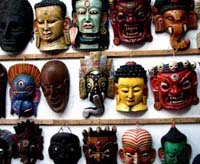
We could also wear those masks - I choose the red one with demon's face - and dance stupidly in the wilderness, pretending to frighten each other. We could also talk endlessly with that old Tibetan woman. I could also tell you that the paper machie boxes made in Kashmir are the best.
I am a dreamer, excuse me, and I dream about the most stupid and flimsy and childish dreams ever known to mankind. Consider this - You have put my picture up on your blog and then your statement has changed to this: All photographs published on this website and the man featuring in the topmost photograph are the property of PPK.
And yes, PPK, if I were to turn blind tonight, you would remain dear to me.
(Pic by PPK, taken at Dharamshala)
Wednesday, July 05, 2006
The shades of his evening
When
Many suns will die
Then
Your era will arrive
Isn’t it?
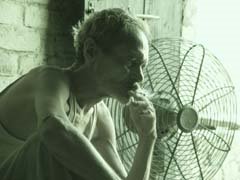
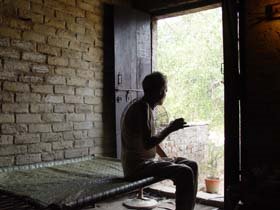
Many suns have died since these lines were written but their time has still not come. So more lines are being created, more suns are being done to death, in that brick dwelling. Inside the four brick walls, the sun that survived, is wreaking havoc with its heat. The room is hot like a furnace. In the middle of the room, over a string cot, lies Lal Singh Dil, writing the last paragraph of his 78-page poem.
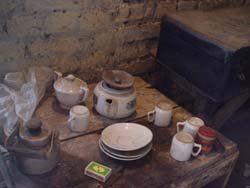
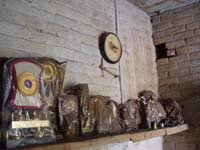
On the cheap register that bears the lashes of his personal history, Dil has noted down the day when he began writing the poem, two years ago. In front of his cot lies another cot, like a berated lover. Few dirty cups share a table with few saucers and two kettles; one made of cheap bone china and the other of aluminium. An old iron trunk plays foootsie with rust in one corner. Numerous mementoes weigh heavily on a cement slab. Their plastic covers have never been lifted. The floor near Dil is littered with Beedis and burnt and unburnt matchsticks.
Jo ladna nahi jaande
Jo ladna nahi chohnde
Wo gulam bana liye jaande ne
(Those who do not know how to fight
Those who do not want to fight
They are turned into slaves)
Lal Singh Dil is sixty-three now. He wrote these lines in 1967 when the thunder spring of Naxalbari reverberated in faraway Punjab. For the first time in his life, he felt as if his life had a mission. There was no point in remaining only a poet now. So Dil picked up a gun and joined the movement.
In his recent unpublished poem, Dil describes a dream where he sees his mother washing his clothes. He tries to hold her and she breaks away, prompting him to write:
Mein kis da putt han?
(Whose son am I?)
It is a manifestation of Dil’s longing for love, which he did not receive from anyone except his mother. Born in the chamar (tanner) community in Samrala town of Punjab, Dil was the first member of his family to finish school. His mother sold off her ear rings to make sure that Dil went right up to college.
Those who know Dil since college days say that he was very handsome and because of this and his poetry, many girls fell for him. There was one girl who wore her hair in plaits and lived in a neighbouring village. She was from an upper caste family. Dil’s friend lived in the same village and so Dil would see that girl often and developed a liking for her. But she died of cerebral haemorrhage. Later Dil would find another girl who looked like that girl, wearing her hair in the same fashion. One day he was invited to that girl’s house where he was offered tea in a steel tumbler. Afterwards, the girl’s mother picked the tumbler with a pair of tongs and threw it in fire to purify it. Dil writes in his autobiography Dastaan (Story) that he can still hear the clank of that tumbler thrown in the fire.
Dil began to write poetry during his college days. One of his early poems was published by Preetlarhi, a leading literary journal of Punjab in those times. He was working as a daily wage labourer when the peasant uprising in Naxalbari spread like wildfire. That was the time when Dil wrote a poem called ‘The shades of Evening’.
After remaining underground for four years, Dil was arrested by the Police. In the lock-up, the upper-caste Police officer slapped Dil hard and shouted: Ab chamar kranti layenge is desh mein? (Would the lower caste bring revolution in this country now?)
For nine months, Dil would face extreme physical torture. He would be subjected to more torture than his fellow comrades because of his caste and because of his poetry.
Soon after his release from the prison, Dil had to go into hiding once again. Only this time the period of hiding was much longer. He fled from his hometown to a village near Lucknow in Uttar Pradesh, where he worked as labourer in mango orchards. He made a comeback in mid 80’s, after a gap of fifteen years.
By that time, the memory of Lal Singh Dil had faded away from people’s memory. He was an icon in 70’s, Samrala’s own Che Guevara. Fifteen years later, he had to open up a tea-stall to make his ends meet. Even that did not last for long. But what did, and still is, is Lal Singh Dil’s ink.
Dil happens to be the contemporary of radical poets like Avtar Singh Pash and Santram Udasi. In ‘The shades of Evening’, based on his experiences during the Naxalbari movement, Dil writes:
The shades of evening
Are old once again
The pavements
Head for settlements
A lake walks
From an office
Thrown out of work
A lake is sucking
The thirst of water
Throwing off all wages
Someone is leaving
Someone comes wiping
On his dhoti
The blood of weak animals
On his goad
The shades of evening
Are old once again
Loaded with rebuke
The long caravan moves on
Along with the
Lengthening shadows of evening
In his one-room hermitage, Lal Singh Dil, the biggest name in Punjabi free verse poetry, spends his last days in penury. He told someone recently that he does not expect anything from anyone.
In the same 78-page unpublished poem, Dil writes:
I do not want to write about my personal sorrows.
Lal Singh Dil’s wounds are too many to heal. And something has to be done with his sorrows also. The shades of evening may have to turn like old once again.
***
This journey became possible because of my friend, filmamker Ajay Bharadwaj. His recent film Kitte Mil Ve Mahi features Lal Singh Dil as radical poet.
Many suns will die
Then
Your era will arrive
Isn’t it?
Many suns have died since these lines were written but their time has still not come. So more lines are being created, more suns are being done to death, in that brick dwelling. Inside the four brick walls, the sun that survived, is wreaking havoc with its heat. The room is hot like a furnace. In the middle of the room, over a string cot, lies Lal Singh Dil, writing the last paragraph of his 78-page poem.

On the cheap register that bears the lashes of his personal history, Dil has noted down the day when he began writing the poem, two years ago. In front of his cot lies another cot, like a berated lover. Few dirty cups share a table with few saucers and two kettles; one made of cheap bone china and the other of aluminium. An old iron trunk plays foootsie with rust in one corner. Numerous mementoes weigh heavily on a cement slab. Their plastic covers have never been lifted. The floor near Dil is littered with Beedis and burnt and unburnt matchsticks.
Jo ladna nahi jaande
Jo ladna nahi chohnde
Wo gulam bana liye jaande ne
(Those who do not know how to fight
Those who do not want to fight
They are turned into slaves)
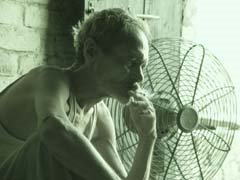
Lal Singh Dil is sixty-three now. He wrote these lines in 1967 when the thunder spring of Naxalbari reverberated in faraway Punjab. For the first time in his life, he felt as if his life had a mission. There was no point in remaining only a poet now. So Dil picked up a gun and joined the movement.
In his recent unpublished poem, Dil describes a dream where he sees his mother washing his clothes. He tries to hold her and she breaks away, prompting him to write:
Mein kis da putt han?
(Whose son am I?)
It is a manifestation of Dil’s longing for love, which he did not receive from anyone except his mother. Born in the chamar (tanner) community in Samrala town of Punjab, Dil was the first member of his family to finish school. His mother sold off her ear rings to make sure that Dil went right up to college.
Those who know Dil since college days say that he was very handsome and because of this and his poetry, many girls fell for him. There was one girl who wore her hair in plaits and lived in a neighbouring village. She was from an upper caste family. Dil’s friend lived in the same village and so Dil would see that girl often and developed a liking for her. But she died of cerebral haemorrhage. Later Dil would find another girl who looked like that girl, wearing her hair in the same fashion. One day he was invited to that girl’s house where he was offered tea in a steel tumbler. Afterwards, the girl’s mother picked the tumbler with a pair of tongs and threw it in fire to purify it. Dil writes in his autobiography Dastaan (Story) that he can still hear the clank of that tumbler thrown in the fire.
Dil began to write poetry during his college days. One of his early poems was published by Preetlarhi, a leading literary journal of Punjab in those times. He was working as a daily wage labourer when the peasant uprising in Naxalbari spread like wildfire. That was the time when Dil wrote a poem called ‘The shades of Evening’.
After remaining underground for four years, Dil was arrested by the Police. In the lock-up, the upper-caste Police officer slapped Dil hard and shouted: Ab chamar kranti layenge is desh mein? (Would the lower caste bring revolution in this country now?)
For nine months, Dil would face extreme physical torture. He would be subjected to more torture than his fellow comrades because of his caste and because of his poetry.
Soon after his release from the prison, Dil had to go into hiding once again. Only this time the period of hiding was much longer. He fled from his hometown to a village near Lucknow in Uttar Pradesh, where he worked as labourer in mango orchards. He made a comeback in mid 80’s, after a gap of fifteen years.

By that time, the memory of Lal Singh Dil had faded away from people’s memory. He was an icon in 70’s, Samrala’s own Che Guevara. Fifteen years later, he had to open up a tea-stall to make his ends meet. Even that did not last for long. But what did, and still is, is Lal Singh Dil’s ink.
Dil happens to be the contemporary of radical poets like Avtar Singh Pash and Santram Udasi. In ‘The shades of Evening’, based on his experiences during the Naxalbari movement, Dil writes:
The shades of evening
Are old once again
The pavements
Head for settlements
A lake walks
From an office
Thrown out of work
A lake is sucking
The thirst of water
Throwing off all wages
Someone is leaving
Someone comes wiping
On his dhoti
The blood of weak animals
On his goad
The shades of evening
Are old once again
Loaded with rebuke
The long caravan moves on
Along with the
Lengthening shadows of evening
In his one-room hermitage, Lal Singh Dil, the biggest name in Punjabi free verse poetry, spends his last days in penury. He told someone recently that he does not expect anything from anyone.
In the same 78-page unpublished poem, Dil writes:
I do not want to write about my personal sorrows.
Lal Singh Dil’s wounds are too many to heal. And something has to be done with his sorrows also. The shades of evening may have to turn like old once again.
***
This journey became possible because of my friend, filmamker Ajay Bharadwaj. His recent film Kitte Mil Ve Mahi features Lal Singh Dil as radical poet.
Thursday, June 29, 2006
Your Painter, yours only
You cannot fool me
In my dreams
By telling me
You are married
I know you are not
The wife of
An Air force officer
You can never be
Because he cannot
Paint with his eyes
Don’t lie to me
Don’t narrate the warmth
Of his joint family
In your letter
Don’t tell me
That you keep fast
For his long life
You don’t lie
To the wind
That ruffles your hair
See your nose ring
In the mirror
Feel it
With your fingertip
My heart beats in it
Sit close to me
Too close to me
Let me paint
Yet another world
For you
Only for you
In my dreams
By telling me
You are married
I know you are not
The wife of
An Air force officer
You can never be
Because he cannot
Paint with his eyes
Don’t lie to me
Don’t narrate the warmth
Of his joint family
In your letter
Don’t tell me
That you keep fast
For his long life
You don’t lie
To the wind
That ruffles your hair
See your nose ring
In the mirror
Feel it
With your fingertip
My heart beats in it
Sit close to me
Too close to me
Let me paint
Yet another world
For you
Only for you
Wednesday, June 28, 2006

Saturday, June 24, 2006
My Mother's 22 Rooms
I cannot sing the old songs, or dream those dreams again - Charlotte Barnard
There it is. Huddled among other dolls and a few shreds of cloth. It is wearing a blue dress. I don’t remember what mine wore, for it has been sixteen years since I saw it. It might not be there anymore, but I would like to believe that it is there, invisible to the new occupants of my house. It is a dancing girl made of earth, decorating a corner of my friend’s drawing room. Touch it a little and it will start dancing, moving her neck gracefully. My dancing girl, mother bought it, when I was a child, from a potter selling his stuff on a pavement in Lal Chowk.
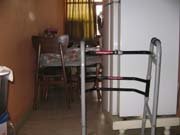
And sixteen years later, as I speak to you, there is no significant noise outside my room. No guttural voice and no sound of my mother’s U-shaped walker making its presence felt through the small corridor of my house. Mother fell down from her bed again this morning.
 23 years ago, in Srinagar, a team of health officials was to arrive at our school. Their aim was to administer cholera vaccines to children. But for that we were supposed to take the written permission of our parents. Back home I told my father and as expected he wrote ‘No’ on my home task diary. I found it very insulting. Tomorrow all my classmates would take the vaccine and sing laurels of their bravery. And me, I would be hidden in some corner, red-faced with shame. It was not acceptable to me. So I erased father’s nay and wrote ‘Yes’ on the diary. Next morning as the needle of the syringe pierced my left arm, I did not even flinch once. I became an instant hero. But as it is with most acts of heroism, I had to pay a price for mine as well. By late afternoon, a lump had formed in my arm. By the time I reached home I was feverish and drenched in sweat. As I pulled off my shoes, mother saw me and in one instant she knew what had happened.
It was August and even by Kashmir valley’s standards, it was hot. I flung myself on the bed. Mother came and sat next to me. She gave me a glass of milk and kept her fair arm on my forehead. It felt very soothing and cold; like a spring. I went off to sleep. Next morning as I opened my eyes, the fever was gone.
Mother handled the affairs of the house like a seasoned ascetic would control his senses. She knew what was kept where. Rice, coal powder, woollen socks and gloves, soap – she kept a tab on everything. Her daily routine was more or less defined. She would wake up in the wee hours of the morning, wash clothes in the bathroom, sweep and mop the floor of every room and corridor, put burning coal dust in Kangris in winters and ultimately take stock of the kitchen. She did not believe much in spending time in worship. She was not an atheist but her belief was restricted to occasionally folding hands in front of the Shivalinga. Her God was her home and hearth.
But mother was in awe of nature. She feared its fury. Sometimes, when a storm blew, she would close all doors and windows and sit in one corner. When she no longer could face it, she would ask my father, “Will this storm stop?” Father would usually try to pacify her, but ultimately he also lost his patience. “What do you think? Would this storm last till the doom’s day?” he would snap at her. But the same meek heart turned into brave heart when any family member struggled with adversity.
It was in the mid of 1988 that my father had a mild heart attack. Actually father had a pain in the stomach and an injection prescribed by a gastroenterologist reacted, which led to the attack. Everyone in the family was too shocked to react. But not my mother. She single-handedly took my father to the hospital in an auto rickshaw. At the hospital, mother recalls, a doctor appeared like an angel. He had a black mark on his forehead, a result of praying five times a day. The moment the doctor started examining him, my father vomited. Mother says it was so intense that it went right into the doctor’s shoes. But not once did he raise his brow. He kept on treating my father.
By the end of 1989, men like that doctor somehow became rare in Kashmir. One day mother came back from office and she was crying. In the bus someone had tried to help an old Hindu lady in getting down from the bus. Another woman, who was a Muslim, criticised that man saying that the woman he helped was a Hindu and she should have been kicked out of the bus. Mother didn’t know whether what she heard was true or whether it was a nightmare. But what she had heard and seen with her naked eyes was what seemed like holding a mirror in front of Kashmir in a few months time. The time had come, once again, to leave our homeland. The migration began. Salvaging whatever little we could, essentially a few utensils and educational degrees of my college-going sister, we reached Jammu.
After spending a couple of nights in a hotel, father hired a room in a marriage house. It was situated in the old city, amidst a bristling market of saris and dupattas. Every now and then marriage ceremonies were solemnised in the marriage house. When the crude ovens, laced with mud and gas cylinders arrived at the house, we would understand that a marriage was taking place that evening.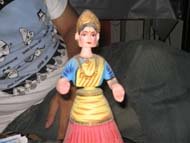
In the ten by ten feet room, ants held a sway. No matter what you put outside, it would be swarmed by ants in a matter of minutes. They appeared in hordes, hundreds of them, attacking every edible item. It was similar to how people would come out on streets in Srinagar, few months before we were forced into exile. Mother obviously could not put up a fight with them, but she always managed to save a bowl of curd from the marauding ants, by keeping it in a basin of water. I always felt that whenever mother took out that bowl of curd, a secret smile would pass her lips. It was like a symbolic victory for her or so I thought.
And one night, that smile was also snatched from my mother’s lips.
I remember that evening. Somebody was getting married in the marriage house. The entire compound was filled with men, women and children, dressed in shimmering clothes. The stereo with huge speakers played popular Bollywood numbers as some of the guests danced on the tunes. And a few metres away, we had closed ourselves in the room.
When the bride was taken away and the noise had eased, there was a knock on our door. Mother opened the door and found a young man standing there. He was holding a plate in his hand. He said that he had been told that there were refugees living here and so he came to offer us some food. Before mother could say something, he handed over the plate and turned back. Mother lifted the cover and I caught a glimpse of the food inside. There was rice, dal and some vegetables. Mother kept on staring at it for some time and then she cried.
After this incident, Mother developed a strange habit. She would tell all, whether they cared to listen or not, “ Our house in Kashmir had 22 rooms”.
For the next few years, we would keep on shuttling from one place to place, becoming victim of the whims and fancies of landlords. We stayed at various places. After the marriage house, we stayed in a window-less room in a dilapidated lodge, where the number of mosquitoes was probably more than the cells constituting our bodies. Then we rented a single room where we ate, studied, slept, cooked and ate our food as well. Then there was another house. The bathroom there had no door and we had to keep on coughing for obvious reasons. Amidst these episodes of Greek tragedy, mother kept her struggle on. Everyday was a battle. From filling water from a leaking tap to bathing under the tap of an adjacent vacant plot, life threw numerous challenges at us.
It was years later that I completed my education somehow and came to Delhi. Few years ago, we bought a 2-bedroom flat in Delhi. But the struggle of Jammu has left a mark on mother. She cannot walk now. Her left leg is paralysed. Sometimes she falls down as she tries to drag her leg. As it happened this morning. She cannot even speak now. Degenerative neurosis, whatever that means. With each passing day, her condition is worsening.
I walk on the road. There is a sea of vehicles moving; endless. Sometimes I feel that there are more vehicles than humans in Delhi. And when I cannot bear the noise any longer, I feel like shouting, “Our house in Kashmir had 22 rooms.”
There it is. Huddled among other dolls and a few shreds of cloth. It is wearing a blue dress. I don’t remember what mine wore, for it has been sixteen years since I saw it. It might not be there anymore, but I would like to believe that it is there, invisible to the new occupants of my house. It is a dancing girl made of earth, decorating a corner of my friend’s drawing room. Touch it a little and it will start dancing, moving her neck gracefully. My dancing girl, mother bought it, when I was a child, from a potter selling his stuff on a pavement in Lal Chowk.
And sixteen years later, as I speak to you, there is no significant noise outside my room. No guttural voice and no sound of my mother’s U-shaped walker making its presence felt through the small corridor of my house. Mother fell down from her bed again this morning.
 23 years ago, in Srinagar, a team of health officials was to arrive at our school. Their aim was to administer cholera vaccines to children. But for that we were supposed to take the written permission of our parents. Back home I told my father and as expected he wrote ‘No’ on my home task diary. I found it very insulting. Tomorrow all my classmates would take the vaccine and sing laurels of their bravery. And me, I would be hidden in some corner, red-faced with shame. It was not acceptable to me. So I erased father’s nay and wrote ‘Yes’ on the diary. Next morning as the needle of the syringe pierced my left arm, I did not even flinch once. I became an instant hero. But as it is with most acts of heroism, I had to pay a price for mine as well. By late afternoon, a lump had formed in my arm. By the time I reached home I was feverish and drenched in sweat. As I pulled off my shoes, mother saw me and in one instant she knew what had happened.
It was August and even by Kashmir valley’s standards, it was hot. I flung myself on the bed. Mother came and sat next to me. She gave me a glass of milk and kept her fair arm on my forehead. It felt very soothing and cold; like a spring. I went off to sleep. Next morning as I opened my eyes, the fever was gone.
Mother handled the affairs of the house like a seasoned ascetic would control his senses. She knew what was kept where. Rice, coal powder, woollen socks and gloves, soap – she kept a tab on everything. Her daily routine was more or less defined. She would wake up in the wee hours of the morning, wash clothes in the bathroom, sweep and mop the floor of every room and corridor, put burning coal dust in Kangris in winters and ultimately take stock of the kitchen. She did not believe much in spending time in worship. She was not an atheist but her belief was restricted to occasionally folding hands in front of the Shivalinga. Her God was her home and hearth.
But mother was in awe of nature. She feared its fury. Sometimes, when a storm blew, she would close all doors and windows and sit in one corner. When she no longer could face it, she would ask my father, “Will this storm stop?” Father would usually try to pacify her, but ultimately he also lost his patience. “What do you think? Would this storm last till the doom’s day?” he would snap at her. But the same meek heart turned into brave heart when any family member struggled with adversity.
It was in the mid of 1988 that my father had a mild heart attack. Actually father had a pain in the stomach and an injection prescribed by a gastroenterologist reacted, which led to the attack. Everyone in the family was too shocked to react. But not my mother. She single-handedly took my father to the hospital in an auto rickshaw. At the hospital, mother recalls, a doctor appeared like an angel. He had a black mark on his forehead, a result of praying five times a day. The moment the doctor started examining him, my father vomited. Mother says it was so intense that it went right into the doctor’s shoes. But not once did he raise his brow. He kept on treating my father.
By the end of 1989, men like that doctor somehow became rare in Kashmir. One day mother came back from office and she was crying. In the bus someone had tried to help an old Hindu lady in getting down from the bus. Another woman, who was a Muslim, criticised that man saying that the woman he helped was a Hindu and she should have been kicked out of the bus. Mother didn’t know whether what she heard was true or whether it was a nightmare. But what she had heard and seen with her naked eyes was what seemed like holding a mirror in front of Kashmir in a few months time. The time had come, once again, to leave our homeland. The migration began. Salvaging whatever little we could, essentially a few utensils and educational degrees of my college-going sister, we reached Jammu.
After spending a couple of nights in a hotel, father hired a room in a marriage house. It was situated in the old city, amidst a bristling market of saris and dupattas. Every now and then marriage ceremonies were solemnised in the marriage house. When the crude ovens, laced with mud and gas cylinders arrived at the house, we would understand that a marriage was taking place that evening.

In the ten by ten feet room, ants held a sway. No matter what you put outside, it would be swarmed by ants in a matter of minutes. They appeared in hordes, hundreds of them, attacking every edible item. It was similar to how people would come out on streets in Srinagar, few months before we were forced into exile. Mother obviously could not put up a fight with them, but she always managed to save a bowl of curd from the marauding ants, by keeping it in a basin of water. I always felt that whenever mother took out that bowl of curd, a secret smile would pass her lips. It was like a symbolic victory for her or so I thought.
And one night, that smile was also snatched from my mother’s lips.
I remember that evening. Somebody was getting married in the marriage house. The entire compound was filled with men, women and children, dressed in shimmering clothes. The stereo with huge speakers played popular Bollywood numbers as some of the guests danced on the tunes. And a few metres away, we had closed ourselves in the room.
When the bride was taken away and the noise had eased, there was a knock on our door. Mother opened the door and found a young man standing there. He was holding a plate in his hand. He said that he had been told that there were refugees living here and so he came to offer us some food. Before mother could say something, he handed over the plate and turned back. Mother lifted the cover and I caught a glimpse of the food inside. There was rice, dal and some vegetables. Mother kept on staring at it for some time and then she cried.
After this incident, Mother developed a strange habit. She would tell all, whether they cared to listen or not, “ Our house in Kashmir had 22 rooms”.
For the next few years, we would keep on shuttling from one place to place, becoming victim of the whims and fancies of landlords. We stayed at various places. After the marriage house, we stayed in a window-less room in a dilapidated lodge, where the number of mosquitoes was probably more than the cells constituting our bodies. Then we rented a single room where we ate, studied, slept, cooked and ate our food as well. Then there was another house. The bathroom there had no door and we had to keep on coughing for obvious reasons. Amidst these episodes of Greek tragedy, mother kept her struggle on. Everyday was a battle. From filling water from a leaking tap to bathing under the tap of an adjacent vacant plot, life threw numerous challenges at us.
It was years later that I completed my education somehow and came to Delhi. Few years ago, we bought a 2-bedroom flat in Delhi. But the struggle of Jammu has left a mark on mother. She cannot walk now. Her left leg is paralysed. Sometimes she falls down as she tries to drag her leg. As it happened this morning. She cannot even speak now. Degenerative neurosis, whatever that means. With each passing day, her condition is worsening.
I walk on the road. There is a sea of vehicles moving; endless. Sometimes I feel that there are more vehicles than humans in Delhi. And when I cannot bear the noise any longer, I feel like shouting, “Our house in Kashmir had 22 rooms.”
Thursday, June 01, 2006
I want to cry
Where do I go now?
Could I possibly
Take my guts out
Clean them
With a toothbrush
And put them back
The night
Has descended
And I wait
For the next morning
To escape
Fom myself
Drown meaninglessly
In trite conversations
And then
In absinthe
Towards the evening
That mail
Has not yet arrived
And mails which have
Put wrinkles
On my forehead
Do I cry
Out of devotion
Or for the lack of it?
I hear nothing
Behind me
And soon
I will hear
Heavy breath
A body will go
Up and Down
I will switch off
The light
And lay awake
In the darkness
I will feel thirsty
And drink water
From the bottle
Would I cry?
Shall I cry?
May I cry?
Can I cry?
What does it take
To just BE
And cry?
Could I possibly
Take my guts out
Clean them
With a toothbrush
And put them back
The night
Has descended
And I wait
For the next morning
To escape
Fom myself
Drown meaninglessly
In trite conversations
And then
In absinthe
Towards the evening
That mail
Has not yet arrived
And mails which have
Put wrinkles
On my forehead
Do I cry
Out of devotion
Or for the lack of it?
I hear nothing
Behind me
And soon
I will hear
Heavy breath
A body will go
Up and Down
I will switch off
The light
And lay awake
In the darkness
I will feel thirsty
And drink water
From the bottle
Would I cry?
Shall I cry?
May I cry?
Can I cry?
What does it take
To just BE
And cry?
Tuesday, May 02, 2006
No sleeping last night
Regrets come back
Like Trade winds
Window panes
Howl in the night
Words whoosh
Like a cannon ball
Sweat dries up
Inside the armpit
Turned elbows
Reflect in the glass
Darkness inside
Tastes like mint
A wet towel
Sheds tears
A drunken man
Sings on the street
A country song
Life long!
Like Trade winds
Window panes
Howl in the night
Words whoosh
Like a cannon ball
Sweat dries up
Inside the armpit
Turned elbows
Reflect in the glass
Darkness inside
Tastes like mint
A wet towel
Sheds tears
A drunken man
Sings on the street
A country song
Life long!
Friday, April 28, 2006
The cherry stain
Miniatures lie
in my cupboard
Like pawns
on invisible,
black and white squares;
staring at me
When I look at them
they evade my eyes
One of them
with a picture of gypsy girl
steals glances at me
Can she hear
the rhubarb of my heart?
What is it really?
A liturgy
or have I been hexed?
In a dark recess
of my heart
I caress the gypsy girl
She puts up
a mock fight with me;
snatching cherries
from the clutches of my lips
Someone knocks on the door
The spell breaks
The gypsy girl is nothing
but a label on a tiny bottle
But I can still smell
the gypsy girl's musk
My shirt is stained
A cherry
has squirted on it
in my cupboard
Like pawns
on invisible,
black and white squares;
staring at me
When I look at them
they evade my eyes
One of them
with a picture of gypsy girl
steals glances at me
Can she hear
the rhubarb of my heart?
What is it really?
A liturgy
or have I been hexed?
In a dark recess
of my heart
I caress the gypsy girl
She puts up
a mock fight with me;
snatching cherries
from the clutches of my lips
Someone knocks on the door
The spell breaks
The gypsy girl is nothing
but a label on a tiny bottle
But I can still smell
the gypsy girl's musk
My shirt is stained
A cherry
has squirted on it
Wednesday, April 26, 2006
The Missing Man
A week after his disappearance, Srikant’s family received an envelope. His father Bhagirath, responding to a knock on the door, collected it from a postman, whose nose was like an eagle’s beak.
Srikant’s name, with his address beneath, was typed neatly on the envelope and on the other side the sender’s name read as: The Marketing Manager, The Times of India. Bhagirath tore it from one corner, with the help of his silver paper cutter, lying on a table. It was a gift in lieu of annual subscription of a weekly magazine. Inside the envelope, Bhagirath found a note and a newspaper cutting. He read the note first.
Dear Mr. Srikant
Kindly find attached a cutting of the advertisement booked by you under the ‘Missing Persons’ column of The Times of India. Your ad appeared in the Delhi and Mumbai edition of the newspaper on March 22. In case of any error in the ad, please contact the Marketing Manager.
Bhagirath looked at the cutting. There was a photograph of a woman, quite clear, despite the cheap newspaper print. The woman smiled in the photograph. She wore a sleeveless T-shirt and trousers and looked very happy posing for this picture. There were details given below. Sneha, aged 34, fair complexion, tall. A small cut on her left arm. Missing from her residence since two months. In case of any information, please contact immediately: Srikant. There was Srikant’s e-mail and his mobile number provided along with his name. The same mobile number which went off that night. The night, when Srikant did not come back home.
Bhagirath felt his head spinning. He caught hold of a corner of the table and sat on the chair, as his legs wobbled. He had no clue about this woman. And he did not know how Srikant knew her and why he had given an ad in the newspaper. And where had he disappeared himself?
That night, the family waited for Srikant’s arrival. If he got late beyond 9 pm, he would always call and inform his father. Or his wife Kavita. Otherwise, they would always have dinner together by 9.30 pm. But that night, when Kavita tried to reach her husband on his mobile, she could not reach him. It was switched off.
By midnight, they were quite worried. Had he met with an accident? They tried calling few friends, with whom he usually spent his evenings. Nobody seemed to have any clue about his whereabouts.
Bhagirath handed over the newspaper cutting to Kavita. ‘Do you know this woman?’ She held it with trembling hands. She looked at it and then read the note. She did not know her. She had never heard her name. She had never seen her.
When he did not come back till the next evening, Bhagirath went to the Police. An hour after he had returned from the Police Station, a Sub-Inspector and a constable came to their house. They wanted to go through Srikant’s belongings. Bhagirath gave a nod.
‘Your son was very fond of books,’ the Police officer said as he looked at the huge rack of books in Srikant’s bedroom. Bhagirath did not know whether the officer was telling him or asking him. He kept silent.
After taking few more pictures of Srikant, they left. Kavita found a book which Srikant was reading the night before he went missing. It lay on his table, over a sheaf of papers. He had drawn some sketches here and there and scribbled in his usual indecipherable writing. The book was a novel by Herman Hesse. Narcissus and Goldmund. She opened it. On one page, Srikant had highlighted a passage from the novel with a fluorescent green highlighter:
A man’s wishes may not always determine his destiny, his mission; perhaps there are other, predetermining, factors.
Srikant’s name, with his address beneath, was typed neatly on the envelope and on the other side the sender’s name read as: The Marketing Manager, The Times of India. Bhagirath tore it from one corner, with the help of his silver paper cutter, lying on a table. It was a gift in lieu of annual subscription of a weekly magazine. Inside the envelope, Bhagirath found a note and a newspaper cutting. He read the note first.
Dear Mr. Srikant
Kindly find attached a cutting of the advertisement booked by you under the ‘Missing Persons’ column of The Times of India. Your ad appeared in the Delhi and Mumbai edition of the newspaper on March 22. In case of any error in the ad, please contact the Marketing Manager.
Bhagirath looked at the cutting. There was a photograph of a woman, quite clear, despite the cheap newspaper print. The woman smiled in the photograph. She wore a sleeveless T-shirt and trousers and looked very happy posing for this picture. There were details given below. Sneha, aged 34, fair complexion, tall. A small cut on her left arm. Missing from her residence since two months. In case of any information, please contact immediately: Srikant. There was Srikant’s e-mail and his mobile number provided along with his name. The same mobile number which went off that night. The night, when Srikant did not come back home.
Bhagirath felt his head spinning. He caught hold of a corner of the table and sat on the chair, as his legs wobbled. He had no clue about this woman. And he did not know how Srikant knew her and why he had given an ad in the newspaper. And where had he disappeared himself?
That night, the family waited for Srikant’s arrival. If he got late beyond 9 pm, he would always call and inform his father. Or his wife Kavita. Otherwise, they would always have dinner together by 9.30 pm. But that night, when Kavita tried to reach her husband on his mobile, she could not reach him. It was switched off.
By midnight, they were quite worried. Had he met with an accident? They tried calling few friends, with whom he usually spent his evenings. Nobody seemed to have any clue about his whereabouts.
Bhagirath handed over the newspaper cutting to Kavita. ‘Do you know this woman?’ She held it with trembling hands. She looked at it and then read the note. She did not know her. She had never heard her name. She had never seen her.
When he did not come back till the next evening, Bhagirath went to the Police. An hour after he had returned from the Police Station, a Sub-Inspector and a constable came to their house. They wanted to go through Srikant’s belongings. Bhagirath gave a nod.
‘Your son was very fond of books,’ the Police officer said as he looked at the huge rack of books in Srikant’s bedroom. Bhagirath did not know whether the officer was telling him or asking him. He kept silent.
After taking few more pictures of Srikant, they left. Kavita found a book which Srikant was reading the night before he went missing. It lay on his table, over a sheaf of papers. He had drawn some sketches here and there and scribbled in his usual indecipherable writing. The book was a novel by Herman Hesse. Narcissus and Goldmund. She opened it. On one page, Srikant had highlighted a passage from the novel with a fluorescent green highlighter:
A man’s wishes may not always determine his destiny, his mission; perhaps there are other, predetermining, factors.
Sunday, April 23, 2006
Tuesday, April 18, 2006

Saturday, April 15, 2006
Then and Now
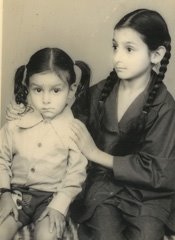
Tomorrow, this girl will become mother of two children. The boy with an elephant drawn on his shorts always rolls his sleeves now, at least till his elbows. His hairline is receding. He hates to wear a watch now. But time moves on.
Of Horses and Illustrations

I have been reading a number of Graphic novels these days. Sharad had got Art Spiegelman's Maus from Manchester. H sent the complete volume of Joe Sacco's Palestine. Last night, I told Sharad that I need to tell a number of stories. Mostly from Kashmir. For my stories, I don't have to depend on 'Saande ka tael' (If you know what I mean).
B said rightly, few weeks back, that if he spends an hour with his village barber, he comes back with a sackful of stories. And his barber is so witty, B tells me. One example of his humour: B sahab, you know there are only two creatures who have benefitted from terrorism in Kashmir - one the horses and two impish children. Horses because there are hardly any tourists now and they no longer have to carry fat Marwari families on their backs. Children because they are no longer required to attend school.
Meanwhile, I am trying to improve my drawing skills. Do you think I stand a chance?
Saturday, March 25, 2006
A Journey from Kashmir to London
A dog-eared copy of Crime and Punishment changed his life. My friend Basharat Peer from Tehelka told me the story of Iqbal Ahmed, who left Kashmir in 1993 to work in London. He was 26. Iqbal worked at a number of places and is currently a porter in a London hotel. It was in Kashmir that he got hold of the classic book and decided to become a writer. His loneliness as an immigrant and the way London failed him inspired him to write a book titled: Sorrows of the Moon, A Journey Through London.
You can read his experiences he shared with the London Review of Books here.
You can read his experiences he shared with the London Review of Books here.
Only one Dream

This is a box item from Page number 113 of Fimlmfare, May 2005 issue. I was flipping through this magazine to pass time as my Hair Dresser Pran drank tea. And then suddenly this page flashed in front of me. As Pran got busy with cutting someone's hair, I silently tore away this page. I could not resist because for long I had been wanting to lay my hands upon these lyrics. These have been penned by Gulzar for film Kinara.
Gulzar says he always wanted to write songs that could be part of narrative. Ek hi khwab... was one such experiment. Gulzar remembers taking this song to Pancham (RD Burman). When he came to learn that Gulzar wanted him to put these words to music, he smacked his head and exclaimed: Koi kaam seedha nahi karta hai.
This song was recorded in Bhupinder's and Hema Malini's voices. Bhupi was given a pair of headphones and asked to strum his guitar spontaneously. Bhupi did it in one take.
Subscribe to:
Posts (Atom)