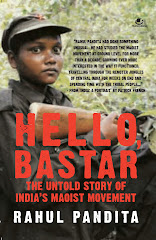

 Posts
Posts


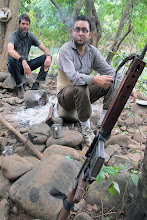
Love dies slowly. Like an ember. More strands of hair have turned grey – the right temple looks like a blooming cotton field. There is dust on bookshelves. Pens look pensive. Empty notebooks lie moth-eaten.
You called up the other day. You sounded tired. Perhaps if we were together, I could have made you some tea. Or I could have made you laugh over some silly joke. Or I could have just curled up next to you, holding your breast in my hand, kneading it softly till all thoughts ebbed away from you.
But I am away. You are away, and you must invent your own remedies. Or just learn to live with pain as I have. In the quiet afternoon, when the sunlight blinds one, I sit with my back resting haphazardly against a crumbling bean bag, facing a window dazzled with light. And I let Susheela Raman’s voice play games with me.
In times like these, earlier, I have run away from everything, taking refuge in hills or hemlock of whisky. Or both. But how many times will I run away? The hills don’t turn me back. But they make my pain so faint, I can no longer recognise myself in the mirror. Your pain gives me identity which the face never gave. So, as long as the pain is there, I can be anything. Like the rebel with a beard, which I sport these days, dreaming of such chaos which throws everything behind us. You and me.
In that chaos we will find each other. Then it will be only a matter of a cup of tea. Or of your breast in my hand.
Saturday, March 13, 2010


Saturday, February 13, 2010
My name is Dharmendra Kumar
The media is overwhelmed with Shahrukh Khan. I mean, I care a damn if his film does not work. Or that the multiplexes are not able to run his film. In any case, the government is so pusillanimous that it won't touch Bal Thackeray. Meanwhile, see what else has been happening in this country:
Dharmendra Kumar, 18, was carrying a light on his shoulder and walking next to the groom’s horse-drawn carriage in Gurgaon when a celebratory shot fired from the carriage accidentally struck his face on Thursday night.
Kumar, who collapsed on the road, died a few hours later in hospital.
A resident of Aligarh in Uttar Pradesh, Dharmendra had come to work in the Capital last week — he had found employment with a tenthouse agency, Krishna Light and Bhaggi, in Gurgaon. Read more...
Dharmendra Kumar, 18, was carrying a light on his shoulder and walking next to the groom’s horse-drawn carriage in Gurgaon when a celebratory shot fired from the carriage accidentally struck his face on Thursday night.
Kumar, who collapsed on the road, died a few hours later in hospital.
A resident of Aligarh in Uttar Pradesh, Dharmendra had come to work in the Capital last week — he had found employment with a tenthouse agency, Krishna Light and Bhaggi, in Gurgaon. Read more...
Thursday, February 11, 2010
Trader of stories
It is 3.45 am. Give me some coffee. Or, can I have some silence, please? I am tired of the noise around me. It makes my head spin. I can feel the bile in my mouth. The noise enters my body and hides in my guts. God, can someone give me shelter? I can trade my stories for a peaceful stay.
Tuesday, February 09, 2010
Journeys

I am writing today because my body is sort of forcing me into it. I have this sinking feeling that refuses to go away, and I think writing – punching the keypad hard – would at least partially take away that feeling. I have also been scared that if I continue like this, not writing at all, my readers will permanently disconnect from me.
It’s not that I have had nothing to say to you or share with you through these weeks. But it’s just that I didn’t know whether my words would be of any importance to you; whether they had the power any longer to inspire you, titillate you, or make you close your eyes and throw your head backwards for a short while. I was not sure. But I should have written anyway. I didn’t, and on that account I am guilty.
Last night it rained in my part of the city. I was caught in it, wholly drenched in it, and through the slush it created on the roads, I moved about, with no particular aim. Actually, I had to run an errand, and after I was done with it, I simply walked to a market complex I used to frequent fourteen years ago when I landed in this city. In ways I’ve changed, the market has changed as well. We have both aged gracefully, I suppose. I went to a bar, and the old waiter recognised me. I ordered some rum, and watched the rain wash over the window panes.
Outside, young boys and girls drank coffee from Styrofoam cups and held hands. Sometimes, they locked lips as well. I watched them from the window of the bar, with a feeling which I thought was a mixture of nostalgia and envy. Neon billboards flickered, displaying discounts on jeans, shoes and Zippo lighters.
In some time I was out. A cab I had called to take me home had been delayed by more than an hour due to traffic jams caused by the sudden downpour. I waited outside for a while, watching two shop attendants planning to fill coke bottles with rum and sipping it on their way home. A team of police swooped upon a gang of Nigerian drug peddlers, pinning them down on the slushy ground, and then pushing them into waiting cars. My cab arrived and I was on my way home thinking about one of the peddlers, a thin boy who moaned in pain caused by a policeman’s foot over his belly.
***
Five days ago I turned thirty-four. Just before that, I made a journey. I think it is sometimes important to undertake journeys – journeys which may not be necessary at all. So you make up your mind, and still, you are not sure about it at all. That is a situation best avoided, more so when journeys which are not necessary at all need to be done. Once the tickets are done, and you take print-outs, the fate is more or less sealed. Still the doubts may lurk but they don’t come in the foreground.
You tell your friends about the journey. By now, probably, you are excited about what the journey may behold for you. A part of your excitement rubs off your friends. They egg you on – offering advice, forgetting the fact that the place you’re visiting is not new to you. Nevertheless, they offer you tips about best hotels, cheap modes of journey, best taverns and eateries. Then their own nostalgia raises head. They have memories attached to certain places you may have been thinking of visiting.
“I used to live just two blocks away.”
“Remember that café, I used to date her.”
They talk mist-eyed about their former beloveds – beloveds now married to somebody else, sharing the photos of their tenth marriage anniversary on the Facebook.
You listen to them in the beginning, and then your own memories lay siege. Then you only pretend to listen. Inwards, you are lost in your own thoughts. Scenes of your own life flash in front of you – of places you had lived in, and cafes you had frequented.
When that happens, you know you will make that journey.
Tuesday, January 19, 2010
The Khaki Fidayeen

The Khaki Fidayeen: Five policemen from Kashmir who have broken the back of militancy in the valley.
Read here.
Pic: Shome Basu
Saturday, December 12, 2009
Somewhere, anywhere

As long as there is fire the mosquitoes keep away. But as soon as the embers begin to die, they come back. And so does the pain in the knee. I sit on the rooftop, alone, caressing a drink, as the smoke from the half-burnt wood stings my eyes. This is a Delhi suburb, soon to be connected with the big city by something which slithers – sometimes through the belly of the earth, and at times overhead on bridges so narrow you’ld think it might come and kiss you on the ground. They call it the Metro. Why does one have to go somewhere, I wonder. Anywhere.
Few weeks ago, not far from my house, a family came to pay obeisance to a measles-curing goddess. Their five-year-old kid got drowned in an open manhole as the father took pains to put on the gearlock of his car. They discovered the young girl’s body the other day in a drain miles away. Life has to go on. So it will. Somewhere. Anywhere. For the young man in my neighbourhood, it goes to his bride’s house tonight. Around sunset a band has arrived. The band members wait outside his house, a bunch of thin men, bogged down by their saxophones, drums and wide belts across their shoulders akin to what models wear in a beauty pageant. Somebody from the groom’s house sends them a few glasses of tea and a few rusks. They sit hunched around a fire made of waste paper and leaves and gulp down the coarse bread, dipping it in the warm tea. Then two of them dig out beedis from a pack and take long puffs from it. Who would have played on their wedding? Probably they would have played at each others' – that is if not occupied elsewhere.
So, yes, the mosquitoes return along with the pain in the knee. The band is playing. And then they go away, accompanying the groom. Silence returns. I can again hear old songs being played out on a radio by a watchman guarding apartments behind mine. He has also lit a fire. When it dies down, the mosquitoes will visit him as well. And who knows which pain will return. But it wouldn’t matter. After all, it has to return somewhere. Anywhere.
Sunday, November 01, 2009

Friday, September 25, 2009
The rebel


She could have been the academician who does the circuit at seminars and round tables. Or the opinion leader in a NGO or a UN body. But she chose to sling a rifle on her shoulders, and stride in the dreaded jungles of Bastar for the sake of the poor and overlooked.
The life and times of senior Naxal leader, Anuradha Ghandy who died of cerebral malaria in April 2008. Her husband, senior Maoist ideologue Kobad Ghandy was arrested in Delhi on September 20.
Read here.
Read here.
Wednesday, September 09, 2009
Erase memories

One day I will just pop some sleeping pills and erase all memories. What do you do with them, anyway? Some you just share with your friends every time whisky and cigarettes are being passed around. They know it well by now. It’s like a journey to a place where you have been a thousand times. You know every turn, every bend, every pothole. The same is with the memories I share with my friends. They know it all by heart by now. They know where I will pause; they know every expression on my face, and where it will change and to what.
But they keep silent. Probably they realise that these mean a lot to me. So they hear it again. “… And then she came with her arms open and hugged me in front of everyone. I still remember she was wearing an electric blue sari….” “We danced all night – she and I – holding each other tight.” “And then I put my coat over her shoulders. She just looked at me and smiled. Oh God, I can’t forget that look in her eyes.”
Even after I am gone, these memories will remain. Over whisky and cigarettes, perhaps, my friends will recall those moments when I told them these stories. Then a time will come when these memories will not belong to me. They will become a part of my friends’ life.
And then they might require those sleeping pills.
Of course, some memories one doesn’t share. They become a part of your bone and flesh. They just lie there, within you, breathing when you breathe. They form patterns when you are not thinking of them, and when you do, they appear, revealing a new aspect every time. Say, for instance, there is a memory of a beautiful foot. Years later, when you think of it, new details emerge. Like a toe ring you had never remembered so far. Or that droplet of sweat on the instep. Or the artistry of the spot where the foot merged with the ankle.
You keep these memories to yourself. They form roots within you. After you have popped those pills, they don’t remain alive among your friends. They become stars.
And then, one day, the heat recedes. They fall on the ground. Ashes. Some day a mad man smears them on his body. He falls. He gets up. He sings. He remembers that foot.
Memories, they don’t go away. They just change form. They always come back.
Monday, September 07, 2009
Noise
Hi there. Do you know someone who can suppress a yawn and an erection at the same time? Just a random thought, nothing else. Don’t read too much into it. Hell, do, if you can’t resist the idea. I am a man of ideas myself, a slave to multiple thoughts which come and go on their own. You could call them gate crashers if there is something like a gate of the mind. Sometimes I think how sane it is to read five books at the same time. More so when one is by Updike and the other by a man called Uday Prakash. The third one is a book I’ve read many years ago and, now, as I read the first two, I develop this strong urge to pick up this one. So it comes out from the shelf – Disgrace by Coetzee. Then the fourth and the fifth one. You wouldn’t want to know their names. If you insist, I may tell you.
What the hell is going on? (Haven’t I been using this hell word lot many times?) Nothing much, except the usual fights with inner demons and the occasional slipping into silence for hours. To put it into perspective, that means locking myself up in a room and wishing all noise – inner and outer – would just go away. But noises are noises after all. They don’t go just because you wish them to. They follow their own routine, their own schedule.
Here I stop. Will tell you more later. There is too much noise right now. Internal. But before I leave, here is the name of the third and the fourth book: The Human Stain by Philip Roth and Ann Weisgarber’s The personal history of Rachel DuPree.
What the hell is going on? (Haven’t I been using this hell word lot many times?) Nothing much, except the usual fights with inner demons and the occasional slipping into silence for hours. To put it into perspective, that means locking myself up in a room and wishing all noise – inner and outer – would just go away. But noises are noises after all. They don’t go just because you wish them to. They follow their own routine, their own schedule.
Here I stop. Will tell you more later. There is too much noise right now. Internal. But before I leave, here is the name of the third and the fourth book: The Human Stain by Philip Roth and Ann Weisgarber’s The personal history of Rachel DuPree.
Sunday, August 30, 2009
Kasauli diaries

Wednesday, August 12, 2009
Left, write
It is too warm outside. And inside, too. The fan sighs. Newspaper sheets disintegrate and are strewn all over. Picture frames lie empty. A candle rues over disfigurement. An old woman stares down from a high-rise apartment visible from the window of the room I am in. She cannot see me. I lie in discomfort, with my back haphazardly resting against a dwarf pillow stuffed with cotton at least thirty years old.
I think of art. Of domesticty. Of lamp designs. Of human body. Of desires and other bodily urges.
Some stories need to be told. I think of them all the time, constructing sentences in my mind but never putting them on paper. At least eighteen notebooks, bought over a period of three months, and many others bought earlier, reek of disuse. The pages of some have turned limp. My eyes are tired. I lie down using a copy of Cold Mountain as pillow. My necks hurts. I take it out and lie on my belly.
I look at my fingers. There are hangnails. I tear off some of them. It is painful.
I want to take a bath. May be have a cold beer. The water flowing from the overhead tank is hot. There is no beer, either. I badly want to read Tolstoy's The death of Ivan Ilyich.
But when do I write?
I think of art. Of domesticty. Of lamp designs. Of human body. Of desires and other bodily urges.
Some stories need to be told. I think of them all the time, constructing sentences in my mind but never putting them on paper. At least eighteen notebooks, bought over a period of three months, and many others bought earlier, reek of disuse. The pages of some have turned limp. My eyes are tired. I lie down using a copy of Cold Mountain as pillow. My necks hurts. I take it out and lie on my belly.
I look at my fingers. There are hangnails. I tear off some of them. It is painful.
I want to take a bath. May be have a cold beer. The water flowing from the overhead tank is hot. There is no beer, either. I badly want to read Tolstoy's The death of Ivan Ilyich.
But when do I write?
Friday, June 26, 2009
Once upon a place: Dispatches from Lalgarh
 Every fire starts from the belly, says Ranjit Mahato. Sitting on a string cot, and occasionally caressing his bandaged leg, Mahato awaits police fury. There is just a large tree and one order between him and the police. A day before, the security personnel have liberated the Lalgarh police station. Now they wait for the order to move forward. Beyond this they dare not go. Two kilometres ahead, the road has been closed by a tree felled by the Maoists. The Maoist leaders had been camping in this area, monitoring the agitation. They have moved ahead. But Ranjit Mahato cannot go anywhere. Where does one go, leaving his home behind, he mumbles. But it is only to himself that he talks.
A month ago, Mahato was seriously injured while escaping from the police who fired at a group of people in the Jhitka forest near his village. The people were planning their further course of action. Lalgarh was virtually cut off from the rest of West Bengal after angry villagers cut roads to protest police excesses against the tribals. On 2 November, 2008,Chief Minister Buddhadeb Bhattacharjee narrowly survived a landmine blast near Lalgarh. The whole agitation in Lalgarh erupted after the police action that followed. But Mahato says the fire had been simmering for quite a while – in their bellies.
For more than three decades Lalgarh had been a CPM bastion. In the neat and tidy tribal houses, the CPM flag shared space with their deities. “We were all CPM,” Mahato says.

But over the years, life had become tougher. In most of the villages there is no electricity. The local CPM leaders would distribute cards meant for people living below the poverty line only among a chosen few – their friends and relatives. In the ration shop the two rupee per kg. rice would be available all the time. But Mahato and many others like him would have no access to it. “We were forced to buy the same rice for seven rupees and it was scarcely available at the shop,” Mahato says. There were job cards of the rural employment guarantee scheme (NREGS). But there was no work. Many people went hungry.
And, then, villagers started noticing a few unknown men. They would just hang around, occasionally asking people if they needed anything. They would ferry sick villagers to the town, and after few days, follow up again, offering free medicine and even monetary help. They demanded nothing in return, except the odd request to help cook a bag of rice which they would bring with them.
In the 2008 panchayat elections, insecure CPM leaders began clamping down on villages in Lalgarh. They forcibly asked villagers to nominate CPM leaders. “One night the CPM workers came with police. They said: ‘CPM supporters stand towards the left and others to the right’. Those at the right were all taken away,” says Mahato. In the Lalgarh block, 70 people were arrested. Meanwhile, the unknown men would pay a visit to the weekly haat in the village, with a rifle now slung on their shoulders. One of them would speak about how the tribals were being exploited, and how the politicians were becoming richer. “The people would listen to them,” says Mahato. By the time the police swung into action, Lalgarh had turned into a Maoist stronghold.
As the police deserted their positions in Lalgarh, the Maoists took over. “They encouraged us to fight with whatever was in our possession,” says a villager.
As the security forces inched forward in Lalgarh, the Maoists retreated deeper, leaving behind villagers. The police along with the central security forces swooped upon village after village, beating up and torturing people, accusing them of being Maoist supporters.
The police have not been issued any specific guidelines except orders to ‘flush out’ the Maoists. Since the Maoists are hardly indulging in direct encounters, the police treats every villager as a suspected Maoist. And that suspicion shows in the way they are dealing with the situation.
The police came to Kuldiha village where they first beat up 45-year-old Vijay Mahato. They didn’t spare anyone – not even an 80-year-old woman, who was dragged by her hair by a policeman. They vandalised everything. Two motorcycles were damaged and then thrown into the village pond. A jackfruit tree was destroyed. “One of them ordered me to raise my hands, and the other started beating me up,” says Vijay. Before leaving, the policemen took away his radio and torch. Shortly afterwards, the entire village fled away, taking shelter in a nearby school. Vijay and his family stayed behind, because they had to tend to their cows. Many young men were picked up. Dozens of such villages are empty now.
Such is the beating Ranjit Mahato has been anticipating.
In Kamarpara village, an old man is the only one left behind. He curls up the moment he sees us entering the village. “I have done nothing,” he pleads. He is too scared after what he has witnessed. Though he does not reveal anything, other villagers who now are in the school, speak of the police brutality. In another nearby village, Janardhan Mahato watched helplessly as policemen beat up his son, and as his daughter-in-law fell at a policeman’s feet, she was kicked away. Even after she had lost consciousness, a police woman kept on slapping her senseless body.
All schools are closed. Some of them have been taken over by the police force. The one such as in Pirakata houses the refugees now.
From a village near Pirakata, Tarun began his walk at dawn. The night before, CPM workers came and beat up many villagers. They escaped in the dawn fearing yet another round of beating by the police. The shops have been closed for many days, and food had been hard to come by. “God only knows how we have survived all these days,” he said, on the way to Midnapore with his wife and three children. They carried a few utensils and a change of clothes. Their most prized possession was a packet of Britannia Tiger biscuits. Midnapore town is about 40 kilometres from their village. They would have to walk it down for many hours in extreme heat.
The heat is so extreme it could kill you in few hours, sapping all water from your body. Before the Lalgarh police station is taken over by the police force, journalists wait with their notebooks and mikes, waiting for the police force to move ahead. A hen flutters around cautiously, stopping, every now and then, on one leg. There is nothing to do except wait. As they do that, journalists pass on bottles of water and potato wafers among themselves. The security men have nothing except their weapons. Some of them have dirty water bottles which they carry with string attached to their belts.

A few stretches secured earlier by the police have been taken hold of by the angry villagers backed by the Maoists. A few armed Maoists have been spotted nearby. Some journalists and a police party rush towards that area. There is a confrontation. From a village nearby, tribals make traditional battle cries to scare the policemen. “Doesn’t it look like as if they are fighting the British?” a photographer says.
Five minutes after the media persons leave for Midnapore town, where they are putting up in two hotels which have doubled their rates ever since, there is a landmine blast. Two policemen are injured. Deep into the forest, the COBRA Special Forces are hunting for Maoists. But the senior cadre has already shifted.
From his hideout, the Maoist’s second-in-command, Comrade Kishenji is readying the Maoist bulletin. He is on phone continuously, giving interviews to news channels. The day police storm into the Lalgarh town, Kishenji has been interviewed by at least two dozen media organisations. That morning, newspapers have quoted the founder of the Naxalbari uprising, Kanu Sanyal saying that Lalgarh is not a communist movement. Kishenji thunders back, his mellow voice turning hard for a while. “Kanu Sanyal is a pheriwala, a hawker for the CPM,” he says. “If you have further questions, please call me in the morning,” he says. “I have two more interviews lined up.” It is already way past midnight.

The Colonypara village is just behind the Lalgarh police station, a small cluster of about 20 houses. There is no electricity, and the only source of water is a lone hand pump. Manju Sen has a NREGS job card, and she got work for three days, last year. But she didn’t receive a penny for it. A month ago, a local Trinamool leader came to her house and took the card away. “I have not seen it ever since,” she says. “At least they could have paid me for those three days.”
The heat has intensified. The temperature hovers around 40 degree Celsius but the relative humidity is about 90 percent. On both sides of the thin stretch of road leading to Lalgarh, there is a dense jungle of Sal trees. The Police and paramilitary jawans sit on both sides, taking positions against an enemy they cannot see. They have no clarity about the operation. “We are not doing anything except wait in this dense jungle, and that is killing us,” said a paramilitary jawan.

But it is not the wait or the Maoists which killed Nabakanta Roy, a jawan of the Central Reserve Police. It was the Union of India. In the absence of any basic facilities like water, he died of a heat stroke. A jawan, who had been walking for miles with a heavy bag of explosives, a bullet proof jacket and two rifles, and without access to drinking water, collapsed just before the Lalgarh police station. We offered him a lift in our vehicle, and some glucose water. About 50 soldiers have been admitted to the hospital with dehydration. Six of them had to be airlifted for urgent medical intervention.
Sitting with his back against a tree, a CRP jawan waits for food to arrive. A fellow soldier has gone searching for water. “There is no action, and this heat is killing me,” he says. There is a pause, and in the silence of the Jhitka jungle, I think I heard his stomach rumble.
He looks at me. His voice is unsoldierly. “I cannot fight when I am hungry.”
Some fires die in the belly.
(The report first appeared as cover story for OPEN magazine, July 3 issue)
Wednesday, June 24, 2009
Misir Besra is free

This is a picture of Misir Besra. He is a top Maoist commander, who was arrested in 2007. Yesterday, he was freed by his comrades in a dare devil operation in a court in Bihar.
My friend Neelesh Misra and your reporter are the only two journalists who have met Besra while he was under arrest. The meeting was organised at a secret location.
Here's my previous story on Misir Besra. In his interview with us, which lasted for two hours, Besra had said that since he was under arrest, his comrades wouldn't trust him any longer. But it seems they do.
Inside Lalgarh

This is your reporter inside the liberated area of Lalgarh in the West Midnapore district of West Bengal. Behind me is a tree felled by the Maoists.
The old man near the tree is my driver, Abdul Azeez, who has been driving in Kolkata since 1955. He is wondering if he could move the tree somehow to enable us to take our car ahead. I told him that would be a big mistake. There might be landmines planted there. So we walked a few kilometres.
The temperature hovered around 40 degree celsius and the humidity was about 90 percent. A day before, a CRPF jawan had died of heat stroke nearby.
But we had to walk - walk in order to meet a senior Maoist leader. So, in the searing heat we walked, taking sips from a bottle containing water mixed with Glucose.
I have more stories to share. Watch this space for more on Lalgarh. Thank you.
Monday, June 15, 2009
Cheers for Fears

As the line between euphoria and arrogance fades in Sri Lanka, there are indications of tough times ahead for the Tamils
Sri Lanka is like Kosovo of February 2008. And Colombo like Pristina. It is as if the nation has just achieved independence. Prabhakaran is dead for weeks now. But the jubilation is far from over in Sri Lanka.
The streets in Colombo are lined with Lankan national flags. They are everywhere. On top of balustrades. Outside booze shops. Over security barricades. Inside broiler chicken shops. “When I saw all the flags and people, my first reaction was: Sri Lanka must have won a Cricket world cup or something,” said a western tourist.
And then there are hundreds of leviathan billboards, featuring the ‘three musketeers’ – President Mahinda Rajapaksa and his two brothers. The most popular of them is of the President hugging his brother, the defence secretary, Gotabhaya Rajpaksa, and for a moment you would think that he will cry any time, overcome with emotion. Every vehicle has a picture of the President, and, of course, the flag. An autorickshaw driver who didn’t have one said a soldier had stopped him the other day, admonishing him for not being patriotic.
In the morning when the Sri Lankans go to work, they all sing the national anthem. In the evening, they do it again, also observing a two-minute silence for the martyred soldiers. Near the foreign ministry in Colombo, the entire staff of a software company is out, holding Sri Lanka’s national flower, the blue water lily, in their hands. “Sri Lanka is freedom,” said a man among them, struggling with his English.
There is palpable relief on the roads. In a city where life is governed by checkpoints and barricades, the prospect of their disappearance seems unreal. The Sri Lankans, particularly its government servants are basking in the glory of post-LTTE attention they are receiving. A publicity officer, who looks after the accreditation issues of foreign journalists, holds a magazine in his hands, and marks some lines of a report on the Lankan crisis. “This line shows how immature reporters are when it comes to our country,” he remarks with a look on his face which could pass off as glee.
The press accreditation card meant for foreign journalists looks like the most important document in Sri Lanka. As a friend working for a French newspaper quipped, “You cannot even piss without that card in your pocket.” The card enables you to roam around Colombo, take pictures if you like, park your vehicle at hotels in the high-security zone. But that is it. The card is of no use when you want to go to the north. That is where the IDP camps are, home to almost 3 lakh Tamil refugees. North is where the Tamils – even those who are not in camps – have been held up in an area 180 kilometres long, from south to north. They cannot come out. Nobody, particularly a Tamil, cannot go in. Repeated requests for access to one of the IDP camps is met with a poker-faced No.
The last hope for those who are denied access is the Media Centre for National Security, set up in a portion of the Colombo swimming club. Like any other colonial-era building, its wooden stairs creak every time somebody climbs up or down. These days they have been creaking too much. A horde of officers are monitoring television channels all across world, and, after every minute or so, they rush upstairs to the director’s office to update him.
Laxman Hullugalle sits in his office, his chair facing a huge Lankan map. The northern areas are pinned by miniature national flags. Some sections of western media had recently been given access to one of the IDP sites. The reports are damning. “The President has asked us to immediately halt permission to journalists. He has been particularly angry about the BBC report,” he says. “We are not from the BBC,” I tell him. “But that BBC reporter was an Indian,” he replies.
We travel to Vavuniya in northern Sri Lanka anyway without the security clearance. This government has been threatening to prosecute journalists who attempt visiting the northern areas. The Army chief said all foreign journalists are working “against his homeland”. A stringer for Reuters news agency was arrested from one of the refugee camps, and his camera confiscated. Another was brutally beaten up, and his beard and hair shorn.
Even aid agency workers are frustrated. Sarasi Wijeratne, an official with the Red Cross said the clear procedures of access were still lacking. Doctors without Borders says that at the Vavuniya hospital, nearly 2,000 patients are packed into a space meant for not more than 400. UK’s Christian Aid has forewarned that the camps are an epidemic waiting to happen. The agency’s Sajid Mohammed, who visited some of the camps said that there are 30 people living in a tent meant for five. “Some of them looked like as if they had not eaten for days,” he said. There are concerns about children, with a survey revelaing that 25 percent of children in some camps suffered from global acute malnutrition. Aid agencies fear the number could be significantly higher now. The camps are believed to be infested with intelligence sleuths who keep an eye on information leaking out.
We managed to speak to some Tamil families near Vavuniya. The meeting was secretly arranged amidst fear of government spies keeping a watch over Tamil-inhabited areas. One Tamil woman said that they were living in difficult conditions since the Sinhalese neighbours looked at them with suspicion. Breaking into tears, another woman said that some of her relatives were living in one of the IDP camps and she had not heard from them.
Getting into Trincomalee, one of the former LTTE bastions in the eastern region is extremely difficult. The media is discouraged from going there. “We don’t allow western journalists at all,” said an army officer at one of the check points.As one enters the main town, the ravages of the war are distinct. Skeletons of buildings riddled with bullets stand as stark reminder of the last days of the battle.
61-year-old Maruthamuthu Sinniah has come back from India after 24 years. He had left with his family in 1985 when the war between LTTE and the Lankan forces was raging on. One night, eighteen of his relatives were killed by unidentified men. Now, he has returned with his wife to a land where his house stood, razed by the Lankan army after they left. They live under a tattered United Nations tarpaulin. Another Tamil man who also returned from India said that he could notice a number of Sinhalese families who did not live there before.
In fact, one major fear is that the government will bring about a massive change in demographics of the Tamil-majority areas, particularly in the north, by providing incentives to Sinhalese. There are fears of settlements on the Israeli model. The army has already declared that it plans to increase its 2 lakh strong force by about 50 percent. “This helps prop up domestic consumption, and it provides a huge force to control the north, and to help impose the government’s political and development plans in the north,” says Alan Keenan of the International Crisis Group.
In Trincomalee, a Tamil man spoke to us about living there. His business (he wished it not to be identified) was gutted down in the riots against Tamils engineered in 1983 by the Sri Lankan navy. “You don’t know what kind of discrimination we are facing,” he said. “Please don’t quote me, they might just kill me,” he said.
Some Tamil families in Trincomalee were bashed up and some even forced to contribute money for a celebration feast. Fingers have been pointed at a new road being built from a Sinhalese village to a Tamil village, with a number of Sinhalese families being settled on both sides of it.
In the Trincomalee town, right in front of a cinema hall owned by a Tamil, the government has all of a sudden declared four ancient banyan trees as protected monument site. The cinema hall owner was scared of speaking to us, but another Tamil man said that the notice board was just a ploy to usurp the cinema hall.
“They will take away everything,” he said. The cinema man wept behind him.
(This report first appeared in the June 19 issue of the OPEN magazine - page 26 and 27.)
Tuesday, June 09, 2009
Under the table

Sunil and Arvind Parmar, owners of a tea stall in Surendranagar, Gujarat, break
for lunch while their servant Mangal, an 11-year-old Dalit boy is made to sit under the table.
This picture was taken by my friend Ritesh Uttamchandani, who is a brilliant photographer as far as I am concerned. He lives in Mumbai. My friend Neelesh Misra told me about him two years ago - Neelesh has earlier done some assignments with him. Now, Ritesh and I are colleagues. But he is in Mumbai, while I am based in Delhi.
I look forward to work with him, preferably in Jharkhand and Orissa (I don't know why!) Meanwhile, you can see some of his work here.
Monday, June 08, 2009
The squirrel

(This squirrel took peanuts from my hands at a hotel in Colombo. Between two appointments, we decided to have beer, and the hotel staff gave us some free peanuts)
The boy with the bomb

The leader hugged him.
With his military fatigues weighing on him, Dayalan could feel the metal buckle of the leader’s belt press against his waist. The leader looked at him for a moment, his hands still resting on Dayalan’s shoulders, and then he said, “Go and destroy the target.”
Almost five months later, Dayalan saw the images of Prabhakaran on TV, his eyes open, as if to convey another message to Dayalan. But the dead don’t speak, and Dayalan knew it only too well; at 17, he had seen enough death. Now the leader himself was dead, a clean bullet hole above his forehead. He wore the same uniform. As for the belt, Dayalan couldn’t see it. But the feel of that buckle returned to him, that haunting symbol of authority against his waist.
It was on 22 December 2008 that soldiers of the Sri Lankan army pounced on Dayalan in Kilinochchi, located in the northern bastion of the Liberation Tigers of Tamil Eelam (LTTE). He was on a mission with a clear brief: he was to mingle with the crowd and get them accustomed to seeing him around. And then he would have received specific instructions – a message to identify his target for him. He would have eased his way towards his target, his finger near a button on his belly bulge. The finger would have pressed the button. And then, there would be a void.
More than slipping towards his target, Dayalan was keen to slip into this void.
The message was still hours away, or maybe a few minutes, he couldn’t tell, when Dayalan found himself surrounded by the army soldiers. He could have bitten his cyanide capsule; like the rest of his militant cadres, he carried one slung around his neck. It was another way to the same void. But when the time finally came, he had that one moment of hesitation. Dayalan’s courage failed him. As he was taken prisoner, he knew reclaiming that courage would be of no help.
At the age of ten, Dayalan became a ‘Black Tiger’ – a member, that is, of the LTTE’s suicide squad. Within the ranks, it’s an honour, they’re told. These are the brave ones, the truly ferocious who have mounted numerous deadly attacks against the LTTE’s enemies, including a former Indian Prime Minister.
At the age of ten, Dayalan became a ‘Black Tiger’ – a member, that is, of the LTTE’s suicide squad. Within the ranks, it’s an honour, they’re told. These are the brave ones, the truly ferocious who have mounted numerous deadly attacks against the LTTE’s enemies, including a former Indian Prime Minister.
On a hill overlooking rubber plantations, Dayalan is now being kept in a camp alongwith 94 other LTTE child soldiers. On one side flows a river. Ringed in by barbed wire, the camp is guarded round-the-clock by the army.
The militant outfit has had a history of recruiting children as a part of its fighting force. According to an estimate, between 1983 and 2002, about 60 per cent of the 14,000 LTTE cadre were children. From 2002 onwards, about 7,000 children had been recruited as soldiers. According to Unicef, 44 per cent of these were girls. Most of these children would volunteer themselves to avenge the death of their parents or escape a life of poverty. Some of them were even abducted by the LTTE and forcibly made to join their ranks.
The LTTE has used child soldiers in carrying out some of the deadliest attacks on the Sri Lankan forces. In 1993 and 1996, it used them along with elite militia forces to overrun two Lankan security complexes, where they seized arms and ammunition worth millions. In 1996, in another attack on a military complex in Mullativu, underage soldiers are believed to have shot dead some 300 Lankan troops after they were disarmed. Child soldiers have also suffered heavy casualties in various offensives. In an attack described as their worst-ever setback, some 3,000 LTTE cadres, most of them children and women, were killed during an attack on a military complex in October 1995.
More than the bloody mound of bodies, how young they were was an outrage at the time. The Sri Lankan government placed the onus of the horror squarely on the LTTE. The authorities in Colombo have always used such underage recruitment as a potent propaganda tool against the outfit. Today, the government has a distinct we-told-you-so air about it, as it showcases camps holding these child soldiers for the global media and aid agencies to ascertain these claims. The bigger plan, of course, is rehabilitation. The children are being given vocational training. “It is important that these children are helped to forget their past,” says Dr Hiranti Wijermanne, a former Unicef consultant who helps the government with child rehabilitation programmes, “and then trained to get employment.”
Dayalan is training to become a tailor. He was one year old when his parents were killed in a bombing by the Sri Lankan Air Force. Brought up in an orphanage run by the LTTE, he was inducted into its suicide squad when he turned ten in 2002. As part of the regimen, he was taught how to use hand-grenades and fire-arms such as the T-56 Chinese rifle. With the infantry, he took an active part in LTTE’s counter-offensive against the army in the Mannar area of the northwest region, where he received severe shrapnel injuries. For training as a suicide bomber, he got the personal attention of Prabhakaran’s son, Charles Antony.
Antony is dead now, and so is his father. And every other LTTE leader Nayakan knew. When he is not at the sewing machine, Nayakan spends time in his bunker bed, staring at two words inscribed in bold letters over a wall at the foot of his bed: ‘Amma, Appa’. Why didn’t he bite that cyanide capsule when surrounded by the army? There is a pause, and then he replies, “I wanted to live.”
Antony is dead now, and so is his father. And every other LTTE leader Nayakan knew. When he is not at the sewing machine, Nayakan spends time in his bunker bed, staring at two words inscribed in bold letters over a wall at the foot of his bed: ‘Amma, Appa’. Why didn’t he bite that cyanide capsule when surrounded by the army? There is a pause, and then he replies, “I wanted to live.”
Among the children in the camp is a young girl, 15-year-old Aruna. She was abducted by the LTTE in 2009 after it faced a severe crunch of soldiers fighting the war. She is from Jaffna, and was being brought up by her mother after her fisherman father died in a boat accident. As she was being taken away, she remembers clutching her mother’s sleeves, frantic for her to save her. But there was not much she could do. Offering one child ensured her own safety, and more importantly, the safety of the other two children younger than Aruna.
After being put up in a camp, where she refused to speak at first, Aruna remembers being hit brutally by one of her trainers. The trainer also ordered her hair cut short. “I cried a lot when they did that,” she recalls. But before she could be properly trained, the war entered its final phase, and her militant captors were overthrown. Her mother managed to pull her out of the LTTE barracks. Then, along with her mother and two siblings, Aruna made it to a refugee camp. From there, she was made to surrender to the army by her mother. All Aruna wants now is to rejoin her family and “continue my studies”. Did she ever meet Prabhakaran? “I don’t know who he is,” she says.
Unlike Aruna, Mary did get to meet Prabhakaran. “I was very happy when I saw him,” she says. From a fisherman’s family in the Mullativu region, Mary says she joined the LTTE in 2007 and was trained by senior women cadres. Three months ago, she was put on frontline duty. “I was very scared as there were bullets flying all around,” she says, “We could hear explosions as well.” As the Lankan army advanced, she slipped away, blending in with other people, and then she surrendered to the army. “I threw away my rifle and just ran away,” she says. Mary was fortunate she was not caught fleeing by the LTTE; girls who were caught ‘deserting’ would have their hair shaven off and be sent back to the frontline. As for the boys, they would be severely beaten.
Vijayan is a soldier who got away – in a sense. His story is not any less horrifying, though. As the LTTE’s death toll rose, it became more and more desperate for recruits. Thus it was that senior cadres of the LTTE dragged 17-year-old Vijayan out of his home in Mullativu on 29 March. The no-fire zone had been shrinking around them, and Vijayan was hiding in a bunker with his family when he was abducted. His parents tried to stop the militants, but all they got for their efforts was the hard end of the rifle butt; a few warning shots fired in the air put an end to the last wisps of resistance.
Vijayan was taken to a training camp with dozens of other children, where they were taught how to handle a rifle and stage an attack. Five days later, he escaped along with few other boys. They were fired at from behind. Many boys died. Vijayan was lucky to get away with bullet injuries on his arm. “But I kept moving in the jungle till I saw the Lankan army,” he says, relieved. His parents are also in a refugee camp, and there’s family life to look forward to. “I want to study further,” he adds.
It was in this camp that another young girl was reunited with her brother after a year. The girl was taken for arms training in June 2008. She was trained with a mortar unit. During the final offensive, she was captured by the Lankan army. Her brother was inducted into the LTTE in February this year, and he spent a few weeks with them before surrendering. The girl was talking to a friend when her brother was brought in. “I cried with joy,” she says. “We want to go back to our mother; we will never leave her again,” says the brother.
It may be a while before these children are reunited with their families. International human rights groups are investigating reported cases of disappearances in at least one refugee camp. All’s not well, they say. “A number of pro-government Tamil paramilitary groups have unhindered access to the refugee camps,” says Charu Lata Hogg of The Coalition to Stop the use of Child Soldiers. Human rights activists also question the legality of camps such as the one where Dayalan and others are interned.
“Let us be clear about one thing: rehabilitation camps, as the government calls them, cannot be run by the military,” says Hogg. “No matter what the government says, these camps are, after all, military-run establishments.”
At least the bullets have stopped flying, some camp inmates would say. It is evening, and all former LTTE child soldiers are to report at the drill ground. A female lieutenant from the Lankan army is in charge. After attendance, the children stand in attention in front of the Sri Lankan national flag – a flag they were once trained to bring down. From the tiger on the LTTE flag to the lion on the Lankan flag, it’s a change they may only faintly grasp the symbolism of. But maybe the real difficulty will be in trying to lead a normal life. Despite all the rehab efforts, their future looks grey. Like the overcast sky above the fluttering flag.
At least the bullets have stopped flying, some camp inmates would say. It is evening, and all former LTTE child soldiers are to report at the drill ground. A female lieutenant from the Lankan army is in charge. After attendance, the children stand in attention in front of the Sri Lankan national flag – a flag they were once trained to bring down. From the tiger on the LTTE flag to the lion on the Lankan flag, it’s a change they may only faintly grasp the symbolism of. But maybe the real difficulty will be in trying to lead a normal life. Despite all the rehab efforts, their future looks grey. Like the overcast sky above the fluttering flag.
(Photo courtesy: David White)
(Some names have been changed to protect their identities. The report appeared first in the June 12 issue of the Open magazine. You can see pics on the page 30 of the June 12 issue at http://www.openthemagazine.com/)
(Some names have been changed to protect their identities. The report appeared first in the June 12 issue of the Open magazine. You can see pics on the page 30 of the June 12 issue at http://www.openthemagazine.com/)
Wednesday, June 03, 2009
Sleepless in Sri Lanka
Some of you must be wondering where I have been all this while. There have been no updates on my book, either. Well, friends, I was in Sri Lanka, trying to get into the war zone.
Reporting in post-Prabhakaran Sri Lanka is very difficult. There is an iron-curtain on media reporting -- so much so that the government has threatened to prosecute journalists who try to report from the northern region.
But, of course, your reporter managed it somehow. At least partially.
I will be soon sharing with you two heart-wrenching stories: one of a 17-year-old boy who was inducted into the suicide sqaud of the LTTE at the age of ten. The other is of a woman, an English teacher, who was sent by the LTTE on a counter-offensive against the Sri Lankan army. Two of her comrades blew themselves off by holding handgrenades in front of their chests. She survived to tell her tale.
Meanwhile, here are few pictures from Sri Lanka.
 (A man holding a fish outside Colombo)
 (Outside a barber's shop near Colombo)
 (An emotional Sri Lankan President embracing his brother, defence secretary Gotabhaya Rajapaksa)
 (An army armed personnel carrier near the war zone in Vavuniya, northern Sri Lanka)
 (A picturesque Lagoon near Trincomalee, the former bastion of LTTE)
 (View near Candy, Sri Lanka)
 (Your reporter inside Trincomalee. No reporter has been able to reach here for weeks now)
Reporting in post-Prabhakaran Sri Lanka is very difficult. There is an iron-curtain on media reporting -- so much so that the government has threatened to prosecute journalists who try to report from the northern region.
But, of course, your reporter managed it somehow. At least partially.
I will be soon sharing with you two heart-wrenching stories: one of a 17-year-old boy who was inducted into the suicide sqaud of the LTTE at the age of ten. The other is of a woman, an English teacher, who was sent by the LTTE on a counter-offensive against the Sri Lankan army. Two of her comrades blew themselves off by holding handgrenades in front of their chests. She survived to tell her tale.
Meanwhile, here are few pictures from Sri Lanka.
 (A man holding a fish outside Colombo)
 (Outside a barber's shop near Colombo)
 (An emotional Sri Lankan President embracing his brother, defence secretary Gotabhaya Rajapaksa)
 (An army armed personnel carrier near the war zone in Vavuniya, northern Sri Lanka)
 (A picturesque Lagoon near Trincomalee, the former bastion of LTTE)
 (View near Candy, Sri Lanka)
 (Your reporter inside Trincomalee. No reporter has been able to reach here for weeks now)
Subscribe to:
Posts (Atom)