

 Posts
Posts


Showing posts with label Kashmir. Show all posts
Showing posts with label Kashmir. Show all posts
Wednesday, August 31, 2011
The Autumn of Hypocrisy
Tonight, they will raise a toast. Tonight, they will pat one another’s backs, and, in the confines of their apartments in New Delhi and elsewhere, may even take out victory marches. Someone might even hurl an imaginary stone, declaring that finally, the Internet Intifada has been successful. Congratulatory messages will flood Facebook and Twitter. After all, a sinister design has been defeated. The Harud (Autumn) Literary Festival, scheduled to be held in Kashmir Valley in the last week of September, has been cancelled. It was a State conspiracy, as they would like everyone to believe.
The truth is that the festival has been sabotaged. A letter circulated on the internet condemned the literary festival, claiming that it would portray a false sense of normalcy in the state. The group circulating the letter also had issues with the organisers’ terming the fest an ‘apolitical’ event.
As a writer who is from Kashmir, and who was invited to be part of this festival, I didn’t care how this festival was being described. I was going to be there to talk about everything I felt strongly about: the killings of the past few summers, the unmarked mass graves, the unfortunate spectacle of an old man being made to frog-jump in front of his son by a CRPF trooper, the untruth about the exodus of Kashmiri Pandits, the hypocrisy of the mainstream media when it came to reporting on Kashmir. I also felt the festival would enable young Kashmiris to interact with prominent writers and artists, and also serve as a platform for them to learn about literature and the process of writing. But saying even this much is apparently taboo. How dare someone teach anything to Kashmiris? After all, young Kashmiris now read Edward Said and Dostoevsky.
As a journalist, every visit to an army officer’s house, draped as it was like a mini Kashmir Arts Emporium, would leave me seething with anger. Here I was, a Kashmiri in exile, who hadn’t even been able to salvage his ancestral shawls and carpets when forced to leave home one cold January night in 1990. And, no, it was not because of Governor Jagmohan.
I feel the same anger now at those who have turned Kashmir into their personal fiefdom, into a monopoly nobody else can touch. All those who opposed the fest—and this includes some of my friends—will get other platforms to present their work. But for many Kashmiris, that opportunity is lost. As a writer friend who was to attend the festival said: “The call for boycott means that those who can express their opinions without being under threat are the only ones who will get a chance to speak. The rest, especially those in Kashmir who have never been part of the conversation before, will find themselves forced to take sides even before the literary festival has begun, silenced in the name of ‘the cause’.”
The process of boycotting this festival has also exposed some severe fault lines in the Kashmir narrative. Somewhere, a careless journalist reported that Salman Rushdie had been invited to attend the festival. This prompted someone to create a ‘Boycott Harud festival’ page on Facebook. Some of the comments here are chilling and one major factor why the organisers decided to call off the festival. One of the members of the organising team, Minhal Hasan, wrote a post on the page denying that Rushdie had ever been invited. She added: ‘We seek support for the spirit of the festival which is plural, inclusive and aims to be a platform for free speech and expression.’ One Adil Lateef responded to her post, writing: ‘Just come here, we will behead you.’ Another wrote: ‘Whoever defends a blasphemer is a blasphemer and should be stoned to death.’
When two of my writer friends took a stand against the festival, I was flooded with calls from journalists of both the national and foreign press for a counter quote. In one of my earlier statements to a news agency, I mentioned how this summer had been peaceful in Kashmir and how I hoped that the fest would bring further intimations of peace. In an hour, the agency reporter called me back. He wanted me to elaborate on ‘peace’. That is when it struck me: I had stepped on a land mine. I immediately made my stance clear. I said: “The festival will not make CRPF soldiers disappear from the streets. The fundamental issues about Kashmir will remain the same. But the festival should be held since I personally know so many Kashmiris who are keen to tell their stories. We need to hear them out.”
We need to hear the young MBA graduate who connected with me on Facebook, and then again, by sheer coincidence, in a protest outside Kashmir University last summer. We need to hear journalist Suhail Bukhari, who was forced to take refuge in Delhi after he was booked for waging ‘war against the nation’ because he had simply chosen to report the truth. We need to hear political activist Anjum Zamrud Habib, who was wrongly declared a convict and sent to prison. Anjum was supposed to attend the festival, but backed out once the battlelines were drawn, forcing everyone to take stands.
Some of those opposed to the festival had also called some invitees in order to dissuade them from attending it. They issued veiled threats as well. “We will be launching smear campaigns against those who decide to attend this festival,” one of the invitees was told. For me as well, I am told, they had devised a strategy. They had plans of dubbing me a ‘right-wing fascist’ who is also a member of the Kashmiri Pandit group Roots in Kashmir (RIK). I laughed when I heard this. The fact is that because of my position on Kashmir, I am hated by every RIK member, except one, a young man called Aditya Raj Kaul who remains a friend despite our ideological differences. I am sure even my friend Yasin Malik, against whom the RIK had initiated many campaigns, will be amused. Will the general-secretary of the party for whom one of those opposed to the festival used to make revolutionary posters in his student days call me right-wing? Well, best of luck, mates.
This reminds me of a musical a group of students had wanted to organise at Kashmir University some time ago and were forced to call off. The future of Kashmir will also depend on who emerges a winner in such battles: those who opposed this musical or who were for it. Unfortunately, those who opposed Harud have ended up strengthening radical voices in Kashmir.
To my Kashmiri friends I say this: we need to fight our own battles. The Twitter messiahs will come and go. They have no stake in our story. For them, we are just case studies. For another article. Or a film. Or white paper. It is time we owned our stories. The story of Fancy Jan, who received a bullet in her heart. The groom whose henna-dyed little finger went lifeless. The old poet in whose forehead they drilled a nail in place of his tilak. Or the young Kashmiri who travelled from Delhi to Jammu in June 1997, and, at the Punjab-Jammu border, saw a photo of his brother’s bullet-ridden body splashed on the front page of Daily Excelsior.
I will tell that last story. Harud or no Harud.
+++
Rahul Pandita is a Kashmiri writer. A staffer with Open, he was a member of the advisory committee for the Harud literary festival
.


Tuesday, January 19, 2010
The Khaki Fidayeen

The Khaki Fidayeen: Five policemen from Kashmir who have broken the back of militancy in the valley.
Read here.
Pic: Shome Basu
Friday, April 24, 2009
Shock Therapy
Probably by now you are tired of this: I have not been writing again.
On my work station, I have pinned up stuff, which I thought would prod me into clobbering my keypad every day: A September 1, 1952 cover of Life magazine, with Hemingway on it. The issue carries his entire novel, The Old Man and the Sea.
Then there are these two messages which are supposed to have been put by writer Philip Roth on his desk: Stay Put, No optional striving. There is also a poem from Dushyant Kumar, and an old picture from rural Kashmir.
But nothing has worked. The moment I sit at my desk, my hands turn limp, and lead gets filled into my arms and head. I feel sleepy as well.
I open a blank file on my desktop, and stare at the cursor, thinking of how to push through the debris of stillness. After a point of time, I give up. I go out, light a cigarette, and exchange words with colleagues. When I come back, Hemingway is looking grimly at me. I evade his stare.
It’s like this: I need to finish writing The Last Man from Kashmir. I have the story which I need to pour out in words.
Last night, I finished reading Sylvia Plath’s Bell Jar. I wonder: do I need shock therapy, too?
On my work station, I have pinned up stuff, which I thought would prod me into clobbering my keypad every day: A September 1, 1952 cover of Life magazine, with Hemingway on it. The issue carries his entire novel, The Old Man and the Sea.
Then there are these two messages which are supposed to have been put by writer Philip Roth on his desk: Stay Put, No optional striving. There is also a poem from Dushyant Kumar, and an old picture from rural Kashmir.
But nothing has worked. The moment I sit at my desk, my hands turn limp, and lead gets filled into my arms and head. I feel sleepy as well.
I open a blank file on my desktop, and stare at the cursor, thinking of how to push through the debris of stillness. After a point of time, I give up. I go out, light a cigarette, and exchange words with colleagues. When I come back, Hemingway is looking grimly at me. I evade his stare.
It’s like this: I need to finish writing The Last Man from Kashmir. I have the story which I need to pour out in words.
Last night, I finished reading Sylvia Plath’s Bell Jar. I wonder: do I need shock therapy, too?
Wednesday, April 08, 2009

Tuesday, December 30, 2008
Family Tree

I know nothing about my family beyond my great grandfather. My grandfather, who was a Sanskrit scholar, and who dabbled in astrology as well, died in the November of 1985. A day before he died, he had been shifted to a hospital. I remember my mother had come home in the evening after visiting him, and, in the night, as my father prepared to lay our beds, she advised him against it. “We won’t require them,” she said. True to her word, a little after midnight, the message came from the hospital. Grandfather had passed away in his sleep with my eldest uncle by his side.
I was too young then – a boy, who would turn ten coming February. And I had no inclination towards knowing about my ancestors. It was only after my grandmother’s death in 2003 that my ignorance turned into a void. I had just returned from Baghdad after covering the war for a news channel. I remember looking at my ailing grandmother, who lay in her bed, her breath running up and down her chest like a squirrel.
The next morning, I left for Benares. The same night, she passed away.
I remember feeling nothing about it after I had kept down the phone. Death, no matter whose it is, leaves my father shaken. I remember offering to return immediately even when I didn’t really mean it. Father, I suppose, didn’t want to ruin my trip.
“Don’t worry, I’ll manage,” he said, while trying to hold back, in vain, his anxiety.
I didn’t turn up for the cremation. After I returned, two days later, I remember sitting at the spot where my grandmother had breathed her last. Still, I felt nothing.
A year later, I began researching for my novel, set around the 1947 tribesmen attack on Kashmir. My maternal uncle – a boy of ten in 1947 – was in the north Kashmir town of Baramulla when the tribesmen came in buses, entering through the border town of Uri and plundering it. Baramulla came next.
One muggy evening, in June 2004, my maternal uncle and I sat on a sofa, in the backdrop of a noisy air-conditioner.
And then he began telling me about his life.
It was till dawn that he told me about those days – on how, along with the Mahura power station, their lives were plunged into darkness. The conversation – one way most of the time – continued for almost a week. He returned to Jammu, where he lives in a one-bedroom flat, nursing his diabetic wife, after their only son was dragged out of the bus by terrorists, in 1997, and shot dead. I kept on asking him, over phone from Delhi, and in person whenever I visited Jammu or when he revisited us, till a complete picture of the family from my mother’s side was evolved.
A majority of those memories forms the basis of my novel.
In the past five years or so, I have made many enquiries about my paternal side. Most of the knowledge I have acquired doesn’t go beyond my grandfather. My youngest uncle, who in his youth has experimented with writing and theatre, and who retired last year from active government service, blames his two elder brothers for lack of interest. He says he was too young when his father and mother could have spoken about the family. I don’t completely buy that argument but I can’t blame him or his two elder brothers. All of them spent their lives – first in establishing themselves in their respective positions and saving money for the construction and, later, the renovation of the house they painstakingly built in what was then a Srinagar suburb, and then dealing with the post-exile trauma in much part of the 1990s, after driven out of the valley.
Today, all I know about my great grandfather is that he was named after the preserver in the Hindu trinity – Lord Vishnu. He was fond of opium and became a widower shortly after my grandfather was born. In fact, I have learnt that after my grandfather was born, he fell seriously ill. His distraught mother – my great grandmother, is believed to have prayed to the God to spare his life and instead take hers.
The same day, she passed away. A day later, my grandfather’s condition improved considerably, and he lived up to his mid seventies. So, whole my grandfather spent his life in the service of the language of the Gods, his father lay dazed in Opium smoke, flirting with married women in the neighbourhood. He had many lovers, and spent most of his time reciting Kashmiri poetry to them.
As a young man, when I would write passionate letters to the women I fell in love with (which was quite often), my father would sometimes discover them, and then remark that I was a reincarnation of my great grandfather.
I am sure he must have also suspected me of experimenting with Opium.
I have two New Year resolutions. One, I strive to write every day. Two, I will visit the holy city of Haridwar and get a family tree made.
I better learn more about a man called Vishnu.
May be I could learn a trick or two about love as well.
Friday, October 03, 2008


Wednesday, September 17, 2008
Grenades as metaphors
I have come back from Kashmir, my third trip in the last two months. This time I almost got lynched at Nawhatta, in downtown Srinagar. My colleague, photographer Shome Basu was also caught badly in an incident of stone pelting.
The Kashmiris are too angry.
 But in between, we got some time off and, one afternoon, the two of us went to the Ahdoos for lunch. The hotel’s restaurant was empty because, one, it is the month of Ramzan, and two, a strike had been called by the separatists, and nobody was in a mood to enjoy lunch. So, we got the seniormost and, obviously, the most experienced waiter to serve us.
We had rice, Roganjosh and Haakh.
I felt so sleepy afterwards that I was tempted to cancel all my post-lunch appointments. But after a strong Kehwa, I continued my interviews, and also managed to witness a major clash between a bunch of youth and the paramilitary forces.
 This was when a young man died – a man who was not even taking part in the protests. He had just stepped out to buy toffees for his nephew when a rubber bullet him, and he died on the spot.
A day later, I met that two-year old nephew of his. He is still under shock and all his chirpiness is gone. He is almost paralysed by the shock.
Back at the hotel, the image of that boy kept on haunting me. Till Muzamil Jaleel arrived, and till midnight regaled us with his anecdotes.
 As we invoked Bacchus, 'Z' drooled at Sridevi’s rain dance sequence in a film of 80s. Noticing that, Muzammil made a dig at his alleged virginity at the age of thirty-two.
“It makes no sense to watch someone hurl a grenade; one has to do it himself,” he said.
In Kashmir, only examples of grenades or bullets serve as metaphors.
The Kashmiris are too angry.
 But in between, we got some time off and, one afternoon, the two of us went to the Ahdoos for lunch. The hotel’s restaurant was empty because, one, it is the month of Ramzan, and two, a strike had been called by the separatists, and nobody was in a mood to enjoy lunch. So, we got the seniormost and, obviously, the most experienced waiter to serve us.
We had rice, Roganjosh and Haakh.
I felt so sleepy afterwards that I was tempted to cancel all my post-lunch appointments. But after a strong Kehwa, I continued my interviews, and also managed to witness a major clash between a bunch of youth and the paramilitary forces.
 This was when a young man died – a man who was not even taking part in the protests. He had just stepped out to buy toffees for his nephew when a rubber bullet him, and he died on the spot.
A day later, I met that two-year old nephew of his. He is still under shock and all his chirpiness is gone. He is almost paralysed by the shock.
Back at the hotel, the image of that boy kept on haunting me. Till Muzamil Jaleel arrived, and till midnight regaled us with his anecdotes.
 As we invoked Bacchus, 'Z' drooled at Sridevi’s rain dance sequence in a film of 80s. Noticing that, Muzammil made a dig at his alleged virginity at the age of thirty-two.
“It makes no sense to watch someone hurl a grenade; one has to do it himself,” he said.
In Kashmir, only examples of grenades or bullets serve as metaphors.
Thursday, July 03, 2008
Geelani's shit and Hindu "hit"
Every morning, Syed Ali Geelani sits on a white porcelain commode, probably imported from Saudi Arabia. His shit, full of anti-India sentiments, travels through pipes to the Wular Lake in his hometown Sopore, in Kashmir, and contributes, on a daily basis, to the shrinking of what used to be Asia’s largest fresh water body. Over the years, Geelani’s morning ritual has been responsible for shrinking the lake area from 202 square kilometres to 30 square kilometres. In Srinagar, meanwhile, his other colleagues, who have been on the streets to force the cancellation of land allotment to the Shri Amarnath Shrine Board, citing ecological reasons among others, do the needful with the Dal lake, adding their bit to the 35 million litres of sewage, which is pumped daily into the lake. On top of it, they run houseboats, where clueless Indian families bite into succulent Goshtaba and get photos clicked in traditional Kashmiri attire.
Together with the government and a former Governor, the Geelanis of Kashmir have turned our sentiments into a Draupadi, each party gambling with a loaded dice.
Last year, it was powdered ice. On television, they showed the Governor’s men, with their boots on, inside the sanctum sanctorum, enhancing the size of Shivling as if it were a female model in dire need of a silicon implant. Then, this year, we were shown visuals of an artificial, marble Shivling being made in Udaipur, Rajasthan which, we were told, would be put inside to enable the piligrims to have a “complete darshan.”
To hell with you all! You think, people are spending money on their Kashmir travel and they have to have a “paisa vasool” through the darshan of a full-size, artificial Shivling. For you, a visit to Amarnath may be picnic. For us, it’s a way of life.
My early memories of our tryst with Shiva come from an aunt who would, every morning, sing Ateebheeshan katubhashan, Yama kinkar patli…, her eyes brimming with tears, begging Shiv to be present when the Yama took her to another world. It meant decorating Shiv as a bridegroom, with silver foil and bel patra, every Shivratri, when snow would reach till our bedroom window. It meant that dream which my father saw as a young man with a new job, in which Shiv appeared and guided him through some confusing office accounts. It means my sister trying to explain to her friends: “We are Shaivites.”
So, you see, I don’t care whether you get that land or not. I don’t care for your darshan as well. But please, leave that Shivling alone.
Yesterday, in an Indian Express photo, Rajnath Singh was caught offering a ladoo to Venkaiah Naidu. Both men could not hide their glee. In the election season, they couldn’t have asked for more. On NDTV, they are showing five men and a woman in Jammu – BJP supporters – wearing Vaishno Devi bandanas, shouting slogans for the benefit of cameras.
“Jo Hindu hit ki baat karega, wo hi desh pe raaj karega.” The woman almost looks like the one in Jammu’s Bakshi Nagar, who washed the walls of her cowshed with cheap distemper, and offered it to my uncle’s family for renting, immediately after our migration from the valley in 1990.
Of course, after almost two decades, we are welcome in Kashmir. Last year, they even allowed the Janamashtami procession. So, as long as we come for a weekend trip, stay in a hotel or a houseboat, buy carpets and shawls as souvenirs for family and friends, we are most welcome. But what about our houses? Our jobs? Our orchards? Errr… you see, Pandit ji, we cannot guarantee your safety. The Afghanis don’t spare us, either.
So, you please stay in Jammu. We will come and visit you. And, of course, you have your ration cards. Pandit ji, you must be a little optimistic. Jammu is not that bad. Now you even have replicas of Kshir Bhawani and Hari Parbat. I must leave now… for Islamabad… sorry, Anantnag.
Meanwhile, 290 kilometres away from Jammu, as those yellow Border Road Organisation milestones would tell you, a man, a free man, sits on a Kashmiri carpet, beside a hookah, tearing apart choicest pieces of lamb. His name is Farooq Ahmad Dar.
You know him very well. He is also called Bitta Karate.
Together with the government and a former Governor, the Geelanis of Kashmir have turned our sentiments into a Draupadi, each party gambling with a loaded dice.
Last year, it was powdered ice. On television, they showed the Governor’s men, with their boots on, inside the sanctum sanctorum, enhancing the size of Shivling as if it were a female model in dire need of a silicon implant. Then, this year, we were shown visuals of an artificial, marble Shivling being made in Udaipur, Rajasthan which, we were told, would be put inside to enable the piligrims to have a “complete darshan.”
To hell with you all! You think, people are spending money on their Kashmir travel and they have to have a “paisa vasool” through the darshan of a full-size, artificial Shivling. For you, a visit to Amarnath may be picnic. For us, it’s a way of life.
My early memories of our tryst with Shiva come from an aunt who would, every morning, sing Ateebheeshan katubhashan, Yama kinkar patli…, her eyes brimming with tears, begging Shiv to be present when the Yama took her to another world. It meant decorating Shiv as a bridegroom, with silver foil and bel patra, every Shivratri, when snow would reach till our bedroom window. It meant that dream which my father saw as a young man with a new job, in which Shiv appeared and guided him through some confusing office accounts. It means my sister trying to explain to her friends: “We are Shaivites.”
So, you see, I don’t care whether you get that land or not. I don’t care for your darshan as well. But please, leave that Shivling alone.
Yesterday, in an Indian Express photo, Rajnath Singh was caught offering a ladoo to Venkaiah Naidu. Both men could not hide their glee. In the election season, they couldn’t have asked for more. On NDTV, they are showing five men and a woman in Jammu – BJP supporters – wearing Vaishno Devi bandanas, shouting slogans for the benefit of cameras.
“Jo Hindu hit ki baat karega, wo hi desh pe raaj karega.” The woman almost looks like the one in Jammu’s Bakshi Nagar, who washed the walls of her cowshed with cheap distemper, and offered it to my uncle’s family for renting, immediately after our migration from the valley in 1990.
Of course, after almost two decades, we are welcome in Kashmir. Last year, they even allowed the Janamashtami procession. So, as long as we come for a weekend trip, stay in a hotel or a houseboat, buy carpets and shawls as souvenirs for family and friends, we are most welcome. But what about our houses? Our jobs? Our orchards? Errr… you see, Pandit ji, we cannot guarantee your safety. The Afghanis don’t spare us, either.
So, you please stay in Jammu. We will come and visit you. And, of course, you have your ration cards. Pandit ji, you must be a little optimistic. Jammu is not that bad. Now you even have replicas of Kshir Bhawani and Hari Parbat. I must leave now… for Islamabad… sorry, Anantnag.
Meanwhile, 290 kilometres away from Jammu, as those yellow Border Road Organisation milestones would tell you, a man, a free man, sits on a Kashmiri carpet, beside a hookah, tearing apart choicest pieces of lamb. His name is Farooq Ahmad Dar.
You know him very well. He is also called Bitta Karate.
Monday, May 05, 2008
The story that never took off
More than a year ago, I tried working on a story about a man, born in Kashmir, immediately after the land was formed out of the water body.
It went on like this:
In the beginning there was only water.
Even one’s thought could not go beyond it without getting wet. Nothing escaped it. Water overwhelmed. It shocked. Its massive tongue devoured everything.
And then, one day, the Earth woke up.
It yawned and the mountains trembled. The tremors created a massive vent, which sucked the entire water, like marrow from a bone. Someone, I do not remember now who, told me that I was born immediately afterwards.
My ancestors broke up from their group, while travelling through the mountains of Hindukush. My mother was carrying me in her womb when the breakaway group arrived in the newly-formed land.
The water had left its mark everywhere. The land was still a slush at most of the places. But something about the place stuck them so much that the group decided to settle there. And that is where I opened my eyes, escaping narrowly from being strangulated by the umbilical cord.
It went on like this:
In the beginning there was only water.
Even one’s thought could not go beyond it without getting wet. Nothing escaped it. Water overwhelmed. It shocked. Its massive tongue devoured everything.
And then, one day, the Earth woke up.
It yawned and the mountains trembled. The tremors created a massive vent, which sucked the entire water, like marrow from a bone. Someone, I do not remember now who, told me that I was born immediately afterwards.
My ancestors broke up from their group, while travelling through the mountains of Hindukush. My mother was carrying me in her womb when the breakaway group arrived in the newly-formed land.
The water had left its mark everywhere. The land was still a slush at most of the places. But something about the place stuck them so much that the group decided to settle there. And that is where I opened my eyes, escaping narrowly from being strangulated by the umbilical cord.
Sunday, May 04, 2008
The professor of Calculus
He walked alone on a frosty winter morning. Fresh snow had fallen in the night, and the sky was overcast. Beneath the soft cushion of the fresh snow lay hidden a muddy crust of ice, capable of breaking the bones of the children and the aged, should they slip over it.
He walked fast, trying to keep pace with the calculations his mind had gotten into. Inside the long pheran, the stitches of which were torn from one side, the thumbs of his both hands moved together over the lines around his fingers.
It was over these lines, many years ago, that his father had taught him counting and, the habit had stayed with him. He no longer attempted simple problems of addition or subtraction. It ran much deeper now, so much so that people around him thought he had gone mad.
Dinanath’s entire life, one could say, revolved around Calculus. A professor of history, who was also a Marxist, had met Dinanath during a marriage ceremony and is said to have remarked later, “Calculus is the opium of the masses.”
Dinanath was still solving equations when he crossed the Ganpatyar temple. The sound of bells along with multiple voices of people singing hymns in praise of the elephant God, Ganesha, could be heard on the road outside, and, in fact, till the last corner of the street.
Beside the temple, the old milkman was beginning to set up his shop. He sat on a goatskin with a Kangri kept next to him. From the circular loop of wicker, on the top of the earthen pot, hung a silver spoon, used to stir the burning coal inside.
“Oye Dina,” the man shouted when he saw him, “where are you headed towards, in this cold wave?”
Dinanath stopped. His fingers stopped as well. He turned his head and looked at the milkman. And then, without uttering a word, he moved on.

On the wooden bridge – one of the seven built over the river Jhelum, Dinanath stopped. He leaned over the railing and looked at the water. That was when his neighbour, Ratanlal spotted him.
“Dinanath,” he said sarcastically, “are you done with your mathematics? Are you contemplating jumping into the water?”
Dinanath looked at him and, then, he looked back at the grey waters.
“I don’t need to jump over to establish contact with water,” he said slowly, almost weighing his every word.
Ratanlal laughed. “What do you mean, my learned Sir?” he asked.
Dinanath touched the railing and, with the knuckles of his right hand, he began hammering against it. And then he said: “You see, Ratanlal, I am on the bridge, the bridge is on water; bridge bridge cancel, I am on water.”
And then he let out a smile. As Ratanlal looked, Dinanath’s hands went back inside the pheran. It was time for some more Calculus.
(In this story, I have tried to imagine the world of a man, who is believed to have lived in Srinagar around the Habbakadal area - a man who, it is said, was in love with mathematics and philosophy)
Photo courtesy: kplink.com
He walked fast, trying to keep pace with the calculations his mind had gotten into. Inside the long pheran, the stitches of which were torn from one side, the thumbs of his both hands moved together over the lines around his fingers.
It was over these lines, many years ago, that his father had taught him counting and, the habit had stayed with him. He no longer attempted simple problems of addition or subtraction. It ran much deeper now, so much so that people around him thought he had gone mad.
Dinanath’s entire life, one could say, revolved around Calculus. A professor of history, who was also a Marxist, had met Dinanath during a marriage ceremony and is said to have remarked later, “Calculus is the opium of the masses.”
Dinanath was still solving equations when he crossed the Ganpatyar temple. The sound of bells along with multiple voices of people singing hymns in praise of the elephant God, Ganesha, could be heard on the road outside, and, in fact, till the last corner of the street.
Beside the temple, the old milkman was beginning to set up his shop. He sat on a goatskin with a Kangri kept next to him. From the circular loop of wicker, on the top of the earthen pot, hung a silver spoon, used to stir the burning coal inside.
“Oye Dina,” the man shouted when he saw him, “where are you headed towards, in this cold wave?”
Dinanath stopped. His fingers stopped as well. He turned his head and looked at the milkman. And then, without uttering a word, he moved on.

On the wooden bridge – one of the seven built over the river Jhelum, Dinanath stopped. He leaned over the railing and looked at the water. That was when his neighbour, Ratanlal spotted him.
“Dinanath,” he said sarcastically, “are you done with your mathematics? Are you contemplating jumping into the water?”
Dinanath looked at him and, then, he looked back at the grey waters.
“I don’t need to jump over to establish contact with water,” he said slowly, almost weighing his every word.
Ratanlal laughed. “What do you mean, my learned Sir?” he asked.
Dinanath touched the railing and, with the knuckles of his right hand, he began hammering against it. And then he said: “You see, Ratanlal, I am on the bridge, the bridge is on water; bridge bridge cancel, I am on water.”
And then he let out a smile. As Ratanlal looked, Dinanath’s hands went back inside the pheran. It was time for some more Calculus.
(In this story, I have tried to imagine the world of a man, who is believed to have lived in Srinagar around the Habbakadal area - a man who, it is said, was in love with mathematics and philosophy)
Photo courtesy: kplink.com
Tuesday, April 22, 2008
Gods' court marriage
I am late again. It is close to midnight as I drag my feet, climb the eighteen stairs that lead to my first-floor flat, and gently knock at the door with my car keys. A faint cough sounds from inside – that is my father’s way of telling me that there is no need to knock again, he is awake. In a moment the door opens and I am let in.
My clothes reek of cigarette smoke. My dinner is kept on the table, covered with my mother’s old shawl to keep it warm. After tearing open the day’s posts – bank statements, old copies of magazines which should have arrived a week ago, books, free passes – I sit down to eat. On the table, beside a reclining Ganesha, there is an almanac and a tattered copy of Shiv Mahimnastotram.
“Don’t eat anything impure tomorrow, it is Ashtami,” my father’s voice almost gets drowned in the hum of the ceiling fan. A siren begins to blare somewhere and, on the road below, the watchman, probably drunk by now, strikes the electric pole with his cane.
By “impure”, my father implies eggs, meat, and, if possible, alcohol also. Every month, a day before the Ashtami, my father issues this advisory.
I don’t know how to use the almanac that has guided my family and thousands of others for generations. For us, the Kashmiri Pandits, the entire life cycle is dictated and, perhaps, led by the minute calculations of the planets. For as long as I can remember, a thick, blue book has been arriving at our home every year around Shivratri and then, for the rest of the year, our lives are governed by it. Every month, on Ashtami, for instance, my father keeps a fast, after consulting the almanac.
The almanac decides everything for us – when to get married, when to enter a new house, when to buy a new car or when to join a new job. The last one is a very touchy issue at my house since I change my jobs so frequently that even the muhurat – the auspicious timings – fall short.
Over the years, though, the almanac has somewhat faded from our spiritual consciousness. There are times when my father no longer remembers the Shraadh – the death anniversary of my grandparents; on those days he is supposed to keep a fast. After he has had his breakfast, he then remembers it all of a sudden. But by then it is too late.
He spends the rest of that day looking at the wall in front of him.
Barring Ashtami, no other auspicious days such as Amawasya and Purnamasi are remembered any longer. Even if they are, no one cares about them any longer.
Even our festivals and marriage ceremonies have changed altogether. Shivratri, for instance, would be at least a week-long affair back home in Kashmir. I remember, as a child I would accompany my father to Habbakadal, built on the banks of the river Jhelum. We would get fresh fish and then earthen pots required for the puja from the Muslim potter.
For other puja paraphernalia, we would visit Kanth Joo’s tiny shop. The old, toothless man would be sitting on a cushion and over his head was a pulley through which ran thread used for tying up small and big bundles of almonds, cashew nuts, silver foil, vermillion, lotus seed, sugar cones, chestnut flour and what not.
 At home, mother would cook three varieties of meat and fish curry apart from spinach and, of course, the Haakh. The electrician, sweeper and many others would come and ask for small tokens of money. The children would play with sea shells and men would gamble for the sake of fun.
In the spring of 1990, no ceremonial conch would be blown in the Pandit households. We were too scared. On the roads, young men, their LT jackets stuffed with weapons, roamed around, looking for potential targets.
On the fourth day of Shivratri, a hush prevailed on the banks of the river. Families arrived silently, to immerse the gods in the water.
In the dark waters, devoid of floating earthen lamps, the newly-wed Lord Shiva and the goddess looked as if they had eloped and then solemnized their marriage in a court.
In Jammu, and elsewhere too, we now have Chowmein stalls in marriage parties. Instead of Lalded, the youngsters would rather listen to Latino. The marriage ceremony itself, which took close to eight hours, is now finished in two or three. Nobody has time.
Jobs are waiting. Traffic signals are waiting. Friends who don’t what Ashtami is are waiting.
The next day, I am at the press club with a group of friends. There are fish fingers and grilled chicken on the table. I pick up a piece and bring it closer to my mouth.
Suddenly, I remember last night.
I remember the look in my father’s eyes and the cream-coloured wall.
“One fresh lime please,” I tell the waiter.
My clothes reek of cigarette smoke. My dinner is kept on the table, covered with my mother’s old shawl to keep it warm. After tearing open the day’s posts – bank statements, old copies of magazines which should have arrived a week ago, books, free passes – I sit down to eat. On the table, beside a reclining Ganesha, there is an almanac and a tattered copy of Shiv Mahimnastotram.
“Don’t eat anything impure tomorrow, it is Ashtami,” my father’s voice almost gets drowned in the hum of the ceiling fan. A siren begins to blare somewhere and, on the road below, the watchman, probably drunk by now, strikes the electric pole with his cane.
By “impure”, my father implies eggs, meat, and, if possible, alcohol also. Every month, a day before the Ashtami, my father issues this advisory.
I don’t know how to use the almanac that has guided my family and thousands of others for generations. For us, the Kashmiri Pandits, the entire life cycle is dictated and, perhaps, led by the minute calculations of the planets. For as long as I can remember, a thick, blue book has been arriving at our home every year around Shivratri and then, for the rest of the year, our lives are governed by it. Every month, on Ashtami, for instance, my father keeps a fast, after consulting the almanac.
The almanac decides everything for us – when to get married, when to enter a new house, when to buy a new car or when to join a new job. The last one is a very touchy issue at my house since I change my jobs so frequently that even the muhurat – the auspicious timings – fall short.
Over the years, though, the almanac has somewhat faded from our spiritual consciousness. There are times when my father no longer remembers the Shraadh – the death anniversary of my grandparents; on those days he is supposed to keep a fast. After he has had his breakfast, he then remembers it all of a sudden. But by then it is too late.
He spends the rest of that day looking at the wall in front of him.
Barring Ashtami, no other auspicious days such as Amawasya and Purnamasi are remembered any longer. Even if they are, no one cares about them any longer.
Even our festivals and marriage ceremonies have changed altogether. Shivratri, for instance, would be at least a week-long affair back home in Kashmir. I remember, as a child I would accompany my father to Habbakadal, built on the banks of the river Jhelum. We would get fresh fish and then earthen pots required for the puja from the Muslim potter.
For other puja paraphernalia, we would visit Kanth Joo’s tiny shop. The old, toothless man would be sitting on a cushion and over his head was a pulley through which ran thread used for tying up small and big bundles of almonds, cashew nuts, silver foil, vermillion, lotus seed, sugar cones, chestnut flour and what not.
 At home, mother would cook three varieties of meat and fish curry apart from spinach and, of course, the Haakh. The electrician, sweeper and many others would come and ask for small tokens of money. The children would play with sea shells and men would gamble for the sake of fun.
 In the spring of 1990, no ceremonial conch would be blown in the Pandit households. We were too scared. On the roads, young men, their LT jackets stuffed with weapons, roamed around, looking for potential targets.
On the fourth day of Shivratri, a hush prevailed on the banks of the river. Families arrived silently, to immerse the gods in the water.
In the dark waters, devoid of floating earthen lamps, the newly-wed Lord Shiva and the goddess looked as if they had eloped and then solemnized their marriage in a court.
In Jammu, and elsewhere too, we now have Chowmein stalls in marriage parties. Instead of Lalded, the youngsters would rather listen to Latino. The marriage ceremony itself, which took close to eight hours, is now finished in two or three. Nobody has time.
Jobs are waiting. Traffic signals are waiting. Friends who don’t what Ashtami is are waiting.
The next day, I am at the press club with a group of friends. There are fish fingers and grilled chicken on the table. I pick up a piece and bring it closer to my mouth.
Suddenly, I remember last night.
I remember the look in my father’s eyes and the cream-coloured wall.
“One fresh lime please,” I tell the waiter.
Thursday, September 06, 2007
Is the apple tree still there? (Part2)
Twenty-nine years ago there were very few houses there. And those had no boundary walls. The blossom-strewn patches of grass outside a house mingled freely with marigold flowerbeds outside another. In kitchen gardens, fenced with tree branches and thorny bushes, there grew tomatoes, chillies, brinjals, pumpkins, cucumbers, and on the small embankments, corncobs smiled gingerly from within their furry frocks.
The world was much simpler. An occasional thief would feel content by stealing an old, flickering bulb or a pair of worn-out slippers kept out on the verandah.
A few years before I was born, father had sold-off mother’s jewellery, emptied his provident fund, and got the house constructed at what was then a Srinagar suburb. My earliest memories of those days are to stare at green apples that hung like celestial bodies, amidst a cluster of leaves, on a tree in the front garden. The apples were of sour variety. My grandmother would pluck some of them, slice them with a small knife kept in her pheran pocket, and, after sprinkling salt over them, eat them with a girlish excitement.
During the day, when father and mother went off to work, it was my grandfather who took care of me. In the afternoon, we would sit under the shade of the tree; he would keep a pebble on my head, asking me to balance it. One of my favourite childhood stories was how the Earth was balanced on the horns of Lord Shiva’s carrier – the Nandi bull. And, grandpa told me, whenever Nandi shook his head, it would cause an earthquake on the Earth. When grandpa kept that pebble on my head, I imagined myself as Nandi, and shook my head vigorously.
“Totha, what if the Earth falls down from Nandi’s horns; then where will it go?”
“ In that case, it will crash into the Pataal lok – the nether world, where demons live.”
The Kashmiri Pandits believe in the power of Apezyeth – one moment in a 24-hour cycle, when whatever you say comes true. It was as if grandfather had said that bang on that moment. Ten years later, our world came crashing down.
It snowed heavily that January. Rahman, the milkman stopped coming. Men, wearing heavy LT jackets with stuffed pockets would cross our street. One by one, the neighbours locked their houses and went away. No one played cricket in the backyard.
That evening, the lights had gone off. Father heard someone laughing on the street below. Lifting a corner of the curtain, we looked down. A few boys were distributing houses among themselves. “You take Razdan’s house and I will take Kaul’s,” a boy called Imtiaz said. Then they all laughed. My father turned back. The next day we left.
Seventeen years, six months, and five days later, I am back. After Natipora’s cremation ground, where the ashes of my grandparents are scattered, I can’t recognise anything. The roads have become congested. The empty spaces I remember have all turned into concrete jungles. The streets are shabbier.
“This is where your house should be; the gurudwara is here,” Zubair points out. Yes, Zubair, it should be here. But where? I enter into the street.
A man, wearing a starched white shirt is standing at the gate. He is looking at us. “Whom are you looking for?” he finally asks. I remain silent. The pause is too deafening. Zubair explains. The man breaks into a smile, and extends his hand. As I shake it, he pulls me towards him, into a tight embrace.
‘My name is Gazanfar Ali; I am an advocate,” he says. “This is your land as much as it is mine. I am glad that you came.”
My house is right in front of his. We politely decline his offer of tea. I am madly clicking pictures. I want to show them to my ailing mother.
 We enter the house. The blue gate is intact. So is the taur – the handle my father had specially got built. The new inhabitants have retained the name of the house. Aabshaar – the waterfall: the board outside the house still reads that. Zubair has to do a bit of explaining again. It is very uncomfortable. “Well… err… this is Rahul. Err… this house belonged… err…. They used to live here before.” The retired man understands. We are led inside.
I am sitting in my drawing room. All the show pieces in the glass almirah are gone. They have put crockery inside. There was a picture of my father receiving a state award for meritorious service from Sheikh Abdullah. It lay on the walnut-wood table. The photo is not there. The table must be in someone else’s house – displaying, perhaps, a replica of Taj Mahal. I am talking to the man. And I am clicking pictures.
 “When we shifted, the house was in absolute mess. The walls were damp and the ceiling had come down at various places,” he says.
“We had been told that after we left, they had taken away sanitary fittings, leaving the water supply open,” I reply. There is silence. And then we both let out embarrassing smiles.
 On my request, I am led upstairs, to what used to be my room. I had some books kept on a shelf: My experiments with truth, Freedom at midnight, Arabian nights, Tagore’s Geetanjali and the complete works of Swami Vivekananda. I look at the shelf. It has potatoes on it now. And some onions. One portion of the room has been converted into a sink; there is a tiled slab beside it. I look out from the window. There is no kitchen garden. A few yellow flowers have appeared on the pumpkin creeper of our times. It sways gently, as if welcoming me.
 I finally say goodbye. On the verandah, the number of water works connection father had taken is still there: 44732. I am reminded of the apple tree. I turn towards it. A wall stares back at me.
“There used to be an apple tree here,” I ask.
“Oh, we got it cut; it was occupying too much of space.”
Ghulam Hasan Sofi’s voice rings in my ears:
B’e thavnus chaetit’h tabardaaran
Yaaro wan baalyaaro wan
Che’ kamyu karenay taveez pan?
(The woodcutter, he left me broken
Tell me my friend, tell me my beloved
Who has put you under a spell?)
The world was much simpler. An occasional thief would feel content by stealing an old, flickering bulb or a pair of worn-out slippers kept out on the verandah.
A few years before I was born, father had sold-off mother’s jewellery, emptied his provident fund, and got the house constructed at what was then a Srinagar suburb. My earliest memories of those days are to stare at green apples that hung like celestial bodies, amidst a cluster of leaves, on a tree in the front garden. The apples were of sour variety. My grandmother would pluck some of them, slice them with a small knife kept in her pheran pocket, and, after sprinkling salt over them, eat them with a girlish excitement.
During the day, when father and mother went off to work, it was my grandfather who took care of me. In the afternoon, we would sit under the shade of the tree; he would keep a pebble on my head, asking me to balance it. One of my favourite childhood stories was how the Earth was balanced on the horns of Lord Shiva’s carrier – the Nandi bull. And, grandpa told me, whenever Nandi shook his head, it would cause an earthquake on the Earth. When grandpa kept that pebble on my head, I imagined myself as Nandi, and shook my head vigorously.
“Totha, what if the Earth falls down from Nandi’s horns; then where will it go?”
“ In that case, it will crash into the Pataal lok – the nether world, where demons live.”
The Kashmiri Pandits believe in the power of Apezyeth – one moment in a 24-hour cycle, when whatever you say comes true. It was as if grandfather had said that bang on that moment. Ten years later, our world came crashing down.
It snowed heavily that January. Rahman, the milkman stopped coming. Men, wearing heavy LT jackets with stuffed pockets would cross our street. One by one, the neighbours locked their houses and went away. No one played cricket in the backyard.
That evening, the lights had gone off. Father heard someone laughing on the street below. Lifting a corner of the curtain, we looked down. A few boys were distributing houses among themselves. “You take Razdan’s house and I will take Kaul’s,” a boy called Imtiaz said. Then they all laughed. My father turned back. The next day we left.
Seventeen years, six months, and five days later, I am back. After Natipora’s cremation ground, where the ashes of my grandparents are scattered, I can’t recognise anything. The roads have become congested. The empty spaces I remember have all turned into concrete jungles. The streets are shabbier.
“This is where your house should be; the gurudwara is here,” Zubair points out. Yes, Zubair, it should be here. But where? I enter into the street.
A man, wearing a starched white shirt is standing at the gate. He is looking at us. “Whom are you looking for?” he finally asks. I remain silent. The pause is too deafening. Zubair explains. The man breaks into a smile, and extends his hand. As I shake it, he pulls me towards him, into a tight embrace.
‘My name is Gazanfar Ali; I am an advocate,” he says. “This is your land as much as it is mine. I am glad that you came.”
My house is right in front of his. We politely decline his offer of tea. I am madly clicking pictures. I want to show them to my ailing mother.
 We enter the house. The blue gate is intact. So is the taur – the handle my father had specially got built. The new inhabitants have retained the name of the house. Aabshaar – the waterfall: the board outside the house still reads that. Zubair has to do a bit of explaining again. It is very uncomfortable. “Well… err… this is Rahul. Err… this house belonged… err…. They used to live here before.” The retired man understands. We are led inside.
 I am sitting in my drawing room. All the show pieces in the glass almirah are gone. They have put crockery inside. There was a picture of my father receiving a state award for meritorious service from Sheikh Abdullah. It lay on the walnut-wood table. The photo is not there. The table must be in someone else’s house – displaying, perhaps, a replica of Taj Mahal. I am talking to the man. And I am clicking pictures.
 “When we shifted, the house was in absolute mess. The walls were damp and the ceiling had come down at various places,” he says.
 “We had been told that after we left, they had taken away sanitary fittings, leaving the water supply open,” I reply. There is silence. And then we both let out embarrassing smiles.
 On my request, I am led upstairs, to what used to be my room. I had some books kept on a shelf: My experiments with truth, Freedom at midnight, Arabian nights, Tagore’s Geetanjali and the complete works of Swami Vivekananda. I look at the shelf. It has potatoes on it now. And some onions. One portion of the room has been converted into a sink; there is a tiled slab beside it. I look out from the window. There is no kitchen garden. A few yellow flowers have appeared on the pumpkin creeper of our times. It sways gently, as if welcoming me.
  I finally say goodbye. On the verandah, the number of water works connection father had taken is still there: 44732. I am reminded of the apple tree. I turn towards it. A wall stares back at me.
 “There used to be an apple tree here,” I ask.
“Oh, we got it cut; it was occupying too much of space.”
Ghulam Hasan Sofi’s voice rings in my ears:
B’e thavnus chaetit’h tabardaaran
Yaaro wan baalyaaro wan
Che’ kamyu karenay taveez pan?
(The woodcutter, he left me broken
Tell me my friend, tell me my beloved
Who has put you under a spell?)
Saturday, August 18, 2007
Is the apple tree still there? (Part 1)
Suhail tells me of a boy who went with him to a boarding school, in a remote district of Kashmir. The boy, it seems, felt home sick, time and again, and would run away from school whenever he got a chance. After a few days, he would resurface, with absolutely no emotion on his face.
“What happened, why are you back so early?” his friends would ask him.
“Nothing,” he would reply. And then after a pause, he continued. “It may seem as if I was beaten up with brooms and a cricket bat, but that is not the case. Or it may seem that father kicked me and then rubbed nettle grass over my legs, but even that is not the case.” Then he would be silent. He would not speak for days.
I have felt home sick for seventeen long years, but like that boy, I never got a chance to run away. In my case, it was not the school, but exile from which I longed to escape.
It is a hot day in Srinagar, when I drive down on the roads in a Maruti 800. Beginning from the aerial view of the valley from the aircraft, as it prepared to land at the Srinagar airport, it feels like déjà vu. Tin roofs, vast fields of paddy, and the T.V. tower atop Shankracharya hill, standing like an old man, adjusting his spectacles, but still struggling to recognize a great grandson who has been away for too long – it only seems as If I have been here before.
 From the Rambagh bridge, the car moves towards Lal Chowk. I see the first signpost of my home: Chanapora. How many times have I waited at this spot, in sky-blue shirt and grey trousers – my school uniform – clutching a one-rupee coin in my fist, to catch a bus back home!
On the Jahangir chowk, I spot the exhibition ground. Flashes of an incident, narrated to me by my mother, occur to me. A week after she was wedded to my father, the entire family went to watch a circus in the ground. While looking at the distant face of a performer, who stood at a height, ready to set himself on fire and then jump into the water below, my mother sensed that something was amiss. She told this to her mother-in-law but she wouldn’t pay heed. In a few minutes all hell broke loose. The performer got nervous and just would not jump. The crowd got restless. There was a stampede. My mother led every family member to a nearby shop, whose rear wall was broken, and then, they got away to safely.
 The Assembly building on the banks of Jhelum is like a pale moon. The black soot of a fire that broke decades ago is still there. Nothing has changed. On the other end is the Hanuman temple. During Operation Blue Star, some miscreants had held the God responsible for the military action, and thrown his idol in the muddy river water. But as children, we were only interested in sweetmeats of Tuesday and watching sadhus with matted hair, sitting cross-legged, taking deep puffs from a common chillum.
 The Palladium cinema looks like a postcard from Gaza strip. The Sun Chasers shop is still there. And so is the Jan bakery, the makers of the best pineapple pastry in the world. Tibetans (or are they Ladakhis?) still sell thick woolen sweaters on the pavement outside the Tyndale Biscoe School. The Clocktower in the central market square boasts of a digital clock now. But it still doesn’t show accurate time.
 The Boulevard road is the same. Paper machie boxes are still on display in shops at the Dal Gate, as they used to be when I was at home. Dr. Naseer still practices there. 26 years ago, he had told my father that he has a small puncture somewhere in his intestines. Almost three decades later in Delhi, the doctors confirm it, but are unable to detect its exact location. Dr. Ali Jan has passed away. The road on which his clinic existed has been named after him.
 The Dal Lake has shrunk but the houseboats still have names like Buckingham Palace and Cleopatra. The car takes a fast turn near the Chashme Shahi, but I guess I have seen the shop where I had the first (or perhaps, second) ice-cream cone of my life. Last time, I had come here with Ravi, on his sparkling red motorcycle. Ten years later after we made that trip, he was dragged out of a bus and shot dead by militants.
Another ten years have passed since then. But not much has changed in Kashmir. The last thing that needs to be checked is our erstwhile house at Chanapora. Have the new occupants of the house changed its structure? Is the apple tree - the keeper of my childhood secrets - still there in our small lawn?
I swear, the thought feels like nettle grass.
(To be continued...)
“What happened, why are you back so early?” his friends would ask him.
“Nothing,” he would reply. And then after a pause, he continued. “It may seem as if I was beaten up with brooms and a cricket bat, but that is not the case. Or it may seem that father kicked me and then rubbed nettle grass over my legs, but even that is not the case.” Then he would be silent. He would not speak for days.
I have felt home sick for seventeen long years, but like that boy, I never got a chance to run away. In my case, it was not the school, but exile from which I longed to escape.
It is a hot day in Srinagar, when I drive down on the roads in a Maruti 800. Beginning from the aerial view of the valley from the aircraft, as it prepared to land at the Srinagar airport, it feels like déjà vu. Tin roofs, vast fields of paddy, and the T.V. tower atop Shankracharya hill, standing like an old man, adjusting his spectacles, but still struggling to recognize a great grandson who has been away for too long – it only seems as If I have been here before.
 From the Rambagh bridge, the car moves towards Lal Chowk. I see the first signpost of my home: Chanapora. How many times have I waited at this spot, in sky-blue shirt and grey trousers – my school uniform – clutching a one-rupee coin in my fist, to catch a bus back home!
 On the Jahangir chowk, I spot the exhibition ground. Flashes of an incident, narrated to me by my mother, occur to me. A week after she was wedded to my father, the entire family went to watch a circus in the ground. While looking at the distant face of a performer, who stood at a height, ready to set himself on fire and then jump into the water below, my mother sensed that something was amiss. She told this to her mother-in-law but she wouldn’t pay heed. In a few minutes all hell broke loose. The performer got nervous and just would not jump. The crowd got restless. There was a stampede. My mother led every family member to a nearby shop, whose rear wall was broken, and then, they got away to safely.
 The Assembly building on the banks of Jhelum is like a pale moon. The black soot of a fire that broke decades ago is still there. Nothing has changed. On the other end is the Hanuman temple. During Operation Blue Star, some miscreants had held the God responsible for the military action, and thrown his idol in the muddy river water. But as children, we were only interested in sweetmeats of Tuesday and watching sadhus with matted hair, sitting cross-legged, taking deep puffs from a common chillum.
  The Palladium cinema looks like a postcard from Gaza strip. The Sun Chasers shop is still there. And so is the Jan bakery, the makers of the best pineapple pastry in the world. Tibetans (or are they Ladakhis?) still sell thick woolen sweaters on the pavement outside the Tyndale Biscoe School. The Clocktower in the central market square boasts of a digital clock now. But it still doesn’t show accurate time.
  The Boulevard road is the same. Paper machie boxes are still on display in shops at the Dal Gate, as they used to be when I was at home. Dr. Naseer still practices there. 26 years ago, he had told my father that he has a small puncture somewhere in his intestines. Almost three decades later in Delhi, the doctors confirm it, but are unable to detect its exact location. Dr. Ali Jan has passed away. The road on which his clinic existed has been named after him.
  The Dal Lake has shrunk but the houseboats still have names like Buckingham Palace and Cleopatra. The car takes a fast turn near the Chashme Shahi, but I guess I have seen the shop where I had the first (or perhaps, second) ice-cream cone of my life. Last time, I had come here with Ravi, on his sparkling red motorcycle. Ten years later after we made that trip, he was dragged out of a bus and shot dead by militants.
 Another ten years have passed since then. But not much has changed in Kashmir. The last thing that needs to be checked is our erstwhile house at Chanapora. Have the new occupants of the house changed its structure? Is the apple tree - the keeper of my childhood secrets - still there in our small lawn?
I swear, the thought feels like nettle grass.
(To be continued...)
Friday, August 10, 2007

Wednesday, December 27, 2006
Monday, December 25, 2006
Houses for you
Oh, it is not that we are not concerned!
Look! We have made houses for you
And they are made of proper brick and mortar
The soil is the same, you see
Here is the proof:
It can grow red radishes
We will even get a temple constructed
But be sure, you don’t blow the conch
It may tear off the fibre of Kashmiriyat
And yes, we could not create these houses
On the banks of a river
So you will have to solemnize your God’s marriage
By sending his bride to him
Through flower pots
And these low doors of your houses
They are for your safety, you see
The boys, you know, are no longer indigenous
But we swear, Afghans have a self-pride
You don’t believe us, ask your ancestors
Or the learned men of your community (Ha, ha, ha! Every Batta is an intellectual!)
‘Their Majesties’ will never lower their heads
Even if their forefingers may be twitching
To pull your guts out
We know, your backs are hardened
And your torso muscles as well
From continuously shifting hearths
During those initial years
But still, it pains us to see that
Old men and women have to
Transport polythene bags full of
Sesame bread, rice flour and spices
To their sons and daughters in
Delhi, Mumbai and beyond
We see them all the time
In trains and deluxe buses
Trying to keep fresh,
Vegetables, they carry with them
That is why we want you to come back
And settle in these houses made for you
Did we tell you that they
Are made of proper brick and mortar?
Look! We have made houses for you
And they are made of proper brick and mortar
The soil is the same, you see
Here is the proof:
It can grow red radishes
We will even get a temple constructed
But be sure, you don’t blow the conch
It may tear off the fibre of Kashmiriyat
And yes, we could not create these houses
On the banks of a river
So you will have to solemnize your God’s marriage
By sending his bride to him
Through flower pots
And these low doors of your houses
They are for your safety, you see
The boys, you know, are no longer indigenous
But we swear, Afghans have a self-pride
You don’t believe us, ask your ancestors
Or the learned men of your community (Ha, ha, ha! Every Batta is an intellectual!)
‘Their Majesties’ will never lower their heads
Even if their forefingers may be twitching
To pull your guts out
We know, your backs are hardened
And your torso muscles as well
From continuously shifting hearths
During those initial years
But still, it pains us to see that
Old men and women have to
Transport polythene bags full of
Sesame bread, rice flour and spices
To their sons and daughters in
Delhi, Mumbai and beyond
We see them all the time
In trains and deluxe buses
Trying to keep fresh,
Vegetables, they carry with them
That is why we want you to come back
And settle in these houses made for you
Did we tell you that they
Are made of proper brick and mortar?
Tuesday, August 29, 2006
Srinagar, Jammu, Delhi
For a man who no longer has a homeland, writing becomes a place to live: Theodor Adorno
Two days ago I saw
My land like a tourist
On the Discovery channel
My father shouted and
Told my niece:
Look that is the Dal lake
Where lotus stems come from
In his shikara
Gulla carried
Bunches of Narcissus
Which we would decorate
In a brass plate
Along with a pen
And a coin to
Welcome the spring
Now springs are spent
In colouring rusted coolers
To enable them to
Provide succour in heat
Relatives from Jammu
Arrive every few months
Bringing with them
Souvenirs of my land
Green saag with roots
And local sesame bread
My father and mother
Arrived in Delhi
A few years ago
From Jammu
And now when
He refers to Jammu
My father says:
Back in Srinagar
And then he stops
When he realises
That Srinagar was
What he left
Sixteen years ago
And then for days
He keeps silent
He keeps on staring
At the ceiling
He also does not
Then read newspapers
Two days ago I saw
My land like a tourist
On the Discovery channel
My father shouted and
Told my niece:
Look that is the Dal lake
Where lotus stems come from
In his shikara
Gulla carried
Bunches of Narcissus
Which we would decorate
In a brass plate
Along with a pen
And a coin to
Welcome the spring
Now springs are spent
In colouring rusted coolers
To enable them to
Provide succour in heat
Relatives from Jammu
Arrive every few months
Bringing with them
Souvenirs of my land
Green saag with roots
And local sesame bread
My father and mother
Arrived in Delhi
A few years ago
From Jammu
And now when
He refers to Jammu
My father says:
Back in Srinagar
And then he stops
When he realises
That Srinagar was
What he left
Sixteen years ago
And then for days
He keeps silent
He keeps on staring
At the ceiling
He also does not
Then read newspapers
Thursday, July 27, 2006
Your almond eyes

Tumhari aankhon ka aakash
Saral aankhon ka neela aakash
(The sky of your eyes
The blue sky of
Your simple eyes)
You were too young to have inspired the above lines of a Hindi poet, who wrote it decades ago. But if you ask me, Priyadarshani, I would like to compare your eyes to the raw, green spring almonds of Kashmir. I have been told that you were an award-winning singer, who performed in faraway nations like Russia. Tell me, did they look at you, the Russians, and utter: Mera joota hai Japani, ye patloon Hindustani – did they?
I imagine you walking on the road near your South Delhi house, humming a tune gently. Or smiling shyly in affirmation on being asked: Are you a Kashmiri? Yes you were and to be recognised on the streets as one, you did not need the symbolic Dejharu.
Long before you turned 26, your parents, like almost all Kashmiri Pandit families, must have begun to amass many small and big things to be sent along with you at the time of your marriage. Kashmiri shawls, carpets, silverware. They must have spoken in hushed tones about this or that boy who they would have seen during marriage ceremonies of friends and relatives.
These days, I visit your area quite often. I am just trying to help my friend Ajay in his next film. He lives just behind the road that Santosh Kumar would have taken to approach your house, rape you and then kill you by strangulating you with a telephone cable.
You are no more than a faded picture in this mortal world. Your killer is a practising lawyer. But you know, Priya, I have just been back after listening to a man’s story who witnessed the 1947 Indo-Pak partition as a five-year old kid. There is no heaven or hell. Every account is settled here on Earth. His will be too. But don’t you know that already?
This evening, a friend sang Shiv Kumar Batalvi’s song:
Ik kudi
Jidda naam mohabbat
Saad muradi
Soni fabbat
Gumm hai, gumm hai
Gumm hai
(A girl
Named love
Simple
Lovely
She is lost
Lost she is)
Where do I find you? Hey don’t pinch my shoulder.
Friday, July 14, 2006
If I turn blind tonight
Poring over a yellow carton, you entered into my stream of consciousness like a ray. Your eyes were fixed upon your fingers trying to open that carton. But somehow I felt that you had included me in the array of your sight. As if to confirm my view, a smile played on your lips like a flute. It seemed to play a song, the words of which could have been: Hey, do not hide there, for I know you are here...
We never met, we never spoke, but we acted as confession boxes for each other. I could share those really lunatic thoughts with you. So could you and I nearly transformed into a father, a friendly one, while seeking answers to questions you almost asked.
I discovered very early, within you, the same wheel of restlesness which I had driven with the wooden stick of my being when I was of your age and younger. Half hidden behind the red, yellow and blue fibres of Dharamshala blankets, you asked me riddles the answers to which I sought in your eyes and ultimately found them in your smile. How I wish we could lay together, our heads supported by our elbows and, while you shared the secrets of your friends with me, I would remove your yellow hair band and play with it!
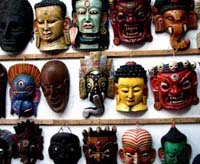
We could also wear those masks - I choose the red one with demon's face - and dance stupidly in the wilderness, pretending to frighten each other. We could also talk endlessly with that old Tibetan woman. I could also tell you that the paper machie boxes made in Kashmir are the best.
I am a dreamer, excuse me, and I dream about the most stupid and flimsy and childish dreams ever known to mankind. Consider this - You have put my picture up on your blog and then your statement has changed to this: All photographs published on this website and the man featuring in the topmost photograph are the property of PPK.
And yes, PPK, if I were to turn blind tonight, you would remain dear to me.
(Pic by PPK, taken at Dharamshala)
Saturday, June 24, 2006
My Mother's 22 Rooms
I cannot sing the old songs, or dream those dreams again - Charlotte Barnard
There it is. Huddled among other dolls and a few shreds of cloth. It is wearing a blue dress. I don’t remember what mine wore, for it has been sixteen years since I saw it. It might not be there anymore, but I would like to believe that it is there, invisible to the new occupants of my house. It is a dancing girl made of earth, decorating a corner of my friend’s drawing room. Touch it a little and it will start dancing, moving her neck gracefully. My dancing girl, mother bought it, when I was a child, from a potter selling his stuff on a pavement in Lal Chowk.
And sixteen years later, as I speak to you, there is no significant noise outside my room. No guttural voice and no sound of my mother’s U-shaped walker making its presence felt through the small corridor of my house. Mother fell down from her bed again this morning.
 23 years ago, in Srinagar, a team of health officials was to arrive at our school. Their aim was to administer cholera vaccines to children. But for that we were supposed to take the written permission of our parents. Back home I told my father and as expected he wrote ‘No’ on my home task diary. I found it very insulting. Tomorrow all my classmates would take the vaccine and sing laurels of their bravery. And me, I would be hidden in some corner, red-faced with shame. It was not acceptable to me. So I erased father’s nay and wrote ‘Yes’ on the diary. Next morning as the needle of the syringe pierced my left arm, I did not even flinch once. I became an instant hero. But as it is with most acts of heroism, I had to pay a price for mine as well. By late afternoon, a lump had formed in my arm. By the time I reached home I was feverish and drenched in sweat. As I pulled off my shoes, mother saw me and in one instant she knew what had happened.
It was August and even by Kashmir valley’s standards, it was hot. I flung myself on the bed. Mother came and sat next to me. She gave me a glass of milk and kept her fair arm on my forehead. It felt very soothing and cold; like a spring. I went off to sleep. Next morning as I opened my eyes, the fever was gone.
Mother handled the affairs of the house like a seasoned ascetic would control his senses. She knew what was kept where. Rice, coal powder, woollen socks and gloves, soap – she kept a tab on everything. Her daily routine was more or less defined. She would wake up in the wee hours of the morning, wash clothes in the bathroom, sweep and mop the floor of every room and corridor, put burning coal dust in Kangris in winters and ultimately take stock of the kitchen. She did not believe much in spending time in worship. She was not an atheist but her belief was restricted to occasionally folding hands in front of the Shivalinga. Her God was her home and hearth.
But mother was in awe of nature. She feared its fury. Sometimes, when a storm blew, she would close all doors and windows and sit in one corner. When she no longer could face it, she would ask my father, “Will this storm stop?” Father would usually try to pacify her, but ultimately he also lost his patience. “What do you think? Would this storm last till the doom’s day?” he would snap at her. But the same meek heart turned into brave heart when any family member struggled with adversity.
It was in the mid of 1988 that my father had a mild heart attack. Actually father had a pain in the stomach and an injection prescribed by a gastroenterologist reacted, which led to the attack. Everyone in the family was too shocked to react. But not my mother. She single-handedly took my father to the hospital in an auto rickshaw. At the hospital, mother recalls, a doctor appeared like an angel. He had a black mark on his forehead, a result of praying five times a day. The moment the doctor started examining him, my father vomited. Mother says it was so intense that it went right into the doctor’s shoes. But not once did he raise his brow. He kept on treating my father.
By the end of 1989, men like that doctor somehow became rare in Kashmir. One day mother came back from office and she was crying. In the bus someone had tried to help an old Hindu lady in getting down from the bus. Another woman, who was a Muslim, criticised that man saying that the woman he helped was a Hindu and she should have been kicked out of the bus. Mother didn’t know whether what she heard was true or whether it was a nightmare. But what she had heard and seen with her naked eyes was what seemed like holding a mirror in front of Kashmir in a few months time. The time had come, once again, to leave our homeland. The migration began. Salvaging whatever little we could, essentially a few utensils and educational degrees of my college-going sister, we reached Jammu.
After spending a couple of nights in a hotel, father hired a room in a marriage house. It was situated in the old city, amidst a bristling market of saris and dupattas. Every now and then marriage ceremonies were solemnised in the marriage house. When the crude ovens, laced with mud and gas cylinders arrived at the house, we would understand that a marriage was taking place that evening.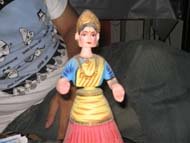
In the ten by ten feet room, ants held a sway. No matter what you put outside, it would be swarmed by ants in a matter of minutes. They appeared in hordes, hundreds of them, attacking every edible item. It was similar to how people would come out on streets in Srinagar, few months before we were forced into exile. Mother obviously could not put up a fight with them, but she always managed to save a bowl of curd from the marauding ants, by keeping it in a basin of water. I always felt that whenever mother took out that bowl of curd, a secret smile would pass her lips. It was like a symbolic victory for her or so I thought.
And one night, that smile was also snatched from my mother’s lips.
I remember that evening. Somebody was getting married in the marriage house. The entire compound was filled with men, women and children, dressed in shimmering clothes. The stereo with huge speakers played popular Bollywood numbers as some of the guests danced on the tunes. And a few metres away, we had closed ourselves in the room.
When the bride was taken away and the noise had eased, there was a knock on our door. Mother opened the door and found a young man standing there. He was holding a plate in his hand. He said that he had been told that there were refugees living here and so he came to offer us some food. Before mother could say something, he handed over the plate and turned back. Mother lifted the cover and I caught a glimpse of the food inside. There was rice, dal and some vegetables. Mother kept on staring at it for some time and then she cried.
After this incident, Mother developed a strange habit. She would tell all, whether they cared to listen or not, “ Our house in Kashmir had 22 rooms”.
For the next few years, we would keep on shuttling from one place to place, becoming victim of the whims and fancies of landlords. We stayed at various places. After the marriage house, we stayed in a window-less room in a dilapidated lodge, where the number of mosquitoes was probably more than the cells constituting our bodies. Then we rented a single room where we ate, studied, slept, cooked and ate our food as well. Then there was another house. The bathroom there had no door and we had to keep on coughing for obvious reasons. Amidst these episodes of Greek tragedy, mother kept her struggle on. Everyday was a battle. From filling water from a leaking tap to bathing under the tap of an adjacent vacant plot, life threw numerous challenges at us.
It was years later that I completed my education somehow and came to Delhi. Few years ago, we bought a 2-bedroom flat in Delhi. But the struggle of Jammu has left a mark on mother. She cannot walk now. Her left leg is paralysed. Sometimes she falls down as she tries to drag her leg. As it happened this morning. She cannot even speak now. Degenerative neurosis, whatever that means. With each passing day, her condition is worsening.
I walk on the road. There is a sea of vehicles moving; endless. Sometimes I feel that there are more vehicles than humans in Delhi. And when I cannot bear the noise any longer, I feel like shouting, “Our house in Kashmir had 22 rooms.”
There it is. Huddled among other dolls and a few shreds of cloth. It is wearing a blue dress. I don’t remember what mine wore, for it has been sixteen years since I saw it. It might not be there anymore, but I would like to believe that it is there, invisible to the new occupants of my house. It is a dancing girl made of earth, decorating a corner of my friend’s drawing room. Touch it a little and it will start dancing, moving her neck gracefully. My dancing girl, mother bought it, when I was a child, from a potter selling his stuff on a pavement in Lal Chowk.
And sixteen years later, as I speak to you, there is no significant noise outside my room. No guttural voice and no sound of my mother’s U-shaped walker making its presence felt through the small corridor of my house. Mother fell down from her bed again this morning.
 23 years ago, in Srinagar, a team of health officials was to arrive at our school. Their aim was to administer cholera vaccines to children. But for that we were supposed to take the written permission of our parents. Back home I told my father and as expected he wrote ‘No’ on my home task diary. I found it very insulting. Tomorrow all my classmates would take the vaccine and sing laurels of their bravery. And me, I would be hidden in some corner, red-faced with shame. It was not acceptable to me. So I erased father’s nay and wrote ‘Yes’ on the diary. Next morning as the needle of the syringe pierced my left arm, I did not even flinch once. I became an instant hero. But as it is with most acts of heroism, I had to pay a price for mine as well. By late afternoon, a lump had formed in my arm. By the time I reached home I was feverish and drenched in sweat. As I pulled off my shoes, mother saw me and in one instant she knew what had happened.
It was August and even by Kashmir valley’s standards, it was hot. I flung myself on the bed. Mother came and sat next to me. She gave me a glass of milk and kept her fair arm on my forehead. It felt very soothing and cold; like a spring. I went off to sleep. Next morning as I opened my eyes, the fever was gone.
Mother handled the affairs of the house like a seasoned ascetic would control his senses. She knew what was kept where. Rice, coal powder, woollen socks and gloves, soap – she kept a tab on everything. Her daily routine was more or less defined. She would wake up in the wee hours of the morning, wash clothes in the bathroom, sweep and mop the floor of every room and corridor, put burning coal dust in Kangris in winters and ultimately take stock of the kitchen. She did not believe much in spending time in worship. She was not an atheist but her belief was restricted to occasionally folding hands in front of the Shivalinga. Her God was her home and hearth.
But mother was in awe of nature. She feared its fury. Sometimes, when a storm blew, she would close all doors and windows and sit in one corner. When she no longer could face it, she would ask my father, “Will this storm stop?” Father would usually try to pacify her, but ultimately he also lost his patience. “What do you think? Would this storm last till the doom’s day?” he would snap at her. But the same meek heart turned into brave heart when any family member struggled with adversity.
It was in the mid of 1988 that my father had a mild heart attack. Actually father had a pain in the stomach and an injection prescribed by a gastroenterologist reacted, which led to the attack. Everyone in the family was too shocked to react. But not my mother. She single-handedly took my father to the hospital in an auto rickshaw. At the hospital, mother recalls, a doctor appeared like an angel. He had a black mark on his forehead, a result of praying five times a day. The moment the doctor started examining him, my father vomited. Mother says it was so intense that it went right into the doctor’s shoes. But not once did he raise his brow. He kept on treating my father.
By the end of 1989, men like that doctor somehow became rare in Kashmir. One day mother came back from office and she was crying. In the bus someone had tried to help an old Hindu lady in getting down from the bus. Another woman, who was a Muslim, criticised that man saying that the woman he helped was a Hindu and she should have been kicked out of the bus. Mother didn’t know whether what she heard was true or whether it was a nightmare. But what she had heard and seen with her naked eyes was what seemed like holding a mirror in front of Kashmir in a few months time. The time had come, once again, to leave our homeland. The migration began. Salvaging whatever little we could, essentially a few utensils and educational degrees of my college-going sister, we reached Jammu.
After spending a couple of nights in a hotel, father hired a room in a marriage house. It was situated in the old city, amidst a bristling market of saris and dupattas. Every now and then marriage ceremonies were solemnised in the marriage house. When the crude ovens, laced with mud and gas cylinders arrived at the house, we would understand that a marriage was taking place that evening.

In the ten by ten feet room, ants held a sway. No matter what you put outside, it would be swarmed by ants in a matter of minutes. They appeared in hordes, hundreds of them, attacking every edible item. It was similar to how people would come out on streets in Srinagar, few months before we were forced into exile. Mother obviously could not put up a fight with them, but she always managed to save a bowl of curd from the marauding ants, by keeping it in a basin of water. I always felt that whenever mother took out that bowl of curd, a secret smile would pass her lips. It was like a symbolic victory for her or so I thought.
And one night, that smile was also snatched from my mother’s lips.
I remember that evening. Somebody was getting married in the marriage house. The entire compound was filled with men, women and children, dressed in shimmering clothes. The stereo with huge speakers played popular Bollywood numbers as some of the guests danced on the tunes. And a few metres away, we had closed ourselves in the room.
When the bride was taken away and the noise had eased, there was a knock on our door. Mother opened the door and found a young man standing there. He was holding a plate in his hand. He said that he had been told that there were refugees living here and so he came to offer us some food. Before mother could say something, he handed over the plate and turned back. Mother lifted the cover and I caught a glimpse of the food inside. There was rice, dal and some vegetables. Mother kept on staring at it for some time and then she cried.
After this incident, Mother developed a strange habit. She would tell all, whether they cared to listen or not, “ Our house in Kashmir had 22 rooms”.
For the next few years, we would keep on shuttling from one place to place, becoming victim of the whims and fancies of landlords. We stayed at various places. After the marriage house, we stayed in a window-less room in a dilapidated lodge, where the number of mosquitoes was probably more than the cells constituting our bodies. Then we rented a single room where we ate, studied, slept, cooked and ate our food as well. Then there was another house. The bathroom there had no door and we had to keep on coughing for obvious reasons. Amidst these episodes of Greek tragedy, mother kept her struggle on. Everyday was a battle. From filling water from a leaking tap to bathing under the tap of an adjacent vacant plot, life threw numerous challenges at us.
It was years later that I completed my education somehow and came to Delhi. Few years ago, we bought a 2-bedroom flat in Delhi. But the struggle of Jammu has left a mark on mother. She cannot walk now. Her left leg is paralysed. Sometimes she falls down as she tries to drag her leg. As it happened this morning. She cannot even speak now. Degenerative neurosis, whatever that means. With each passing day, her condition is worsening.
I walk on the road. There is a sea of vehicles moving; endless. Sometimes I feel that there are more vehicles than humans in Delhi. And when I cannot bear the noise any longer, I feel like shouting, “Our house in Kashmir had 22 rooms.”
Subscribe to:
Posts (Atom)
