Sunday, May 20, 2007

Love is an old shirt


It's a Sunday today. I think, if I visit the coffee house in the evening, I may be able to spot you. "He wonders, why do I insist on going to the coffee house. How do I tell him why." This is what your sms read. "Who do you love more?"I committed this stupid mistake of asking you again. Now I realise how your love has made me capable of jealousy. You wrote back, the screen of my mobile phone getting lit like a thunder sky. "I have only loved once. I cannot fall in love again." Ah. I remember closing my eyes, and leaning backwards, in relief perhaps. But the fact is that you are not with me.

Sometimes, when there is no one around, I open my cupboard, and take out that old, worn-out shirt. You had washed it once, with your hands. More than the detergent, it smells of the moisturiser you'ld put on your hands.

I would like to think that you use the washing machine now.

Saturday, May 12, 2007

Seven seas in Chandigarh

Memory is vision. Even when the summer heat in Delhi blinds me, I can clearly see a swirling ceiling fan and a wet floor. I can also hear songs from the ‘Bandit Queen.’ I go back to the summer of 1996, to Kamal’s room in Sector 15-B in Chandigarh. April and May meant long walks in the evening around the Sukhna Lake. They also meant milkshakes sweetened by Rooh Afza. Kamal’s landlord, an old Sikh widower, would be gone to his Kasauli retreat. In winters, we could see him, sitting in the compound of the ground floor, his feet resting on a cane stool, sipping his scotch silently in front of a fire. Come April and he would leave for Kasauli, only to come back in September. To sip more scotch, we thought.

We would lie on the clean bedsheets – Kamal and I – in his room and listen to Nusrat Sahab’s haunting voice. To turn the air cool, we sprinkled water on the floor. On the top floor lived a man who would be drunk throughout the day. He fought with his neighbours all the time. But we never troubled him and he never troubled us. He had two sweet little daughters, who we were his darlings. The man, we learnt later, was the son-in-law of a very famous Qawwal. He himself taught music at the local Girl’s college.

One day, Kamal was not there. I lay half awake, in perspiration, as the power supply had been cut off. Suddenly I heard two sweet voices, singing a song from one of the popular Bollywood flicks released during that time:

Maine kiye paar saat samandar…

I heard the entire song with closed eyes, completely mesmerised. When I looked out, I found the musician’s little daughters, wearing identical pink frocks, singing that song. Later, Kamal and I would make them sing the song a hundred times. It was during that time when the singer Vinod Sehgal came visiting his house and we came to know that in a few months’ time, Gulzar’s film Maachis was being released in which Sehgal had also sung a few numbers.

A few months later, our final exams came to an end and we had to bid goodbye to Chandigarh. A year or so later, a friend told us that the musician had passed away (he would not have been more than forty). In his place, his wife was offered the job.

Eleven years have passed and, in summers, when the electricity goes off, I sometimes hear that song:

Maine kiye paar saat samandar…

Saturday, April 14, 2007

Nights are tough

Eleven years have passed in this city. Next to where you are breaking your promise of serving breakfast only to me, I remember buying a book from my first salary: Safdar Hashmi - The fifth flame. Life had just begun to explore new theatres of existence. I was raw; I did not know how to cut a slice of pizza. I would lose my way almost every day, thinking South Extension was nearer to Saket than IIT Gate. There were no counters of boiled corn those days; people would eat peanuts while waiting for the bus, warming their hands on a small bonfire lit by a friendly watchman. Very few people had cars those days. The roads were emptier. There were no malls, no Cafe Coffee Days. The lawns of the National School of Drama offered solace to lovers. Holding hands in the darkness of a cinemahall would rid the heart of triglycerides. Mosquitoes would still die from Tortoise coils.
Eleven years later, I am making pilgrimmages to all those places we visited together. As I sit alone, I almost talk to the empty chair in front of me. This is the table where you created arcs with your nails. This is the granite floor where your one foot would hang over the other, like guilt. No one notices me today. I have merged with the indoor plants. My head serves as a portrait on the wall where the orange paint has peeled off. As I sip on black coffee, imagining it to be hemlock, I wonder what you are doing: rubbing coconut oil in his head?
I go back home, eat frugally, and lie down. I switch off the light.

Aapki yaad aati rahi raat bhar
chashme nam muskuraati rahi raat bhar

Raat bhar dard ki shamma jalti rahi
gham ki lau thartharati rahi raat bhar

Yaad ke chaand dil mein utarte rahe
chandni jagmagaati rahi raat bhar

Koi deewana galiyon mein phirta raha
koi aawaz aati rahi raat bhar

Tuesday, April 10, 2007

Letting it go

A time comes when you have to just let it go. There is no planning; no schemes are made. If you try holding it, it will pass any way, like saliva through a chipped tooth.
It rained heavily the night I decided to let it go. It was not easy. Tobu's memories were as painful as hangnails. Memory is not like semen; one cannot drain it away. It felt like rubbing swollen gums till they bled. Tobu - for whom so many pet names had fallen short that she had to be named after a kids' cycle brand.
The first vision of love came to me through an old black and white Weston television set. A serial run on Doordarshan, in early 80s, it had a song which stayed with me ever since:
Mere humsafar mere saath tum, kabhi dhoop banke chala karo...
When I think of Tobu, those black and white images come back. And then, I rub my gums. I swallow the blood.

In the name of God

History sometimes likes to play Dumb Charade. And while doing so, it takes the aid of very unusual props to enable ordinary men to analyse it in hindsight. One hundred and fifty years ago, when Hindustan was ruled by men who came here as merchants, it was chapatis which served as the first signal of the storm which was to follow. Made of the coarsest flour, these chapatis made special appearances all over the North-Western provinces, distributed reportedly by Fakirs, who were said to be capable of swallowing red hot coals. The ‘dirty little cakes’, as the English officers called them, also made rounds of the barracks where the native sepoys lived. The first Black Sunday for the Company, when an ordinary sepoy would rise against hisown officers, was just a few weeks away. By the time Mangal Pandey was executed in Barrackpore on April 8, 1857, it was history that behaved like a housewife and murmured that it had much more up its sleeve.

Over 1,500 kilometres from Barrackpore, in Meerut, Dr Amit Pathak is performing an ultrasound on a young woman whose lungs have shrunk. A man possessed with history, medical reports share space on his table with a huge map of the city in 1904. “Very little geography has changed in Meerut for 150 years,” he says, rubbing off the grease from his patient’s abdomen. It was the grease on Enfield cartridges that finally claimed the first English victim of the 1857 revolt.
Just outside the present-day Race Course in Meerut, Colonel John Finnis, the Commandant of the 11th Native Infantry Regiment, was shot dead by rebel sepoys.

Fifteen days after Mangal Pandey’s execution, 90 native sepoys were ordered to use the cartridges, said to be laced with cow and pig fat. Eighty-five of them refused and were court-martialled on May 9, most of them sentenced to rigorous imprisonment of ten years. It was so hot on Sunday, May 10, that the evening church-parade was postponed by half-an-hour to 7 pm. Dr Pathak drives his car through the market area where unidentified Fakirs appeared that Sunday evening urging masses to fight for their deen (religion). “Religion may be a taboo for intellectuals today, but in the 1857 context, you cannot separate religion from the revolution,” says he. As the mob swelled outside the church that fateful evening, there was little that any of the English officers could do. At 8 pm, the 85 prisoners were set free and the sepoys set their barracks on fire. The mob dashed at every European in order to take revenge.

Behind a walled house, Dr Pathak points towards a dry well. It was here that Mrs Chambers, the pregnant wife of the Adjutant of the 11th Native Infantry, was chopped into pieces by a butcher who was later hanged to death. On the same night, around two thousand soldiers marched to Delhi and rode straight to Bahadur Shah Zafar’s palace, asking him to lead them. In today’s Meerut, a taxi driver is found guilty of killing 250 people after robbing them in the past four months. “Meerut could never belong to Delhi and it refused to associate itself with other small towns towards the other side. The city hangs in balance with a heavy baggage of the past,” says a local poet.

Around 400 kilometres away from Meerut lies Jhansi. The city’s old market still sells Eveready batteries which are not red, and Weston television sets. In the bylanes, numerous ads of quacks claiming sureshot cure for premature ejaculation survive along hoardings of beauty parlours and English coaching centers.
After the British forces surrounded the Jhansi fort, Rani Lakshmibai escaped with her adopted son, jumping from a high wall of the fort on the back of her horse Badal. But today, nobody is bothered about Jhansi’s brush with history. It is election time in Uttar Pradesh. Many supporters of a political party are lined up along the fort walls, emptying their bladders. A few workers who live inside the fort have pasted pictures of Aishwarya Rai. On the fort walls, Aslam has declared love for Mumtaz. And so has Ashok for Malti and Mukesh for Sunita. “You see, people have no respect for history,” rues Mohammed Asif as he lets out a huge glob of spit. Asif is a photographer-cum-tourist guide. “I am married with kids and there is no job. This morning I was coming to the fort and I saw this message behind a truck: Mehangai ki jai (Hail inflation) and it seemed so appropriate,” says Asif. What does he think of the 1857 revolution? “All gone waste, sir. The Angrez have left but has it made a difference to poor people like me? Not really.”

The journey of 220 kilometres from Jhansi to Kanpur takes seven hours in a state roadways bus. Kanpur is ‘chilled beer’ zone. After every ten metres or so, there is a liquor shop, with bright lights and mirror slabs, enticing the young and the old to take a bottle home or to the neighbourhood corner, wrapped in a newspaper carrying raunchy pictures of item girls. “All well at Cawnpore,” Major-General Hugh Massy Wheeler had written to the Governor-General during the third week in May 1857. But by the beginning of June, the English residents had received enough warnings to know that all was not well. Under the command of General Wheeler, the residents dug up an entrenchment. On June 6, it came under heavy attack from the rebel troops led by Nana Sahib. After being offered a safe passage to Allahabad, the residents decided to surrender. On June 27, they were taken to Satichaura Ghat, where around forty boats had been arranged for their departure. “The boats belonged to a boatman called Hardev Mallah, who also got a temple constructed here,” points out an old man. Bhagwan Das is 62 and runs a small shop near the Ghat. His son Chandan saved a child from drowning and was awarded a medal for this act of bravery by the President of India. “But no other facilities promised to us reached my family ever. It is tough living here,” says Das.

Nobody is sure who fired the first shot at the Ghat on June 27, 1857, but immediately afterwards, the residents were attacked by the rebels and many were killed. The 125 children and women who survived the attack were pulled towards the river bank. Later, upon hearing about the advance of the British Army, the survivors were killed brutally and their bodies dumped into a well. It is rumoured that the youngest daughter of General Wheeler survived and married a Muslim trooper. Many years later, she had confided to a Christian priest on her deathbed that she was Miss Wheeler. When the British troops reoccupied Kanpur and other regions they committed atrocities on a much larger scale. Many captured rebels were made to crouch down and lick clean a square foot of the blood-soaked floor before being led to the gallows. Elsewhere, villages after villages were taken over by the British army and all the men were hanged from the tree branches. A memorial stone erected on the site of massacre was pulled down a day after India gained its freedom. “The last stone of that memorial is right outside my shop,” says Bhagwan Das. The stone serves as a platform for washing utensils.

Inside the temple compound, there still exists an old tree from which the leader of the rebel forces in Kanpur, Brigadier Jwala Prasad was hanged after being arrested by the British forces. At the site of the entrenchment lies a church today, built by the British in the memory of their own who perished in the revolt. Many English victims lie buried here. “Why do you want to click pictures here?” asks the church priest. “1857 is a closed chapter. I don’t want my church to be attacked in the name of patriotism. I hope you get the drift,” he explains.

By the time the siege at the Lucknow Residency was over, the ageing king at Delhi had already been captured, his two sons and grandson shot near the Khooni Darwaza, which is more known now for the rape of a medical student in 2002. The king was exiled to Rangoon where he died unnoticed. The British forces massacred thousands of people in Delhi. Some of them were tied to the muzzle of cannons and blown off. Noted Urdu poet Mirza Ghalib could no longer get his ration of liquor from an English wine shop in Meerut. “Delhi is no longer a city; it looks like a cantonment,” he mentioned in a letter. “The rebellion was not successful because there was no sense of cohesive patriotism,” says Lucknow-based writer, Dr Yogesh Praveen. “No one knew what was happening elsewhere in the country except those who went for a chaar dhaam yatra. So it was essentially a fight for one’s own territory or rights. Expecting patriotism from those who participated in the uprising is like expecting your grandmother in bikini.”

So, is it that so many lives were lost in the name of God during 1857? “These days, more and more people are being killed in the name of democracy,” says Dr Pathak. Ten years after the uprising, the first railway whistle could be heard in Delhi on New Year’s eve in 1867. Two years after that, a boy was born in Porbandar, Gujarat, who, without firing a single shot, would finally force the British to leave India.

(This story first appeared in the Financial Express)

A summer dream

I imagine you sitting on a chair, doing nothing. You are just staring through the wire mesh of the door which opens to the balcony, overlooking the road below. The heavy curtains on the windows tremble a bit in the weak dust storm. A little while later, you lift your legs and sit cross-legged on the chair. Then you lift your knees and bring your head down. And then your lips quiver. You hum along with Razia Sultan:

Ab nikal jaayega dum
Is tabassum ki kasam
Aao lag jao gale
Kum ho seene ki jalan
Pyaas bhadki hai
Sare-e-shaam se jalta hai badan...

Monday, March 12, 2007

Rains wash away everything

Rains wash away everything
Rancour. Vomit. Tear stains.
But they bring back in torrents
Memories. In one such rain
When my world is deluged
I make a boat of your memories
And set to sail amidst Passat winds
Braving hailstorms of my existence
And alligators of my past

I try to reach you
But you have left the island
Leaving behind your scent
In the water where you
Dipped the thumb of your foot
Trying to etch my name

That is it. I take out
A dagger from my back
And make a hole in the boat
The water gushes in
Filling my nostrils
And your scent my senses

Sunday, March 11, 2007

Pursuit of happyness

Days have passed. Many days. Many insignificant days. I am hobbled, tethered with invisible ropes. The sight of ink fills me with dread. Nothing moves within me except a few strands of my soul, to music. My bile is feeble and my guts acidic. There is sand in my eyes. I have no patience with words. Or anything else.

Maya used to say that I paint with my eyes. I have stopped now. I wouldn’t have, had I not felt that the steps she took that evening were certain. It was almost as if spring had moved, away from my dreams with her, and, then abased itself at her feet. I aged so quickly in those few moments as if years had sprinted away from me. My world turned grey and bronchitic. Asphalt chipped off from roads leading to her. It melted and got sucked through my ear lobes.

It is not my destiny to pursue happiness. I had hoped, at least, to turn my bile into ink. Even that is no longer visible on paper. My papers are virgin. My words suffer from erectile dysfunction.

The fire within me has died. But my canvasses have burnt. Only embers remain. It has begun to rain now.

Thursday, December 28, 2006

Where is Swadesh Deepak?


In an old mansion, on Ambala's Mall road
He lay in his room, doing nothing, only
speaking to characters. His thoughts went
berserk like cigarette stubs on his ground.

Food was brought to him; he ate it silently
swallowing most of it, and at times,
winking at his image in the glass of water,
spilling it inside, without any sound.

He had stopped going out and didn't care
for what happened outside. Within himself,
much took place, and it went on and on
Like a child in a Fair on a merry-go-round.

As if she would ring the doorbell with a bouquet
of sunflowers in her hands, say, Hello, is he inside?
Her voice came tiptoed, smiled, and said: I am the hunter
What would you like to be: The hare or the hound?

Oh, welcome, Maya, so you have finally arrived
Place a kiss, if you may, on my parched lips
and erase all the lines on my forehead; who asks then:
Where is Swadesh Deepak, and where could he be found?

Monday, December 25, 2006

Houses for you

Oh, it is not that we are not concerned!
Look! We have made houses for you
And they are made of proper brick and mortar

The soil is the same, you see
Here is the proof:
It can grow red radishes

We will even get a temple constructed
But be sure, you don’t blow the conch
It may tear off the fibre of Kashmiriyat

And yes, we could not create these houses
On the banks of a river
So you will have to solemnize your God’s marriage
By sending his bride to him
Through flower pots

And these low doors of your houses
They are for your safety, you see
The boys, you know, are no longer indigenous
But we swear, Afghans have a self-pride
You don’t believe us, ask your ancestors
Or the learned men of your community (Ha, ha, ha! Every Batta is an intellectual!)
‘Their Majesties’ will never lower their heads
Even if their forefingers may be twitching
To pull your guts out

We know, your backs are hardened
And your torso muscles as well
From continuously shifting hearths
During those initial years
But still, it pains us to see that
Old men and women have to
Transport polythene bags full of
Sesame bread, rice flour and spices
To their sons and daughters in
Delhi, Mumbai and beyond
We see them all the time
In trains and deluxe buses
Trying to keep fresh,
Vegetables, they carry with them

That is why we want you to come back
And settle in these houses made for you
Did we tell you that they
Are made of proper brick and mortar?

Sunday, December 24, 2006

Flower dreams


I remember, one day
While sitting
Just like that
You made on
A pack of cigarettes
Kept on my table
A sketch of a plant
Come and see it now
A flower has apppeared on it
~
Translated from Gulzar's Koi Baat Chale...

Saturday, December 23, 2006

Meeting Big B on NH 8

It is virtually the last milestone of prosperity, also marking the end of Gurgaon. As young software techie couples, wearing Nike sneakers and Levis Jeans step out of their Hondas to have a lazy brunch at the Haldiram’s, you almost forget that you are in India. Before this point, there are 24-hours power-backed apartments. Cheerleading Thomas Friedman are boys who turn from Pawan to Peter during the night.
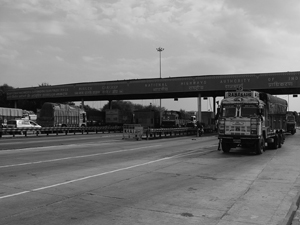
I am travelling on the Golden Quadrilateral, one of the last symbols of the Vajpayee Government. Till few years ago, huge pictures of the former Prime Minister would don toll plazas built at various spots on the super highway. The pictures are gone but you can still find traces of the NDA era. At such one place on the National Highway 8, I meet Rajpal.

Outside the ‘Feel Good’ wine shop, Rajpal is quietly gulping down Old Monk mixed with Pepsi at 11 am. Our eyes meet and I strike a conversation with him. After a few minutes of polite conversation, he finally opens up, helped partially by the good old rum. He looks at me, points at the bottle and says, “ This is just to ward off loneliness. Have you heard this song: I feel so lonely baby, I feel so lonely, I could die…?” Though I am not fond of Elvis Presley, I recognize this song. Before I can utter a word, he continues.

“As a young man, I was inspired by Manoj Kumar’s Upkaar. I joined the Army. But in a few years time, I was disillusioned. I quit and returned to my village. I became a farmer, tilling my father’s land. But that also did not hold me for long. It is a cycle of Karma.”

“What do you do now?,” I ask him. He looks at me and smiles. “I just feel good now,” he mutters, followed by a hearty laugh. As I take out my camera to click a picture, he refuses to be photographed. “OK, but at least tell me where did you hear Elvis Presley?,” I ask him.

“In the Army, I was attached with a Colonel. He was very fond of old songs. Every evening he would play this song on his gramaphone and sing along with it. I picked it from there,” he says. We shake hands. “See me again while you are coming back; just ask this shopkeeper and he will guide you,” he adds.
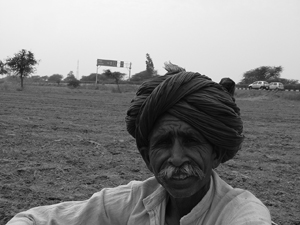
I move on. Just before Kotputli, on the Jaipur highway, I enter a field where a turbaned man is sitting on the earth, a flute resting beside him. There are goats grazing nearby. His back is turned against me and so he is almost startled as I greet him. I tell him I have come from Delhi and would like to ask him few questions. His name is Raja Ram and he is 60 years old. He has been a farmer all his life. He has never been to Delhi or Jaipur. He lives nearby and has no electricity in his house. He has never heard of Sachin Tendulkar. “Who is Abdul Kalam?,” I ask him. “He was a fakir,” he replies. “What is your wish list for 2007?” He looks at me as I put this question to him and then looks at his goats. “Nothing,” he replies.

Just before Jaipur, around 240 kilometres from Delhi, I spot Reema, a young college girl, waiting for a bus on the highway. I cautiously approach her lest other men at the bus-stop might think I am teasing her. I introduce myself and tell her about my assignment. I can see that few boys at the bus-stop are looking at us with curiosity. One of them passes a comment, making others laugh. I can hear them talking about ‘jeans.’ I notice that Reema is wearing jeans. Reema begins telling me about her family. Her father is a farmer and after much persuasion she was allowed to study further in a college. “Usually girls of my age are married off but I managed to wriggle out of it, at least for now,” she says. She wants to become a teacher. And what are her expectations from 2007? She looks at the jeering boys and says,“ I wish I could wear jeans without inviting comments from them.”
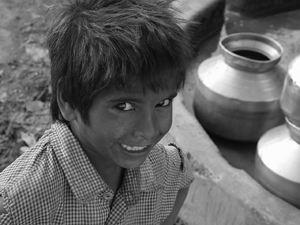
Further ahead, I meet Ratan Lal, a young boy, who studies in 8th class in a government school. His village, Chapakhedi is a few kilometers away from the highway, which goes on to Mumbai. He wants to join Army when he grows up. Has he ever seen a computer? “No,” he replies almost apologetically, “but I have heard about it,” he asserts. “What is it?” “It is an electronic pigeon, used for sending messages,” he answers. What does he want in 2007? “I wish I could see a cricket match on television,” he says.

Along the National Highway, in Rajasthan’s Chittorgarh district, I meet Kishan Lal, 24, who drives a taxi. He is a lower caste. “ Come, I will take you to my village,” he says. His village Achalpura is situated along the highway. “This highway came up a few years ago but, you see, it brought no changes in our lives,” he tells me. Till a year ago, Kishan Lal says, the people of his community could not sit on a cot in his village.
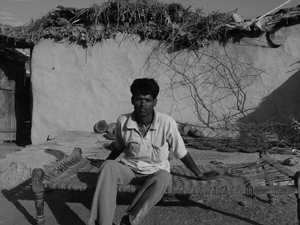
“The upper caste men would object to this, maintaining that we had no right to sit on a cot,” he says. Last year, some of the boys of his caste, along with a few social activists began a ‘khaat andolan.’ They would take out cots from their houses and sit on them outside. Some of them were beaten up by drunken upper caste men. “They also declared a social boycott against us,” remembers Ram Lal. But still, he says, only 50 percent lower castes are with them. “The rest of them still prefer a non-confrontationist approach,” he says as he sits on a cot outside his house for a photo op.
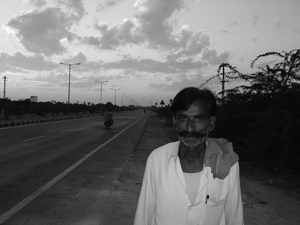
A few kilometers before Udaipur is Idra gram panchayat, where 50 gypsy families have built small settlements. “We were tired of always being on the move and decided to settle here for the sake of the new generation,” says Banjara leader Bansilal. He laments that no politician pays heed to them since most of them do not vote. “We are always on the move, searching for jobs. If someone is working in Gujarat, how is he supposed to spend 500 rupees and come here for voting?,” he says. What is his expectation from 2007? “The Police harass us a lot here. I wish that could change,” Bansilal says, urging me to have a cup of tea at his house.
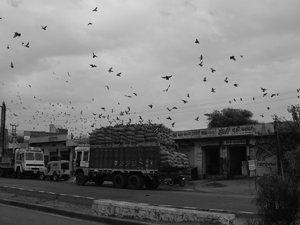
On my way back, I am reminded of my promise made to Rajpal. As the evening descends, I reach the spot where I had left him two days back. The shutter of the Feel Good wine shop is half open and in the dim light, I ask the owner about Rajpal. “He is holding his Panchayat behind this shop, in the fields. There is a turn there, you can go inside,” he says with an amused look on his face. And true to his words, I find Rajpal with his bottle, surrounded by a few men. He is regaling them with his stories.

“Oh here comes the babu,” he shouts as his eyes fall on me. I can sense that he has had a little too much. “Ok, let me play Kaun Banega Crorepati with you,” he says, and without waiting, he throws a question at me, increasing the baritone of his voice to match with that of Amitabh Bachchan, “Why is this country infested with so many problems?” I can feel all eyes set upon me. Before I can gather an answer, Rajpal comes to my rescue. “I think you need a phone-a-friend helpline,” he says, shifting from one foot to another. It is absolute dark as I hear his voice sifting through the air: Hello Manmohan Singh ji, mein Amitabh Bachchan bol raha hun

(This report appeared in the New Year special issue of The Sunday Indian)
Friday, December 22, 2006

Between the pages


Often in your books
I discovered dried flowers
And in my books, the winds
That dried them

In winds like those
I go out, wearing, these days
A checked woollen muffler
Around my neck
Considering its two ends
Your two arms

I do not know, what is there
In this song:
Beqarar karke humen yun na jayiye…
Loneliness or its panacea

Today, I almost knew
When in the cupboard
Beside naphthalene balls
I found, in an old copy of
Gustave Flaubert’s Sentimental Education
Between pages 210 and 211
A stamp-sized picture of yours

Years have passed and
I could never tell you
But today, as I saw
You smiling in that picture
I found myself muttering:
Aapko humari kasam laut aayiye…

(This poem appeared originally here)

Sunday, December 17, 2006

Her Master's voice

In a Rajasthan village, a woman sarpanch stays at home, while her husband conspires with the Panchayat to grab land belonging to Bheel tribals.

The sun is at its zenith and only when you come really close can you see the broken remains of what used to be the house of Dharmesh Bheel and his family. The clear skies invite winds and the dust enters Dharmesh’s eyes. He touches the empty ground where his house stood till recently and applies the sandy earth to his forehead.
“This had been my family’s house for 42 years and there are not even stones left now,” says a bleary-eyed Dharmesh. His wife has shifted to her father’s house and Dharmesh and his father stay in a neighbour’s house.

Dharmesh lost his ancestral house in a conspiracy supported by the Panchayat in his village Beeladi in Rajasthan’s Chittorgarh district. It all began in October this year when the Public Works Department started extension of an old grovel road under the Prime Minister’s Gram Sadak Yojana. The department conducted survey and laid pillars along the houses of tribal Bheels which did not interfere with their houses.
The village is home to 27 Bheel families, out of which 3 families live outside the village, by the river. After independence, the Government, recognizing the vulnerability of the Bheel tribe, allotted some land to the community in 1964 as a part of the land reforms. “Ever since we were allotted this land, the upper caste Rajput and Jat families in the village have had their eyes set upon this land,” says Gangaram Bheel, a village elder. The Bheel community members say that this particular stretch of land is very fertile and many times in the past, the upper caste landlords have offered them land elsewhere. But the Bheels refused to shift. “They destroyed our crops and even declared a social boycott but we did not part away with our land. How could we? We have nothing else,” says Dharmesh. In October this year, the plan to extend the old grovel road offered an opportunity to the landlords to grab the land belonging to Bheel tribals.

On October 26, the government excavator ran over Dharmesh’s house and destroyed it completely. It also made trenches on both sides of another house in preaparation to uproot it. The entire operation was overseen by Lal Singh, the husband of the village sarpanch, Lad Kanwar. “Lad kanwar is just a rubber stamp; for all practical purposes, her husband calls the roost,” says a villager. “After destroying my house, Lal Singh took away all the stones that formed the walls of my house, and the wooden rods also,” alleges Dharmesh.
The Bheels then approached the local administration including the Police and the SDM. The Police, according to the Bheels, accepted the complaint but took no action. The SDM, however, tried for a compromise between the two parties. “The sarpanch’s husband said that he will give land elsewhere to the displaced families. We told him to give it to us in writing,” says Bhanwarlal, another Bheel villager. That did not happen. What happened instead was something that the Bheels had been fearing for years.

On the night of November 10, the Bheels received a notice from the Panchayat that next day in the morning their ‘illegal’ houses and fields will be evacuated. When Bheels and labour activists complied a response and tried to submit it to the sarpanch, she refused to accept it. “She said that she had no knowledge about this case and would accept it only after consulting her husband who was not home at that time,” says Madan, a labour activist. The Bheels then pasted their response on the door of the Panchayat office.
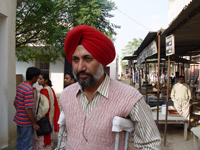
Next day, the Bheels and the labour activists tried to reason with the sarpanch’s husband (the sarpanch never came herself) that it was totally illegal for the Panchayat to displace the Bheels. Panchayati Raj act clearly states that the Panchayat has executive powers only and doesn’t have the judicial power, which is a must to order evacuation of people. When the upper caste landlords realized that they had no legal standing, they decided to install fear among the Bheels. Late in the night, around 150 upper caste men, belonging to the Rajput, Keer and Jat castes, descended upon the Bheel houses and attacked their inhabitants. They were also joined by their women who surrounded the houses, armed with sickles. The Bheels and a few labour activists who were present there were beaten up by lathis. Some of them escaped in the fields and were later rescued by the Police. 2 Bheels and 6 activists sustained serious injuries and three of them had to be hospitalised. The attackers also allegedly destroyed the crops of the Bheels before falling back.
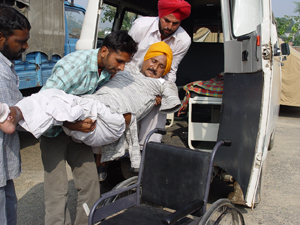
On December 6, a Bheel maha rally was organized in the village against the attack. On the same day, the upper caste landlords also organized a similar rally, alleging that the Bheels were trying to usurp their lands and were trying to vitiate the atmosphere at the behest of ‘outsiders’. Beeladi village is just a few kilometers inside from the super highway – also known as the Golden Quadrilateral project – that joins Delhi to Mumbai.
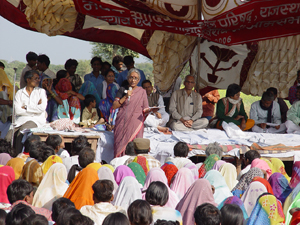
Noted social activist, Aruna Roy, who addressed the Bheel maha rally, demanding rights for the tribals, says, “Development has become an euphemism for grabbing the land of the poor and the downtrodden.”

A survey, conducted just before this episode, by two non-Governmental organizations in Chittorgarh district states that 1,389 bheegas of agricultural land, belonging to various Bheel families in 92 villages is currently in the possession of upper castes.

The social boycott may have dispirited them, but the Bheels have resolved to continue the fight. The first step, of course, is to rebuild the broken house. “Where do we get new stones for the house now,” asks Dharmesh’s father, as he sits cross-legged on a neighbour’s cot. Would the Vijay Raje Scindia government care to ask this question, and few others, to the ‘rubber stamp’ sarpanch of Beeladi?

(This report first appeared in The Sunday Indian)

Friday, December 15, 2006

Dignity of the dead


"How old is this?," the young labourer asks me. I take the plastic can filled with water from his hands without answering him. I'm still looking at the gravestone. I splash some water on the stone, removing layers of mud and dead leaves. The name is clear now: The Michaels. Died 2 July, 1868. Read on.

Sunday, December 10, 2006

Landless in Punjab

Beyond the facade of prosperity in Punjab, lays hidden a grim tale of numerous landless workers, who are caught in a cycle of indebtness and end up turning into bonded labourers.

On a clear, cold morning in Mansa in Punjab, hundreds of shadowy figures, most of them draped in torn, faded shawls, huddle at the town’s Labour chowk. 60-year-old Ajmer Singh rubs his hands together and lets out a sigh. His eyes, like that of everyone else, are fixed at the main road. Farmers, riding jeeps and tractors, would be coming any time to pick up men like Ajmer Singh for working in their fields. Even on a good day, only 60 percent of them will get work. Life is hard. But for Ajmer Singh, it is a bliss as compared to the life he was forced to lead for years in his village Nangal Khurd.
Ajmer Singh was caught in a viscious web of bonded labour after a farmer from his village employed him as contractual labourer for 12,000 rupees per annum. On less than 35 rupees a day, he worked seven days a week, for 12-14 hours every day. The day he was unable to come for work due to illness, the farmer would ask Ajmer Singh to pay a fine of 100 rupees. Within a year, he was also forced to take some loan from the farmer. Once caught in the debt trap, he was forced to work in the farmer’s fields for years, on a very low wage. “I worked day and night at his fields. Gradually, he asked me to bring my 15-year-old son along with me to work. There was not even a single hour of rest,” says Ajmer Singh. Three months ago, Ajmer Singh was lucky enough to be freed by labour activists. He earns 60-70 rupees a day now, working on a daily basis in farms. The minimum daily wage rate in Punjab is 97 rupees. But still Ajmer Singh is grateful for his recently-acquired freedom.

According to an estimate, there are at least on lakh workers in Punjab who are bonded labourers. Actually, these are contractual labourers who get caught in the debt trap and end up as bonded labourers. In Punjab, there is an increasing trend of hiring agricultural workers on a contractual basis, where they get an advanced payment of 12,000-18,000 rupees for the entire year. The poor workers end up borrowing small amounts for needs such as health care. The interest rate for such loans is a high as 60 percent per annum. As a result, the debt trap continues for years, sometimes passing on from one generation to another. In most of the cases, the other members of the family also get stuck.

Hameer Kaur was recently rescued from one such trap from her landlord’s house in Dindholi Kalan in Sangrur district. For 35 years, she was forced to work in the house of her landlord, which included domestic work and cleaning of cattle sheds and taking away dung. Her mother-in-law had taken a loan of 2,000 rupees from the landlord. The landlord, apart from making Hameer Kaur work for 35 years, forced her to bring her daughter-in-law also for work. This practice is well established throughout Punjab where generations inherit the family’s debt and work in the households of the moneylenders at very low wages to pay it off. “It is a never ending circle,” says Harbhagwan Singh, a labour activist, working in the Sangrur district.

According to a study conducted recently by the Sociology department of Punjab University, the worst cases of bonded labour in Punjab are found in the Malwa belt, which includes Bhatinda, Sangrur and Mansa districts. Most of these labourers are Scheduled castes, who hold only 2.34 percent of the land under cultivation in the entire state. There have been cases where the moneylending farmers have taken the houses of these labourers since there is no land to annex. Their livestock is also taken away and they end up living in open spaces or in community places like gurudwaras. “In most of such cases, the labourer’s family is too scared to go back. Even when we assure them that we will reclaim their houses for them, some of them just refuse out of fear,” says Bhagwant Singh Samaon, state secretary of the Mazdoor Mukti Morcha.

The landlords have also devised another method to enslave landless labourers. They make labourers addicts of Bukki (Poppy Husk). “After consuming the drug, the labourers become oblivious to fatigue and work indefatigably in the farms of their landlords,” says Harbhagwan.
Janata Singh of Mansa’s Makha village was fed this drug regularly by his landlords. He worked day and night in their fields, while his wife worked worked at the landlord’s house. “They would give me a break of few hours on Gurupurab. For the rest of the time, throughout the year, I worked in a dazed state in their fields. I even slept in their fields,” says Janata Singh. “I would come home by midnight and by 4 am, they expected me back, for work in the cowsheds. I was deprived of sleep for years. I would fall asleep while cleaning the dung and then they hurled abuses at me,” says his wife.

“We know of cases where the labourers are given poppy husk as wages. The landlord often boils it along with a cup of tea and once the labourer is addicted, he is given large doses, the cost of which is deducted from his wages,” says Bhagwant.
Kala Singh was also fed Bukki by his landlords, while making him work in their fields. One day, while spraying pesticide, he got poisoned by it and had to be hospitalized. Kala Singh alleges that this made his landlords so angry that they got him arrested by the Police in a case of theft. “My landlord came drunk to my house and beat me up, while the Police looked on,” says Kala Singh.

There are many instances when such beatings turn fatal. 22-year-old Jarnail Singh of Khadiyal village in Sangrur district was allegedly beaten to death by his two landlords in November this year after he failed to turn up for work. His family members say that he was down with fever. According to them, Jarnail Singh’s landlords forcibly took him, as he lay feverish on his bed, to work in the fields. “A few hours later, they came home, telling us that Jarnail Singh had been poisoned while spraying pesticide in the fields. His landlords offered us one lakh rupees, urging us not to send his body for postmortem,” alleges a family member. After labour activists staged a dharna, the Police finally arrested the two accused on November 30.

Assembly elections are due in Punjab early next year and currently, the Punjab Chief Minister is busy touring the state, portraying it as a prosperous state where every household is able to dole out sarson da saag and makki ki roti for guests. The time has come now to look behind the facade of green revolution and ensure equal economic and social equations for all. Otherwise it would seem that the government itself is high on the husk of power.

(This report first appeared in The Sunday Indian).

Saturday, December 02, 2006

Punjab: A Bihar in Making?

In Punjab’s Malwa region, upper caste landlords are creating ‘Ranvir Senas’ in response to the growing Dalit assertion.

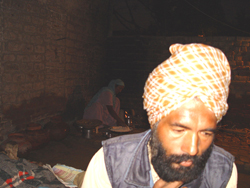
The first telltale signs of the growing class divide in Punjab are evident in the office of the CPI-ML in the Mansa district. In the courtyard, many Nihang Sikhs, dressed in their traditional attire, are listening to their first discourse on Marx.
All of them are lower castes. “We have told them that instead of fighting for Gurudwaras, they must fight for their own lot,” says Bhagwant Singh Samaon, a CPI-ML activist.

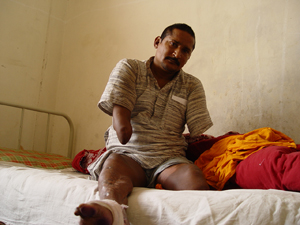
A few miles away, a caste cauldron is simmering in the Bhurj-Jabbar village. Groups of upper-caste Jat landlords stand outside their pucca houses, waiting for news from the court. Seven Jat boys from the village stand trial for attacking and badly mutilating Bant Singh, a 40-year-old Dalit, in January this year. He lost his two arms and a leg in the attack.
The news finally arrives in the village. For 3.5 hours, in front of the judge, Bant Singh narrated the sequence of the attack on him and identified his attackers. The final judgement of this case, as per Bant Singh’s lawyer, is expected by December 25.

“Our boys have been falsely implicated in the case,” says Sukhwinder Kaur, whose two sons are among the accused. A former village sarpanch, Sukhwinder Kaur’s husband is the current sarpanch from the Congress party. In the courtyard, the eldest son Yadavinder Singh’s three children are playing hide and seek. Holding her younger son’s photograph in her hands, she asks: “Does he look like a murderer? He was about to get engaged.”
On a string cot, in front of her, sits Amrik Singh, whose two sons have also been arrested in the case. “It is all being done at the behest of the liberation guys (CPI-ML activists). They are trying to mobilize Dalits against us. They are poisoning their minds,” he says. Ask him about the attack and he goes silent for a while and then whispers, “ It is not an act against Dalits. It is a case of personal enemity. Bant Singh had a series of fights with our boys. And some of them hit him back.” How many of them? “Only four, I swear. Three of them are innocent. They have been dragged into this.” And does those four include his sons? Another bout of silence. And then another whisper. “Yes, my younger son.”

As Bhurj-Jabbar waits to explode, upper caste landlords are increasingly taking cudgels against the formidable Dalit assertion. In Khadiyal village of the neighbouring Sangrur district, Jat landlords took out armed processions in an apparent show of strength, after the death of a lower caste labourer, Jarnail Singh, allegedly at the hands of his upper caste employers, on November 2. The labourers, led by the activists of the CPI-ML, staged a Dharna in front of the DSP’s office, urging him to arrest the perpetrators of the crime. After this incident, the Jats have made announcements through the Gurudwara loudspeaker, warning Dalits not to venture in their fields. “Their aim is to annex our lands; we are not against Dalits but they should not become a puppet in somebody else’s hands,” says sarpanch Harbans Singh, who is spearheading the agitation against the Dalits.

Similar armed rallies have been taken out elsewhere too. In October, Landlords took out a procession, carrying their licensed arms, under the banner of their newly-formed organization, Kisan Mazdoor Vyapari union. “The government is scared of Dalits. We will have to deal with them ourselves,” the leaders of the union are believed to have declared.

In Raipur village, in August, landlords came out in huge numbers after labour activists tried to lay siege over a piece of land which, they allege, had been illegally acquired by a landlord. In a meeting, the upper caste sarpanch appealed to other landlords to take out their weapons and come out in the form of a rally on August 28.
The labour activists staged a dharna outside the DC’s office in Mansa, demanding that the administration take action against the landlords. Finally, a day before the rally, the administration seized all the licensed weapons, thus nullifying the rally. “They are trying to create a Ranvir Sena in Punjab,” says Sukhdarshan Singh Natt, a veteran leftist (In red turban).

“A line has been created between the bigger farmers and the labourers after the Bant Singh attack,” says farmer leader, Raldu Singh. “It is not a caste war; it is the rich versus the poor,” he adds. But it remains a fact that almost all big farmers in Punjab are upper castes and all the local labourers are Dalits; most of them landless. Punjab has the highest number of Dalits in the country – almost one-third of the total population. So ultimately everything boils down to caste.
Nobody can swear this more than Bant Singh himself. “Being a lower caste, they expected me to keep to myself. But I would raise my voice everytime they committed any wrong. I got their ration depot cancelled and I was not even dependent on them since I raised pigs for a living instead of working in their fields. They did this to me in order to send a message. But it has boomeranged,” says Bant Singh, as he is being carried back to the hospital, from the court.

After the arrest of the accused in the Bant Singh case, landlords in a number of villages decided to boycott Dalit labourers. They were barred from working in the fields and were even prohibited from entering them. Most of these labourers have no access to toilets and thus depend on the fields for relieving themselves. It was only after the adminstration’s intervention that the boycott was called off.
“But it still continues in some villages; our men in villages are getting threats that they will be finished off,” says Kamaljeet Singh, a former Robotics engineer, who is now a CPI-ML full-timer (standing behind in maroon jacket with his fellow comrades).

After this boycott, a large number of labourers got mobilised. “When we gave a call for a meeting, we were surprised to see them turning out in huge numbers. We were not expecting this,” says Natt. “The credit for this goes to the sacrifice of Bant Singh,” he adds.

In Bhurj-Jabber, all eyes are now set upon the court judgement. “In his latest statement, Bant Singh has even named sarpanch Jaswant Singh as an accused. His two sons are already under arrest. The Jats will revolt against this injustice,” says a farmer.

Meanwhile, in the hospital, Bant Singh’s second daughter wipes the sweat on her father’s forehead. Since the incident, she has been away from her home, at her aunt’s house. “I am scared to go back, but I miss my home,” she says, with a faint smile on her lips. Considering what the court judgement may be and the consequences thereafter, her home-coming seems unlikely as of now.

(An edited version of this story first appeared in The Sunday Indian).

Tuesday, November 28, 2006

Pratibha's remarriage?

The number of farmers committing suicide in Vidarbha since June 2005 has risen upto 1,136. In November alone, this year, 91 farmers have committed suicide.

This morning, a farmer tried to commit suicide by consuming pesticide in the Yavatmal district. His condition is reported to be very critical. In his suicide note, Rameshwar Annaji Kuchankar has blamed the Maharashtra Chief Minister and Deputy Chief Minister for bringing disaster to the Vidarbha region. His suicide note, released by the Vidarbha Jan Andolan Samiti reads:
I don't know how to continue living. I have taken a loan of 15,000 rupees. The Government says that the price of cotton will not be hiked. Since I have plunged into losses, I am ending my life. My mother and father should not be harrassed. Chief Minister, please give us the correct price for our cotton. Deputy CM, RR Patil, fix the rate at 3,000 rupees otherwise more suicides will happpen. Pratibha, please get remarried; I am sorry, I am leaving you alone.